

























































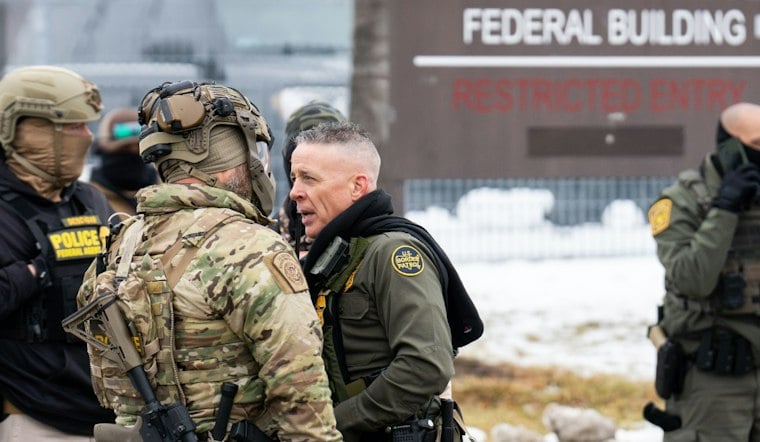
A federal judge ordered Yader Cortez released, but the order did not end his detention. On Oct. 2, after leaving the back of the Bishop Henry Whipple Federal Building in St. Paul, Cortez said three men in civilian clothes approached him and asked if he was Yader. He said yes, and they detained him.
Cortez had been transferred that day from the Sherburne County Jail to the Whipple building to sign release papers, according to MPR News. U.S. District Judge Jerry W. Blackwell had ordered his release the day before, ruling that the warrantless arrest that led to his detention was “illegal.” Cortez said the men who detained him were ICE officers.
Cortez said he was shocked to be detained again after learning a judge had ordered his release. He said he asked why the officers were arresting him and one replied that the judge did not know what he was doing and had made a mistake in his case.
The Release Order and Its Aftermath
Cortez said his wife, Jennifer, called on the Sunday after his re-arrest to tell him he would be released. She also told him he had been approved for U.S. residency, news she had learned from another lawyer the couple had retained. He said he thanked God and barely slept, expecting to leave the next morning.
Cortez said an ICE officer spoke to him in a way he experienced as hateful and racist, and that the encounter left him fearful. He said it led him to feel that authorities did not respect the law and acted like dictators.
Jennifer Cortez, a U.S.-born citizen, said her husband was not physically harmed but suffered psychological and emotional harm. The couple lives in St. Cloud with their 17-month-old daughter, Arianna, and Jennifer's three children from a previous relationship.
A Weekend Scramble to Free Him Again
Cortez was released again after his lawyer and wife spent the weekend seeking his freedom, according to MPR News. Attorney Danielle Oxendine Molliver wrote up a motion to file and made calls on his behalf. Jennifer Cortez contacted state lawmakers and posted the family's account on social media, saying she wanted to make the case public because nobody else was talking about it.
The case began with Cortez's arrest in June, when federal agents picked him up six blocks from his home, a day after he agreed to a plea deal providing probation rather than incarceration for a fourth-degree misdemeanor DWI charge, according to MPR News. He had been held at the Sherburne County Jail since the beginning of July, before Blackwell ordered his release in October.
Other Reported Re-arrests at Whipple
MPR News reported that Cortez was the third person the outlet had spoken with who was immediately re-arrested by ICE at Whipple after a federal judge ordered release. Court records, the outlet reported, indicate that two other men were ordered released and then immediately re-arrested at the building on Sept. 9 and Sept. 22, according to MPR News. The outlet also reported that a man from Mexico was re-arrested just outside Whipple on Sept. 25, while a man from Guatemala was re-arrested before getting outside on Oct. 1, the day Blackwell ruled on Cortez's case.
By Oct. 27, MPR News had confirmed seven cases of immediate re-arrest, including that of Milton Saltos Velasquez, who said he was re-arrested inside the building on Oct. 19 after being told he would be released under a judge's order, according to MPR News. Immigration lawyers told the outlet they suspected there were additional cases. MPR News also reported that an ICE official told Cortez's lawyer the practice had been underway since May: “It's not new; we've been doing this since May,” according to MPR News.
The Department of Homeland Security defended the practice to MPR News, saying ICE may seek to re-arrest someone released by a judge if it does not appeal and otherwise complies with the judicial decision. DHS also characterized claims that ICE cannot re-arrest someone this way as sabotage, according to MPR News.
An Earlier, Limited Comparison
A separate case from the District of South Dakota offers an earlier comparison: the Eighth Circuit described ICE approaching Flores-Sandoval outside a jail on Oct. 6, 2005, after his criminal indictment was dismissed and ICE removed its detainer. That case involved release following dismissal of a criminal case, not release under an immigration judge’s order, according to the U.S. Court of Appeals for the Eighth Circuit.




