

























































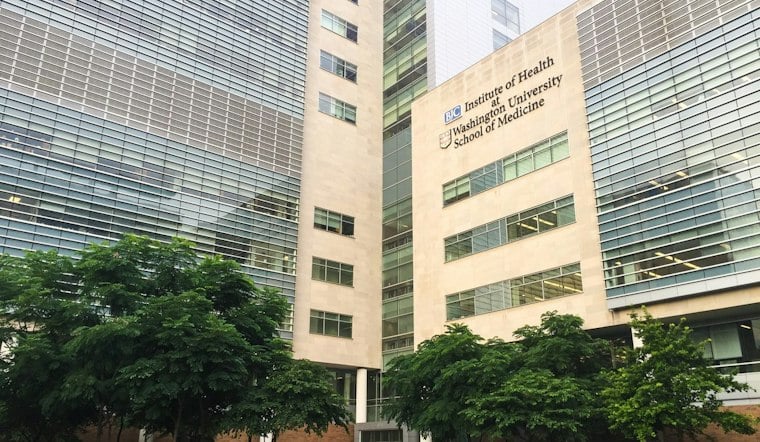
A St. Louis research program that will reach its 45th year in 2031 just landed $32 million in new federal funding, and the money comes with a plan to roll a mobile clinic straight into north St. Louis neighborhoods. The renewal from the National Institute on Aging will carry the Healthy Aging and Senile Dementia program through 2031, when it marks its 45th year, and researchers say the next phase is about reaching people the study has historically missed.
The five-year award, which comes from the National Institute on Aging, part of the National Institutes of Health, will fund an expansion of a pilot study that enrolled about 40 participants in north St. Louis into a program aiming for 300, according to WashU Medicine. The program has enrolled more than 1,877 people since it began, and researchers want the next group to include people with varied education levels, income levels and health histories — a sharp departure from a research tradition that, per the same report, has historically skewed toward mostly white, highly educated volunteers in overall good health.
A Mobile Clinic Headed Into the Neighborhood
To reach that broader group, the team plans to bring a mobile clinic into neighborhoods to collect data, blood and other tissue samples directly from volunteers, rather than requiring them to travel to a university medical center. Volunteers who take part will also have the opportunity to be connected to health services if they need them, the WashU Medicine report notes. Researchers additionally plan to track how patients in non-research clinical care settings who are receiving newly available Alzheimer's treatments are responding to them, since those therapies have been shown to slow disease progression in some people.
Principal investigator John C. Morris, the Harvey A. and Dorismae Hacker Friedman Distinguished Professor of Neurology, has led the program since 1998, when he took over from founder Leonard Berg upon Berg's retirement. Morris has said the disease can start silently in the brain before memory fails, and the same report quotes him explaining why the team is bringing research into the community rather than waiting for people to come to campus: mistrust and transportation barriers have long kept potential participants away.
Decades of Groundwork Behind the New Funding
The program traces back to the 1970s, when Berg noticed memory problems among his older patients and started what would become one of the longest-running longitudinal studies of Alzheimer's disease. That early work helped establish WashU Medicine's Alzheimer Disease Research Center in 1985, among the first 10 such centers in the United States, later endowed by Charles F. and Joanne Knight and now known as the Knight ADRC. Berg and colleagues also developed the Clinical Dementia Rating, described as the worldwide standard for determining whether dementia is present and its severity.
Morris and colleagues went on to find that Alzheimer's-related brain changes can appear in people without memory symptoms, a discovery that fed into the 2005 establishment of the Adult Children Study, which follows middle-aged people whose parent had Alzheimer's to determine who may develop the disease and what triggers symptoms. The newly renewed program will also examine whether some Alzheimer's biomarkers vary between Black and white participants — a question that matters because such variation could mean diagnostic tools do not work equally well across racial groups.
Closing a Long-Standing Representation Gap
WashU Medicine reports that Morris raised the proportion of Black study participants in the program from 3% to 17%, dating that shift to 1998, though a separate WashU Outlook page places the same 3%-to-17% increase against a starting point of 1999. The Knight Alzheimer Disease Research Center supports long-term participant studies and research on biomarkers, brain imaging and genetics.
The stakes of that gap go beyond St. Louis. The same WashU Outlook page notes that African Americans make up about 20% of U.S. Alzheimer's patients but only about 2% of Alzheimer's clinical trial participants nationally, and that the Aduhelm trials in 2021 included just 19 people who self-identified as Black or African American out of 3,285 volunteers. Researcher Renã Robinson's team has tried to close a similar gap using a semitruck trailer equipped with brain-related interactive stations, activities and computer technology to bring Alzheimer's research engagement directly into communities, as reported by the St. Louis American; that team also established a virtual and in-person university course on Alzheimer's prevention.
One Participant's Reason for Signing Up
Nicole Garrison, a pharmacist from Lake St. Louis, has taken part in the Knight ADRC research since 2025, undergoing cognitive tests, brain imaging, blood draws and spinal taps as a participant. Her grandfather died of Alzheimer's, and her father and each of his siblings were later diagnosed, giving her a direct family stake in the disease the study is trying to understand. She has said she participates partly because Black Americans are disproportionately affected by Alzheimer's and underrepresented in research, and she advocates for wider access to blood-based Alzheimer's tests.
Garrison has said she takes part for her daughters and believes representation in research matters, telling WashU Medicine that Alzheimer's disease may run in her family, but this is where it runs out. The Knight ADRC says it seeks participants of all ages and backgrounds, including people with and without a family history of Alzheimer disease and with and without memory or thinking changes, according to the Knight Alzheimer Disease Research Center.
A Growing Research Footprint at WashU
The renewal lands amid a broader expansion of WashU Medicine's research operation. The school's NIH research funding portfolio ranks second largest among U.S. medical schools and has grown 78% since 2016, the same WashU Medicine report states. WashU Medicine commits more than $1.6 billion annually to basic and clinical research innovation and training, supported by more than 2,550 faculty physicians practicing at 200 locations and a faculty practice that ranks among the country's top five.





