

























































A free online experience lets visitors explore survivor Charlotte Knobloch’s memories of Kristallnacht through recorded testimony, archival materials and digitally reconstructed settings. Knobloch was six on November 9, 1938, when she walked through Munich with her father as Nazi mobs attacked Jewish homes, businesses and synagogues across Germany and Austria. Participants can ask questions, but the answers they hear are recordings of Knobloch—not AI-generated responses.
Inside Kristallnacht combines Knobloch’s testimony with historical photographs and footage in interactive 360-degree environments. Visitors can use a computer mouse or a VR headset; on a desktop, they can click and drag to explore and select yellow markers to view historical materials. The St. Louis Jewish Light reported on the experience and its availability to users without specialized equipment.
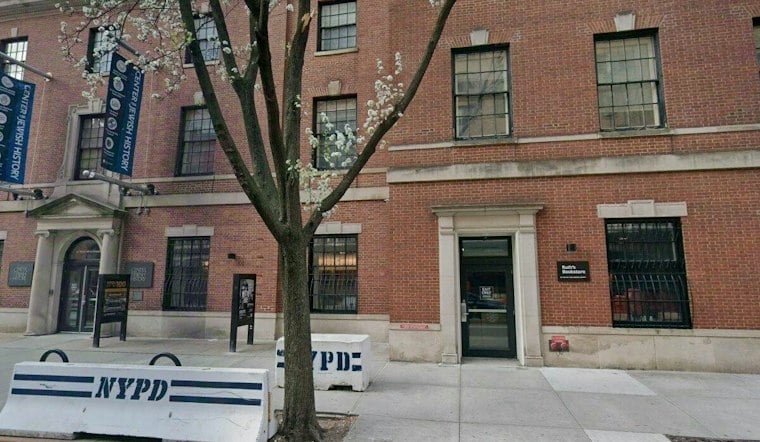
More than 30,000 Jews were rounded up and sent to concentration camps during Kristallnacht on November 9, 1938 — a night that occurred 88 years before this reporting. The experience arrives as the Center for Jewish History, partnering with the Conference on Jewish Material Claims Against Germany, prepares to formally announce Inside Kristallnacht in New York on November 9, 2026, ahead of a planned installation opening there on November 30.
Her Own Voice, Not an Algorithm's
The project’s question-and-answer feature relies on Knobloch’s own recorded responses, rather than answers generated by a chatbot. Gabriel Sanders, chief partnerships and engagement officer at the Center for Jewish History, said the tool is intended to complement, not replace, traditional Holocaust education. He emphasized that teaching and historical context—not the technology by itself—make an immersive experience meaningful.
Sanders also said classrooms equipped with VR headsets could connect with educators and students in New York and other communities for shared learning sessions built around the experience. Knobloch herself has emphasized the importance of reaching younger generations with her story — a goal that has taken on added urgency given recent events in Germany. Knobloch has publicly criticized Germany's far-right Alternative for Germany party, and death threats against her referenced the party's electoral success in September. Munich police opened an investigation after threats against Knobloch appeared as graffiti in a public park, according to the Jewish Telegraphic Agency.
A Parallel St. Louis Story
Ilse Altman, born Ilse Johanna Katz, was 16 and living near Kassel, Germany, during Kristallnacht. Her family’s home and synagogue were destroyed; the family’s belongings were ruined, and the synagogue’s Torah scrolls had been cut apart and its prayer books burned. Altman’s testimony also recounts how one neighbor refused them refuge while another let them hide in a root cellar.
Altman escaped Germany in September 1940 through a program helping Jewish children. She arrived first in Baltimore and later settled in St. Louis. Her testimony is preserved by the St. Louis Kaplan Feldman Holocaust Museum. The museum’s executive director, Myron Freedman, said the institution is interested in exploring technologies and approaches that could deepen visitors’ connections to Holocaust history.
Built on Prior AI Testimony Projects
Inside Kristallnacht incorporates archival footage, photographs, music, audio and researched historical context, according to the USC Shoah Foundation. Its question-and-answer feature uses natural language processing to match visitors’ questions with Knobloch’s prerecorded responses, and the experience is designed for museums, film festivals and classrooms. The USC Shoah Foundation reported that the experience was released on November 8, 2024. The Claims Conference has also created a free printable curriculum companion for teachers.
The project belongs to a broader effort to use recorded testimony in interactive formats. The USC Shoah Foundation’s Dimensions in Testimony initiative lets users ask questions and receive real-time responses drawn from prerecorded interviews with Holocaust survivors and other witnesses to genocide. Other projects have used immersive technology in different ways: the Illinois Holocaust Museum & Education Center made three VR documentaries featuring survivors Marion Deichmann, Rodi Glass and Doris Fogel available for home viewing on October 8, 2026. Produced with East City Films, they use 360-degree video, 3D environments, motion capture and spatial sound, according to XR Today. In the UK, the Holocaust Educational Trust’s Testimony 360 programme uses a virtual replication of a survivor for question-and-answer sessions; it was piloted in 15 schools with 800 students, according to The Guardian.
Local testimony and interactive formats
The St. Louis Kaplan Feldman Holocaust Museum says approximately 800 Holocaust survivors rebuilt their lives in St. Louis after the war, and their stories underpin its collection and educational mission. Its archives preserve testimonies, documents, oral histories and artifacts for current and future generations, according to the museum. Those details describe the museum’s holdings and mission; they do not specify how particular materials are used in student lessons. The USC Shoah Foundation describes Dimensions in Testimony as a separate initiative built around questions answered by prerecorded interviews with Holocaust survivors and other witnesses to genocide. Inside Kristallnacht, by contrast, centers on Knobloch’s memories of Kristallnacht and combines her recorded answers with reconstructed settings and historical materials; it is designed for museums, film festivals and classrooms. The Foundation’s description of Dimensions in Testimony focuses on its subjects and question-and-answer format, rather than specifying particular settings for its use.
Researchers have also flagged open questions about how such tools should be used. A study published in the journal Holocaust Studies examined the pedagogical challenges and ethical dilemmas of relying on virtual interactive survivor testimony in place of live testimony, including how survivors are chosen to participate and whether their testimonies can or should be edited for educational purposes. Those unresolved questions sit alongside the practical reality now facing St. Louis classrooms and families: a direct line, however technologically mediated, to a six-year-old girl who once walked through Munich on the worst night of her childhood.





