

























































St. Louis police could begin sending drones to certain 911 calls as early as this week, but the launch still hinges on a vote from the city's police oversight board. The St. Louis Metropolitan Police Department has built out a Drone as First Responder program through its Aerial Response Unit, which would let drones be dispatched to some emergency calls, but officials have not yet said which call types would qualify or what restrictions would apply.
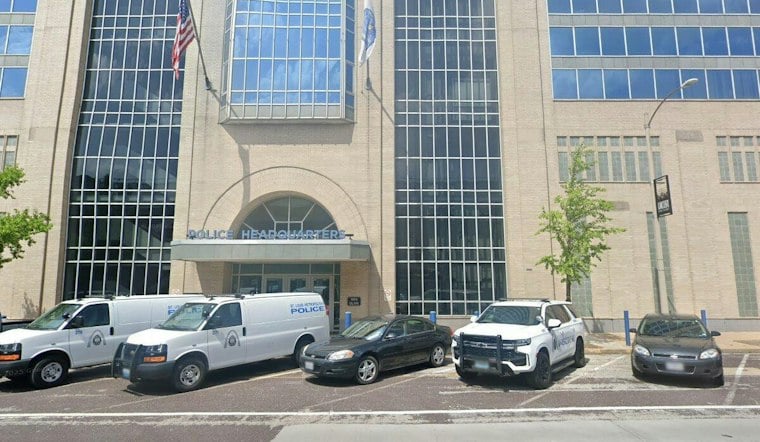
Police officials have scheduled a news briefing for Monday at police headquarters, where they plan to release the proposed policies and special orders governing drone use, according to KSDK. Officials are expected to outline safeguards meant to govern responsible use of the technology at that briefing, with additional program details also expected to be released Monday. The Board of Police Commissioners is scheduled to consider those drone policies on Wednesday.
How the Program Took Shape
The aerial unit's roots stretch back to spring. SLMPD first announced its proposal to launch an Aerial Response Unit on May 26, 2026, according to the St. Louis Metropolitan Police Department. The Board of Police Commissioners approved the broader Drone as First Responder program the very next day, but that approval came with strings attached — the board required the department to finalize its policies and hold community meetings before any drone could actually launch, per the same account reported by St. Louis Public Radio.
SLMPD has said it plans to deploy six BRINC drones, with docking stations spread across the North, Central, and South Patrol areas. As of the department's own materials, the Aerial Response Unit still was not using Drones as First Responders while executives worked to develop usage policies — language that matches what officials are now preparing to formally unveil.
What the Drones Would Do
According to the department's own description, the unit would assist on a variety of calls, including robberies, burglaries, and even mass-casualty situations. SLMPD has said a drone typically arrives at a scene in about 70 seconds on average, and the department has described the proposed technology as non-weaponized, intended to operate within strict public safety, legal, and transparency guidelines.
There is some confusion in the department's own public announcements about the timing of the board's initial May 27 vote: one SLMPD notice listed the special meeting to consider the proposed BRINC contract as starting at 9:00 a.m., while a separate SLMPD announcement listed the same meeting at 10:00 a.m. Neither version has been reconciled publicly.
Funding and the Regional Picture
The St. Louis Police Foundation has planned to spend $583,000 to purchase the six drones and a new radar system, covering the program's first year, St. Louis Public Radio reported. St. Louis is not alone in this push: St. Charles County's Council voted to purchase five drone systems for $900,000 over four years, and St. Charles County separately announced plans in May to use drones to respond directly to 911 calls, according to Hoodline's earlier coverage of the St. Louis County drone fleet rollout. St. Louis County Police, for their part, planned to begin with three drones capable of reaching an emergency scene in as little as 90 seconds, with an eventual expansion to six aircraft.
The push toward airborne policing is playing out nationally as well. More than 1,000 public safety agencies had received the FAA waivers needed to automate drone operations and launch similar programs as of February 2026, according to the Electronic Frontier Foundation. The organization reported that the FAA issued more of those waivers between April 2025 and February 2026 than in the previous seven years combined. The EFF has also noted that drone deployments elsewhere often respond to low-risk calls involving unhoused people, mental health concerns, and loud music — though SLMPD has not specified which call types its own program would cover.
Early Research on Response Times
Separately, a 2026 preprint on CrimRxiv described what researchers called the first two randomized controlled trials of Drone as First Responder programs, run concurrently by the Philadelphia Police Department and the Montgomery County, Maryland, Police Department. In the Philadelphia trial, assignment to a drone response reduced receipt-to-closure service time by 14.5 minutes, or 16.6%. The Montgomery County trial found that operating drone sites reduced median first-arrival time by 1.33 minutes, or 10%, across eligible calls. The study has not yet been peer-reviewed, and its authors label it a preprint.
Any St. Louis drone operations would also need to comply with federal rules: the Federal Aviation Administration states that all drones operated by public safety agencies must comply with Title 14 of the Code of Federal Regulations, according to the agency's public safety toolkit. Whether SLMPD has secured the specific waivers needed for its own planned operations has not been verified. For now, St. Louis residents will have to wait for Monday's briefing — and Wednesday's board vote — to learn exactly how and when the city's drones might take flight.




