

























































For 13 years, STEM NOLA has taught thousands of New Orleans kids to build miniature heart pumps and rain clouds in jars without ever having a true home of its own, bouncing between recreation centers and borrowed classrooms across the city. That could soon change. Founder Calvin Mackie says the science, technology, engineering and math education nonprofit has raised roughly $8 million toward a planned $20 million STEM Innovation and Workforce Development Center in New Orleans East, with construction now expected to break ground by the end of 2027.
A Long-Delayed Project Inches Forward
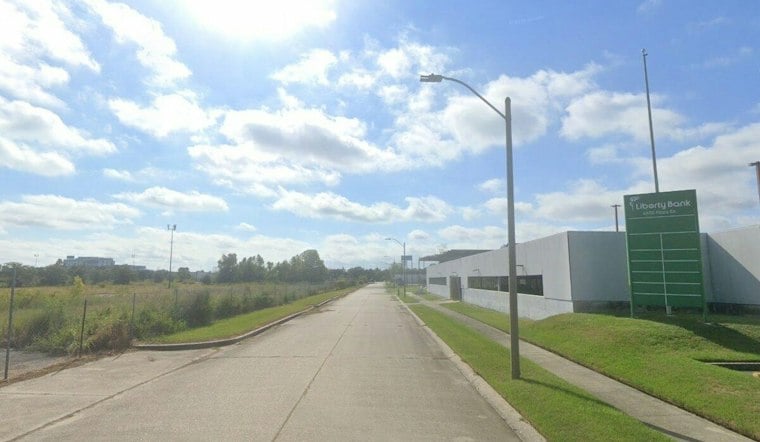
According to NOLA.com, the planned center's projected cost has doubled from the organization's initial plans drawn up in 2021. The 42,000-square-foot facility is meant to include laboratory space, classrooms, meeting spaces and state-of-the-art equipment, and would finally serve as STEM NOLA's headquarters and dedicated learning center. Ochsner Health has donated the land for the building, which sits on Plaza Drive adjacent to the Liberty Bank building where STEM NOLA currently keeps a training office and storage space.
Mackie, who founded and directs the organization, said STEM NOLA will build a center even if it has to scale back its ambitions to a $10 million version of the project. Funding commitments toward the center have come from Boeing, the Kellogg Foundation, the city of New Orleans and Louisiana state capital outlay funds, the station's report notes. Mackie said a dedicated location is needed for children interested in building robots, something STEM NOLA's current patchwork of public recreation facilities cannot fully support.
Teaching Without Walls
Until the center is built, STEM NOLA keeps running its programming wherever it can find space. On a recent Saturday, the group held a monthly STEM Saturday chemistry event at Gernon Brown Recreation Center in Lakeview that drew more than 130 children and 70 volunteers, per the same account. STEM NOLA is headquartered on Xavier University's campus and relies on many student volunteers from the university, offering mostly free family events, afterschool community learning centers in partnership with schools, and hands-on experiments that double as entry points into STEM careers.
Tracy Mackie, STEM NOLA's co-founder and Calvin Mackie's spouse, said a larger, central facility could make it easier to involve parents in the organization's activities rather than scattering families across rec centers citywide. The group's reach has been described differently across its own materials over time, with STEM NOLA citing more than 250,000 K-12 students engaged since December 2013 in one account, while its 2024 annual report cited 41,000 children served across 14 states that year alone.
One Student's Path Through the Program
Raleigh Brock joined STEM NOLA in second grade and has since built three solar-powered cars in eighth grade, won first place at Alice Harte Elementary's science fair, the Greater New Orleans Science Fair, and the junior division of the Louisiana Science and Engineering Fair in Baton Rouge. Brock became a paid STEM Fellow in ninth grade, a role STEM NOLA describes as paid learning and mentorship for high school students, and later traveled to Washington, D.C., with Mackie to represent New Orleans youth pursuing aerospace careers at the White House Space STEM Forum. Brock is now a freshman studying mechanical engineering at Tuskegee University.
STEM NOLA’s paid Fellows program is one bridge from classroom projects to career planning. In its 2024 impact tally, the organization counted 203 Fellows, and said 89% planned to major in a STEM field; the same tally recorded 4,015 volunteers, including 2,522 college students. Those figures point to a mentoring network around the hands-on events, not just one-off activities—one that a permanent center could give a more consistent base. STEM NOLA’s 2024 impact figures include those participation and volunteer totals.
Alyssa Brock, Raleigh's mother, said STEM NOLA helped put her daughter on a pathway to STEM. The U.S. Bureau of Labor Statistics projects STEM careers to grow 8% over the next decade, compared with 2.5% growth projected for non-STEM careers, a gap Mackie has pointed to in pressing for a permanent center that can expand STEM NOLA's capacity.
A Changing New Orleans East
The East’s industrial push is now organized around two proposed job corridors: a Michoud Innovation Corridor for aerospace, advanced manufacturing and research, and a Port and Logistics Corridor tied to maritime commerce and the future Louisiana International Terminal. That broader strategy could put STEM NOLA’s workforce mission alongside a changing local job market, though the city says sites still need preparation to attract investment. the city’s corridor plan identifies both areas and their intended industries.
The push for a dedicated building comes as New Orleans East itself is drawing fresh attention for advanced industry. Mayor Helena Moreno's administration is pursuing a plan to attract aerospace, advanced manufacturing and maritime transportation development to the area, including inventorying available land and addressing infrastructure and zoning issues. The NASA Michoud Assembly Facility is slated to receive a 50-acre industrial park aimed at manufacturing, distribution and other tenants.
Elsewhere in Louisiana, SpaceX has announced a $100 billion commitment to build a 125,000-acre launch facility in Vermilion Parish, about a three-hour drive from New Orleans, with company officials saying the first Starship launch from the site is planned for 2029. Closer to STEM NOLA's work, the Xavier Ochsner College of Medicine is set to open on Poydras Street in 2027, and Mackie said that opening could deepen the medical school's partnership with STEM NOLA.
The medical-school partnership has moved beyond a future plan: Xavier Ochsner College of Medicine received preliminary accreditation in October and opened its downtown teaching center in November, ahead of its first class in 2027. It is the only HBCU college of medicine in the Gulf South and the fifth nationally, a distinction that connects the project to a wider effort to expand who trains as a physician. Mackie’s hoped-for partnership would link STEM exposure for younger students with a nearby institution preparing future health professionals. the college’s 2027 inaugural class and accreditation milestone mark that next step.
For now, the organization is leaning on a newly launched fundraising campaign to close the gap between the roughly $8 million raised and the center's full projected cost. Whether that effort reaches $20 million or a scaled-back $10 million, Mackie has made clear STEM NOLA intends to finally build a home of its own after more than a decade spent teaching wherever it could find a room.




