

























































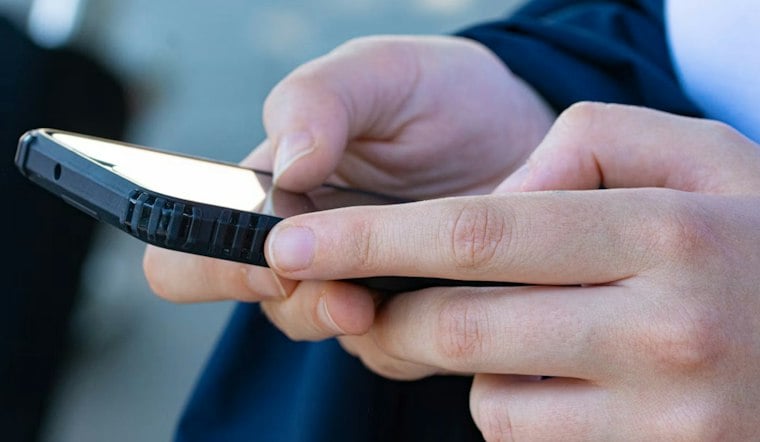
More than a year after Stillwater Area Public Schools told every student from kindergarten through 12th grade to put phones away from the first bell to the last, teachers say something has shifted in their classrooms. Homework is getting done. Kids are talking to each other again. But the district still cannot point to hard numbers proving the policy is actually boosting learning.
Stillwater adopted its bell-to-bell, all-day phone-free policy in August 2025, according to KSTP. Robert Bach, principal of Stillwater Area High School, told the station that the shift was noticeable almost immediately. “Right away there was an increase in homework completion from kids,” he said, adding that teachers also reported anecdotally an increase in student talk in classrooms.
The timing lines up with new national research. A report from the Center for Education Policy Research at Harvard University found that schools using strict cell phone bans with lockable pouches saw modestly higher math and reading achievement growth - the equivalent of roughly one to two weeks of additional learning per year. Researchers described the analysis as the first national study of school cell phone bans to use student-level achievement growth data in the United States.
Encouraging Signs, But No Proof of Cause and Effect
Bach was careful to note that Stillwater does not have data directly tying lower phone use to better learning after one year in the district. “For the most part, yes, students have responded great,” he said of the policy, while stopping short of claiming the anecdotal improvements amount to measured academic gains.
The Harvard researchers struck a similarly cautious tone, warning that schools should not expect large boosts in achievement immediately, even as they said the extra instructional time gained from reduced phone use could accumulate over time. That caution echoes findings from other corners of the research world. A 2026 working paper from the National Bureau of Economic Research found that average effects of phone-pouch adoption on test scores were consistently close to zero, though it noted modest positive academic effects in high schools, particularly in math, alongside small negative effects in middle schools. The same paper found little evidence that phone pouches affected attendance or clearly improved self-reported classroom attention or perceived online bullying.
A separate study released in April reported close to zero overall impact on test scores from phone pouches. As NPR pointed out, that April study had been peer-reviewed, while the newer research had not.
An Academic's Take: Encouraging but Not Conclusive
Dr. Jenny Hill, an associate professor in St. Cloud State University's Department of Education, said the Harvard findings are encouraging but not conclusive. She noted that other research has not found the same academic gains, and said she would like to see studies comparing strict bell-to-bell policies against the less restrictive phone rules used in other Minnesota districts.
Hill also argued that progress tied to phone-free policies should be measured by more than academics alone. That framing matches the rationale the Stillwater Area Public Schools Board of Education gave when it created the policy, with mental health listed as a central consideration. The board's written policy states its goal is to minimize the impact of personal electronic communication devices on student behavior, mental health, and academic attainment.
How Stillwater Is Tracking Student Experience
Bach said the district conducts its own surveys about student experience, regularly checking in on how students feel when they come to school. He described the goal as understanding the broader picture of student well-being, not just test scores, as the district continues monitoring the policy's effects.
Under Stillwater's written policy, personal devices are restricted from bell to bell, according to Stillwater Area Public Schools.
Minnesota's Patchwork of Phone Rules
Stillwater is far from alone in overhauling its phone rules. At Mounds View High School, Principal Rob Reetz told Minnesota Public Radio that classroom phone caddies and an entry routine have produced similar anecdotal results: “We've seen increased achievement and decreased concerns with behavior,” he said, as reported by MPR News.
Menahga High School required students to secure phones before school and keep them locked away until dismissal. In St. Paul, Central High School has taken an equally strict stance, requiring students to keep personal devices powered down, off their bodies, and in their bags from 8:15 a.m. until the school day ends at 3 p.m., according to MinnPost.
The broader trend is sweeping the country. As of November 2026, 41 states and Washington, D.C. - more than 80% of states - had statewide cell phone policies in schools, according to the Center for Education Policy Research at Harvard University. By the 2025-26 school year, the center's national survey of teachers and school staff found nearly 74% of schools reported having some form of bell-to-bell ban in place.
For now, Stillwater's experience sits somewhere between the optimism of the Harvard report and the caution voiced by researchers like Hill: students appear more engaged, homework is getting turned in, and classrooms sound a little livelier - but whether any of it shows up in test scores remains an open question the district has yet to answer with data of its own.



