

























































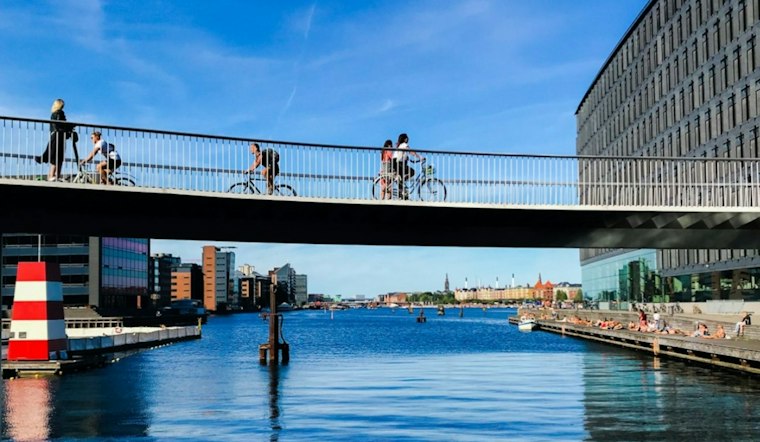
Summit's Common Council took a step forward on the Park Line trail project Monday, advancing a grant-funded $750,000 capital ordinance that would pay for new pedestrian and bicycle bridges over Ashwood Avenue and Russell Place. A construction bid for the project is reportedly ready to be awarded, though the ordinance still needs to clear a public hearing and final vote before any contract can move ahead.
According to TAPinto, the council introduced the $750,000 ordinance on Monday, Nov. 16, with the funding package combining $250,000 in federal Community Project Funding from the U.S. Department of Housing and Urban Development and $500,000 from the New Jersey Department of Transportation's Bikeway Program.
City official Chantal Landman said the city must amend its capital budget and approve a capital ordinance before the project can proceed, according to the same report. Landman also explained that grant funding becomes available at different stages of the project, with money disbursed partly when the bid is awarded and partly after the project is completed.
The state grant is part of a program designed to create new bikeway mileage, not simply maintain existing routes. NJDOT says eligible paths must be physically separated from motor traffic by open space or a barrier; the program also weighs whether projects connect to existing local or regional routes and improve safety and access to public facilities. Those priorities make the two crossings important links in the trail’s proposed pedestrian and bicycle route. NJDOT’s Bikeway Grant Program criteria describe the goals.
A Trail Years in the Making
The Park Line initiative aims to transform roughly 1.2 miles of former Rahway Valley Railroad property into a pedestrian and bicycle trail, with the Ashwood Avenue and Russell Place crossings intended to extend those connections through town. The trail is designed to link Summit neighborhoods with downtown and Briant Park, building on a pedestrian bridge over Morris Avenue that the city installed in October 2022.
The trail follows the former Rahway Valley Railroad, which carried passengers and freight for nearly a century before service ended in 1992; New Jersey bought the corridor in 1994. The city’s feasibility study says former Council President Robert Rubino championed the Park Line in 2014, and the Summit Park Line Foundation was formed as a nonprofit to help advance the project. Its mission is to assist Summit in creating a linear park along the abandoned rail line, connecting downtown with Briant Park.
Progress on the Ashwood Avenue span has already been visible on the ground. The Summit Park Line Foundation confirmed that the existing railroad bridge there was removed in April to make way for its replacement, with the old structure lifted by crane during the removal work, per a photo caption cited in the TAPinto report.
Bidding Setbacks Have Slowed the Timeline
The path to this point has not been smooth. The council has faced repeated bidding setbacks and construction delays for the Park Line's next phase, and the Park Line Foundation reported that the city had to reopen bidding after a bid submitted in September 2025 came in substantially higher than its appropriation and engineering estimate.
The latest bid round appears to have cleared a major hurdle: in an October council packet, Summit’s community services director said the city had received bids within its estimate from a qualified bidder after earlier unsuccessful attempts. But the city also sought a six-month extension from NJDOT because the next council meeting fell after the grant’s Nov. 11 award deadline. The city now anticipates construction in summer 2027, subject to fabrication timelines, according to its Park Line construction update.
Those delays mark a shift from the city's earlier timeline. In an October 2024 letter, the city of Summit projected that construction along the corridor from Morris Avenue to Russell Place would begin in spring 2025 and take six to nine months to complete.
With the ordinance now headed toward a Dec. 1 public hearing, Summit residents who have watched the Ashwood Avenue bridge disappear this year are left waiting to see whether the funding plan finally clears the last procedural hurdle standing between the Park Line and its next phase of construction.




