

























































A Swampscott police officer resigned after an internal affairs investigation sustained multiple findings against him, including harassment, untruthfulness and unauthorized use of a law-enforcement license-plate database. Officer John Cassidy stepped down following the probe into unauthorized law-enforcement database use, department officials confirmed.
According to Swampscott Tides, the internal affairs investigation sustained findings of conduct unbecoming, unauthorized personal ALPR use, untruthfulness, conflict of interest, violation of a direct order and administrative-leave provisions, and harassment. Cassidy had accessed law-enforcement computer systems without authorization, and the Lynn Police Department notified Swampscott officials of anomalies identified in an enhanced audit. Lynn and Swampscott police subsequently limited access to Lynn's Flock Safety system to Swampscott Criminal Investigation Division detectives, and Lynn ultimately revoked Swampscott's access to its Flock Safety camera system altogether.
Cassidy was placed on paid administrative leave on August 18, 2026, after Chief Ruben Quesada ordered the department's executive officer to conduct a comprehensive internal affairs investigation. “Technology can be an important tool in supporting public safety, but its use carries significant responsibilities,” Quesada said. He said officers are entrusted with sensitive information that must be used only for legitimate purposes. Quesada said, “We take violations of that trust seriously,” and referred to “appropriate oversight” and maintaining community confidence. He said citizens' civil liberties and privacy must not be compromised by those sworn to protect them.
No Flock-Specific Policy on the Books
A separate records review found that Swampscott Police does not have an ALPR policy specifically governing Flock Safety technology, the same outlet reported. The department's existing ALPR policy, established in 2015 and reviewed in 2023, was written for its own system rather than for partner-community Flock access. That policy restricts system use to legitimate law-enforcement purposes, assigns day-to-day management responsibility to the police chief, and limits operation and data access to sworn officers trained in its use.
Swampscott's own cruiser-mounted ALPR system has not functioned in approximately five years, the station reported, and is currently uninstalled and sitting in storage. The department said that the authorized use of Flock license plate readers through partner communities had been strictly limited to active law enforcement investigations. Swampscott has since implemented a full and extensive review of all departmental user access to outside law-enforcement computer systems, and officials said the department will ensure those responsible are held accountable.
How Flock's Network Works
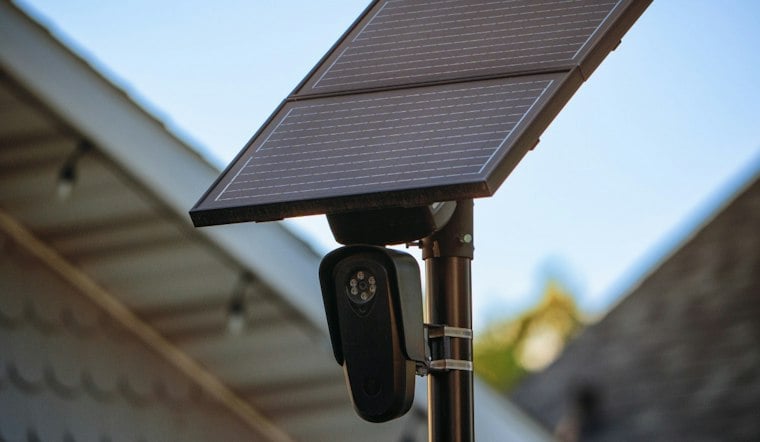
Flock Safety is a public-safety technology company best known for its automated license plate reader cameras, which record passing vehicles' plates along with characteristics such as make, model and color. Law enforcement officers can search Flock's vehicle database during investigations, and participating agencies can share that data with other departments, creating a larger searchable vehicle-sighting network. The company describes its system as an investigative tool rather than a live GPS tracker, and says the characteristic-search capabilities it offers can generate investigative leads that do not necessarily prove a person committed a crime. Flock also says data sharing is controlled by customer agencies and is not automatic.
Scrutiny Spreading Across Massachusetts
Swampscott's case lands amid a wider reckoning over Flock access across the state. In Lynn, an audit on August 12 identified anomalies and what officials called a concerning pattern in some system searches, as reported by The Boston Globe. Two Lynn police officers were placed on paid administrative leave as the department investigated alleged misuse of the technology, and Lynn has since restricted system use to supervisors holding the rank of lieutenant or higher while overhauling its policies. GovTech reports that Lynn's updated policy now requires weekly audits to identify unauthorized, excessive, or otherwise suspicious use.
Comparable cases have surfaced elsewhere in Massachusetts and beyond. In New Bedford, an officer was under internal investigation for allegedly using the city's Flock system to track her former girlfriend, with internal affairs reports cited by the New Bedford Light detailing that one plate was searched 658 times between January and late July, and a second plate 229 times between mid-June and late July. In Stow, the town pursued termination proceedings against Officer Jason Rogers over alleged misuse of Flock cameras and other law-enforcement databases; according to The Times of India, Rogers resigned hours before his scheduled August 26, 2026, termination hearing after an internal investigation found he had misused law-enforcement tools to track a former partner. Flock CEO Garrett Langley said the company was updating its privacy and security standards, including a mandate that all customers adopt a feature flagging abnormal audit-log activity, after acknowledging that recent audits had been associated with arrests of several officers accused of system abuse.
Outside Massachusetts, a Michigan City police officer resigned while under investigation after a routine audit of Flock system activity turned up searches that violated department policies, IPM News reported.
A Statewide Debate Over Surveillance
The Swampscott case unfolds against a backdrop of rapid, and increasingly contested, Flock expansion statewide. The ACLU of Massachusetts says more than 80 police departments across the state had active Flock contracts as of July 2026, and that Massachusetts police have spent more than $2 million in taxpayer funds on the technology over the preceding three years. Nationally, Flock had deployed nearly 90,000 cameras as of July 2025, according to the ACLU.
That growth has prompted pushback in some communities. The Boston Globe reported that at least nine of the roughly 106 Massachusetts communities that contract with Flock have recently cut ties after residents complained, with more municipalities debating whether to follow suit; Boston, for its part, ran a brief pilot with Flock but chose not to extend it.





