

























































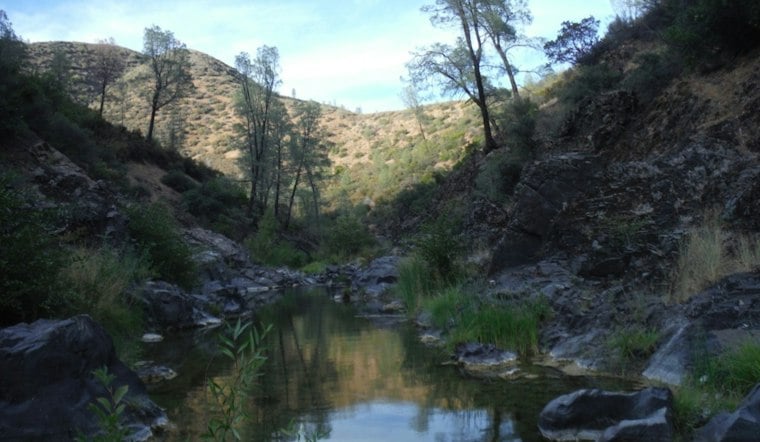
Three Northern California water companies that irrigate roughly 11,000 acres of orchards and pasture along Deer and Mill creeks just won a major round in a years-long fight over how the state handled 2021 drought cutbacks. A Ninth Circuit panel ruled that the companies were entitled to meaningful hearings before California curtailed their water diversions, reversing a trial judge's dismissal of their due process claims and sending the case back for further proceedings.
The ruling centers on Stanford Vina Ranch Irrigation Company, Los Molinos Mutual Water Company and Peyton Pacific, LLC, which according to the Ninth Circuit's opinion hold the majority of riparian water rights on Deer Creek and Mill Creek, both tributaries of the Sacramento River in Tehama County. In 2021 and 2022, the State Water Resources Control Board ordered 22 water rights holders on those creeks to reduce or stop diverting water, the court noted. The companies say they asked for evidentiary hearings and the chance to cross-examine state witnesses in both years and were turned down, receiving instead just five minutes during the public comment period at a 2021 meeting, according to their claims recounted in the opinion.
Why the Legislative-Versus-Adjudicatory Label Mattered
A trial judge in Sacramento had agreed with the state that the emergency regulations and curtailment orders were legislative in nature, meaning no individualized hearings were required. The Ninth Circuit panel disagreed, classifying the actions as adjudicatory instead. Adjudicatory decisions require notice and pre-deprivation hearings because, unlike broad legislative rules, they target a few persons on an individual basis, the panel found.
Judge Lawrence VanDyke, writing for the panel, explained that whether an action is legislative or adjudicatory turns on the character of the action rather than its label, and concluded that due process required a meaningful pre-deprivation hearing that the plaintiffs did not receive. VanDyke wrote that the public comment period the companies were given did not amount to a meaningful hearing. Judges John Owens and Danielle Forrest joined the decision, as reported by Courthouse News.
Takings Claims Rejected, But Due Process Claims Live On
While the companies scored a win on due process, the same panel upheld dismissal of their Fifth Amendment takings claims in a separate, concurrently filed disposition, per the Ninth Circuit's opinion via Justia. The court found the plaintiffs could have instead sought compensation through an inverse condemnation lawsuit in California state court. The appeal was argued and submitted in August 2026, with the opinion filed this week.
The dispute traces back to April 2021, when Governor Gavin Newsom declared a drought state of emergency after a lack of winter storms left reservoirs depleted, Courthouse News reported. State agencies took action during that emergency to protect salmon, steelhead and other fish, which drove the curtailment orders affecting water rights holders along Deer and Mill creeks.
Companies Say Cutbacks Have Become a Pattern
Attorney Jackson Minasian, representing the companies, argued at the Ninth Circuit hearing that California had stopped the diversions four times in seven years. Minasian said future droughts and curtailment orders should come with a due process hearing and compensation for the companies. He also pushed back on the state's fish-protection rationale, saying the salmon and steelhead come back every year and that the state is taking it for free and keeps doing it.
Representatives for the California Attorney General's Office did not immediately respond to requests for comment, according to the reporting.
A Shift From Earlier Water Rights Rulings
The Ninth Circuit's conclusion marks a departure from a 2020 California appellate ruling in a related Stanford Vina case, which upheld the State Water Board's use of curtailment orders to implement emergency regulations without any evidentiary hearing for impacted water users, according to a summary from Bick Law LLP. That earlier decision found neither federal nor California constitutional due process guarantees required a hearing before adoption of a regulation governing reasonable water use.
A separate 2022 California appellate decision limited the Board's authority to curtail certain pre-1914 appropriative rights based solely on insufficient water, though that ruling's summary noted it did not foreclose the agency's ability to adopt emergency regulations or rely on the public trust doctrine or other authority, per Nossaman LLP. A separate 2015 State Water Board dispute in the Sacramento-San Joaquin River Delta had similarly directed holders of certain post-1903, pre-1914 appropriative rights to immediately stop diverting water due to insufficient supply, that same summary noted.
For now, the Ninth Circuit's reversal sends the due process claims from Stanford Vina Ranch Irrigation, Los Molinos Mutual Water and Peyton Pacific, LLC back to the lower court for further proceedings, with the takings claims off the table.





