

























































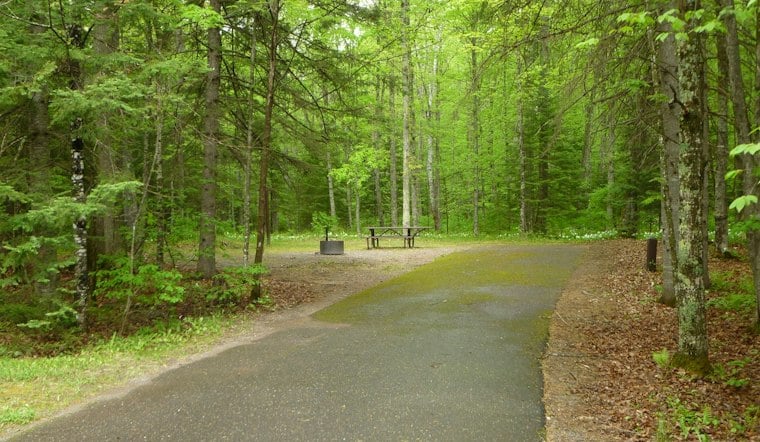
Three environmental organizations have filed a federal lawsuit against the U.S. Forest Service, arguing the agency illegally approved a sprawling logging project on the east side of Michigan's Ottawa National Forest in the Upper Peninsula. The groups say the Silver Branch Vegetation Management Project, which the Forest Service announced in July it would move forward with, violates federal environmental law and the forest's own management plan.
According to Michigan Advance, the organizations argue that approving the vegetation-management project violates the National Environmental Policy Act, claiming the Forest Service failed to fully evaluate the environmental impacts of the planned timber harvest. The lawsuit also alleges the agency authorized logging on Ottawa lands designated unsuitable for timber harvest, which the groups say runs contrary to the forest's management plan and violates the National Forest Management Act as well.
Per the same outlet's reporting, the groups are asking the U.S. District Court for the Western District of Michigan to vacate the Forest Service's environmental assessment and its approval of the project. The agency did not respond to a request for comment before the story published, and the station says it plans to update the story when a response is received.
What the Project Actually Involves
Reporting on the lawsuit describes the planned timber harvest as covering nearly 80,000 acres, with more than 25,000 acres subject to clearcuts and another roughly 55,000 acres subject to selection harvests, thinning, and other logging methods, according to the same coverage. A December 2025 environmental assessment for the project, reviewed via a document hosted by bridgemi.com, separately describes the Silver Branch Vegetation Management Project as spanning a total project area of approximately 177,772 acres, including 127,828 acres of National Forest System lands, with total proposed vegetation-management harvest activities listed at 94,863 acres. The Forest Service's stated goals for the 30-year project, per the agency, include protecting clean water, supporting wildlife habitats, and strengthening recreation opportunities.
The lawsuit alleges extensive clearcuts would worsen existing deer browsing and tree regeneration problems in the forest. It also states that endangered wolves and other wildlife could be displaced by the noise and human presence tied to the logging, with that displacement potentially lasting up to 10 years. The complaint further claims the planned logging could harm the endangered northern long-eared bat.
From Objection to Lawsuit
The legal fight did not start this month. On June 1, the Environmental Law & Policy Center and five other organizations filed a formal objection to the Forest Service's draft decision, according to the Environmental Law & Policy Center. Joining ELPC in that objection were Environment Michigan, the Michigan Environmental Council, the Michigan League of Conservation Voters, the Natural Resources Defense Council, and the Upper Peninsula Environmental Coalition — several of the same groups now listed among the three organizations behind the federal lawsuit.
At the time of the June objection, ELPC described the plan as seeking to clear-cut 25,000 acres of aspen and paper birch trees and heavily log another 55,000 acres. The Forest Service's response came through Upper Michigan's Source, which reported the agency said it had completed a full environmental analysis that did not identify significant adverse effects, and that the project includes mitigation measures. The Forest Service has determined, per its own assessment, that the project would have no significant environmental impact — a position the environmental groups continue to dispute.
A Voice From the Coalition
Kelly Thayer, senior policy advocate for ELPC, has argued that a thorough environmental review helps ensure responsible logging on federal lands. Thayer said reasonable steps can avoid irreversible damage and make a bigger impact on the community, and added that Trump administration attempts to streamline operations without considering consequences have repeatedly failed.
A Similar Fight Out West
The Silver Branch dispute isn't an isolated case. A trio of conservation groups sued the Trump administration over a separate logging plan in Washington state, according to Courthouse News Service, accusing the U.S. Forest Service and the Fish and Wildlife Service of violating multiple federal environmental laws in approving the Midnight Restoration Project. That 53,000-acre project near Twisp, in the Okanogan-Wenatchee National Forest, reportedly authorized logging on about 25,000 acres and was challenged over alleged harm to northern spotted owl habitat and critical bull trout habitat.
Whether the Michigan lawsuit will follow a similar path through the courts remains to be seen. For now, the fate of the Silver Branch Vegetation Management Project — and the wolves, bats, and old-growth stands the plaintiffs say are at stake — rests with a federal judge in western Michigan.





