

























































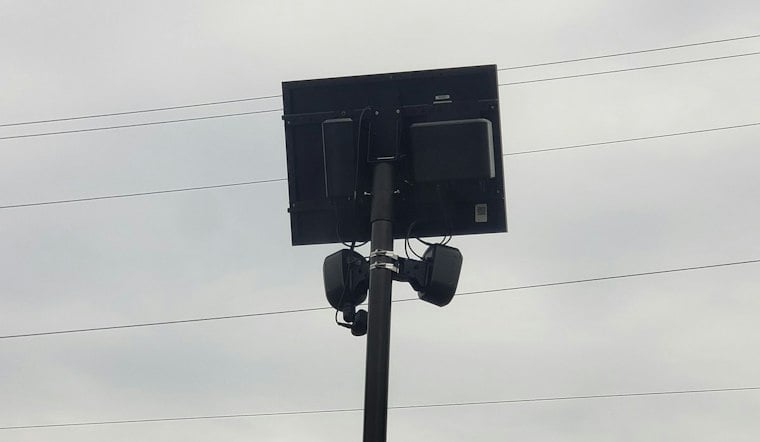
A South Carolina town of just 5,000 people has quietly built one of the densest license-plate camera networks in the region, leasing 56 Flock Safety cameras that blanket nearly every major road running in and out of Cheraw. The town pays roughly $150,000 a year for the system, with $155,000 budgeted for the lease in 2026, and the cameras now cover essentially every major road going both directions, with some coverage even overlapping in spots.
That density puts Cheraw among the towns with the highest per-capita ratio of automated license plate readers among the contracts reviewed, according to WBTV, which examined dozens of Flock Safety contracts across greater Charlotte and upstate South Carolina as of November. The station reported finding at least two separate sets of cameras clustered close together along State Road in Cheraw, with neighborhood crossroads sitting between the two groups. Cheraw has also added cameras to the inner part of the city, well beyond its main thoroughfares.
How Cheraw Stacks Up Against Bigger Neighbors
The comparison becomes stark when set against other towns the station reviewed. Rock Hill, a city of 75,000 whose camera count was based on its most recent invoice, runs just 22 cameras. Monroe, population 42,600, operates 10 cameras plus an additional $50,000-per-year software contract. Tega Cay, with 14,000 residents under a five-year contract signed in 2023, has 9 cameras, while Pineville's 11,800 residents are covered by 7 cameras under a five-year deal also signed in 2023. Clover, population 6,600, has 6 cameras under a two-year contract signed in 2025, and Norwood, with just 2,300 residents, runs only 2 cameras under a two-year 2024 contract.
Gastonia offers a different kind of comparison. The city's population of 87,000 is set to be covered under a new contract expanding its network to 130 ALPR cameras and 70 live cameras, a ratio the station described as one camera per 435 people. WBTV's camera counts represent municipally funded cameras paid for directly through town and police department budgets, and exclude privately funded cameras, which can often still become available to police through the Flock network.
Police Credit Cameras With Major Cases
Cheraw Police Chief James Henderson, newly sworn in, said his department uses the system strictly for investigative purposes. He described the cameras as the department's eyes and ears, and said the network has paid off in concrete ways. “It was such a success on recovering stolen vehicles, missing persons, helping other agencies with homicides,” Henderson said of the system's track record, which also includes at least one internal department investigation. Cheraw won a Municipal Association of South Carolina achievement award in 2023 specifically for the extensive camera network it had already built by then.
Rob Wolfe cited three missing-person cases and a homicide case as evidence the system works, calling it a force multiplier for the department. Not everyone in town is convinced the scale is justified. Resident Allen Walker said the cameras make him feel a little safer, but also called 56 cameras excessive and concerning, while a passerby told the station that number of cameras simply isn't needed to monitor license plates.
Legal Fights Are Reshaping the Technology Nationwide
Automatic license plate reader cameras are facing scrutiny and legal challenges nationwide, and Cheraw's network sits inside that larger fight. Most legal challenges so far have resulted in rulings that the cameras do not violate constitutional protections against unlawful search and seizure, but that consensus cracked in October when a judge in Oklahoma ruled that the sheer scale of surveillance these systems offer could trigger Fourth Amendment protections, ultimately excluding camera evidence from that case. A federal judge there separately found that a police search of Flock's license-plate-reader system amounted to what the judge called indiscriminate mass surveillance, according to the Washington Post.
A separate case out of Virginia is now headed to appeal, with citizens challenging a lower-court ruling that found Flock camera use there was not comprehensive enough to infringe on privacy rights. The Fourth Circuit Court of Appeals has set oral arguments for December, and law enforcement groups, including some from North Carolina, have filed amicus briefs defending the technology. Jeff Welty, a UNC School of Government professor tracking the court cases, said the Virginia case differs because community residents there allege daily rights violations stemming from the constant gathering of their license plate information, and that courts broadly are wrestling with whether people have a reasonable expectation of privacy in their own location.
The debate over scale isn't confined to the Carolinas. Flock Safety operates about 120,000 automated license plate readers across the country, according to a report from Fox 8, which detailed how investigators in Louisiana's St. Tammany Parish used Flock data earlier this month to track a murder suspect after his vehicle was detected crossing into Washington Parish. In a separate Louisiana case, investigators said a camera recording of a suspect's license plate near Pelican Park helped tie him to a homicide. Those cases underscore the same tension playing out in a town of 5,000 in the South Carolina Pee Dee: cameras that police say solve crimes, and residents who are still deciding how many of them their town actually needs.




