

























































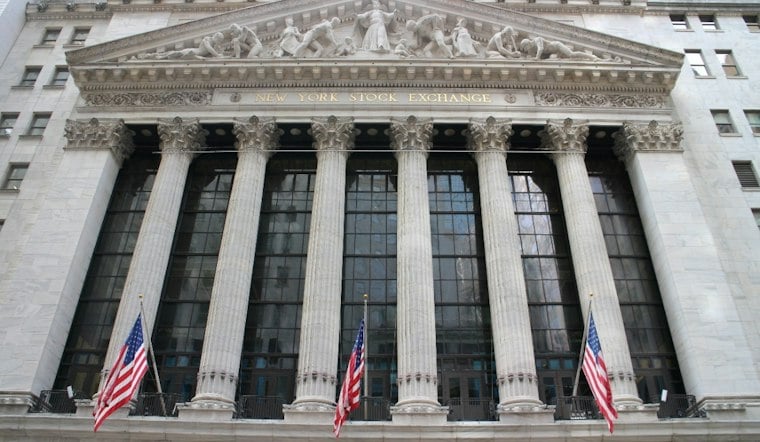
A new platform for trading tokenized versions of public company stock opens Monday to eligible U.S. customers, but it arrives trailing a wave of corporate objections that has scrambled its launch roster. OKXICE, the venture jointly operated by Intercontinental Exchange, which owns the New York Stock Exchange, and crypto exchange OKX, confirmed 113 assets for rolling launches, including exchange-traded funds and products, after giving issuers a 30-day window to object to having their shares tokenized.
A Launch Clouded By Conflicting Numbers
Exactly how many companies used that window to say no depends on which account you believe. As reported by CNBC, 56 of the 62 companies initially targeted by OKXICE objected to having their shares tokenized and traded on the platform, based on public notices, and the platform received objections from even more companies outside its original roster as of Monday. CoinDesk put the same tally at 56 of 62 companies objecting as of Nov. 6, while Forbes separately reported that 67 companies had objected by early November, including all of the so-called Magnificent Seven — a gap between the two counts that neither report reconciles.
The platform's inventory has proven just as murky. Forbes has described OKXICE as planning to list more than 70 assets at launch, including shares of Coinbase, Circle, Robinhood and Strategy alongside 59 Direxion exchange-traded funds, while a TechTimes report said a November 20 notice listed just six stock tokens — Coinbase, Securitize, Strategy, BitGo, Robinhood and Circle. Neither figure has been confirmed as the final day-one lineup. Securitize, OKX's tokenization partner, is among the first companies being listed on the platform, alongside participants including Fidelity Investments, Direxion, eToro, Strive and Vida Global.
Why So Many Companies Said No
The objection mechanism traces back to a federal innovation exemption that took effect in September, temporarily permitting trading of certain tokenized stocks while requiring trading platforms to notify underlying issuers and give them a chance to object — an objection that, once filed, blocks that issuer's shares from being tokenized. People involved in the issuer discussions said the 30-day window left companies little time to decide whether to participate, per CNBC's reporting.
Seth Ginns, chief investment officer at Franklin Templeton's crypto arm, said many issuers were open to exploring tokenization but hesitated amid competing priorities, attributing many of the rejections to that same compressed timeline. Ginns said issuers cited earnings season, the midterms, and other competing activities during the objection window as reasons they could not engage before time ran out.
Carlos Domingo, chief executive of Securitize, offered a related explanation: some issuers' digital-asset heads did not even know who within their own companies had rejected the listing. Domingo attributed many of the rejections to the novelty of the process and venues and a general lack of understanding of what the notification actually meant, and said he expects more issuers to participate once companies become familiar with the model.
Investor Relations Teams Push Back
Ran Grushkowsky, chief executive of global payout platform MassPay, said MassPay clients were among OKXICE's initial targets and were concerned about the effect of round-the-clock trading on stock value and investor-relations strategies, including the timing of corporate announcements. Grushkowsky said company executives were often excited about the innovation and potential investor interest, even as their investor-relations teams pushed back.
OKXICE co-chair Andrew Cuomo has framed the resistance as a matter of unfamiliarity rather than lasting opposition. Cuomo said many companies are simply unfamiliar with tokenization and have not yet had the chance to understand its consequences, though he said companies are becoming more receptive as they learn about the prospect of 24/7 global access. He has also said the shift to a round-the-clock global marketplace would transform market structure, according to CNBC's reporting, which also noted that some regulated trading venues can operate without issuer consent at all — a structural reality that has fed the standoff between exchanges and the companies whose shares they want to tokenize.
Nasdaq And Bullish Chart Issuer-First Paths
While OKXICE presses ahead amid the pushback, two rivals are betting that giving issuers more control from the outset will prove the safer route. Nasdaq announced in September that its venture arm would invest $100 million in Payward, the parent company of Kraken, as part of a plan to launch an issuer-centric tokenized-equities model together in the second quarter of 2027. Under the design Nasdaq has proposed, according to a release from Nasdaq, a transfer of the token would represent a transfer of the underlying security itself, with blockchain records folded into issuers' official share registries; Nasdaq expects the program to be operational, with additional blockchain-based services available to issuers, starting in the first half of 2027. Nasdaq and Payward have said the collaboration is meant to advance tokenized equities while preserving the rights and protections intended for issuers and investors.
Bullish is pursuing a similar issuer-led approach through its roughly $4 billion acquisition of Equiniti, seeking to combine its exchange, custody and trading operations with Equiniti's shareholder-recordkeeping business into a single issuer-focused tokenization platform. Former NYSE president Stacey Cunningham, now involved in that effort, has said companies need a clearer reason to participate in tokenization than simply making their stock available for round-the-clock trading, the same CoinDesk report notes. Bullish and Equiniti said they hosted issuers and capital-markets leaders at the New York Stock Exchange on Oct. 27 to discuss issuer priorities around tokenized-securities infrastructure.
That outreach appears to be paying off in at least one respect: a coalition the two companies formed, the Issuer Token Coalition, grew to 12 firms after DRW, Flow Traders, SoFi and Superstate joined, according to a release distributed on GlobeNewswire. The coalition describes itself as a working group meant to advance the infrastructure, standards and commercial ecosystem needed to support issuer-sponsored tokenized securities, though participation remains non-binding and does not require any member to actually issue or list a security.
What Tokenization Promises — And What It Risks
The appeal driving all of these efforts is the same: tokenization enables round-the-clock stock trading, shortened settlement times, fractional ownership, and easier use of securities as collateral, according to CNBC's reporting. Exchanges are racing to retain control of trading and market infrastructure as blockchain-native venues push into traditional finance.
But the model carries real tradeoffs. An IMF finding cited by Forbes found that tokenized stocks were about 1.5 times as volatile as the same shares trading in traditional markets, partly because more than half of their trading activity occurs while U.S. markets are closed. Clear Street analyst Owen Lau has said tokenization expands the total addressable market for securities trading but may not generate sufficient incremental revenue in the near term, a caution that tempers some of the industry's more sweeping predictions even as OKXICE, Nasdaq and Bullish each stake out their own version of what a tokenized stock market should look like.





