

























































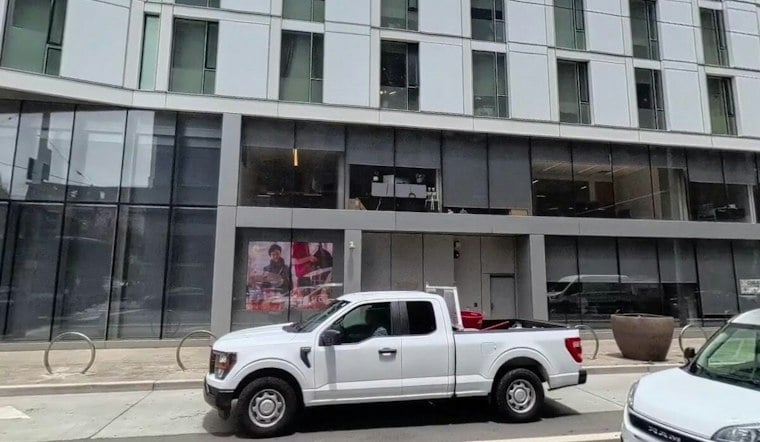
A vacant office building from the 1970s in Sunnyvale's Moffett Park neighborhood could soon make way for two apartment buildings holding 543 units, under a new proposal from developer TruAmerica. Nearly half of those units, 239 in total, would be set aside as income-restricted housing.
The 50,000-square-foot office building currently sitting on the site would be torn down to clear space for the residential project, according to the Silicon Valley Business Journal, which first reported the proposal. The outlet's reporting is the only available account of the specific plan, including the unit count and the location in Moffett Park.
Part of a Wider Bay Area Pattern
Sunnyvale isn't new to this kind of trade-off. The city has already approved other projects that call for tearing down existing office buildings to build housing in their place, according to the San Francisco Chronicle, which examined similar shifts happening across the region. That same reporting found office vacancy rates above 30% in cities along the Interstate 680 corridor, a vacancy crunch that has pushed cities to rethink what to do with empty office space.
San Ramon offers the starkest example of that shift. The Chronicle reports the Tri-Valley city already had 1,501 housing units either under construction or approved on land where office buildings were coming down, with eight of the city's current residential projects requiring demolition of old office buildings, three of them within the Bishop Ranch business park. San Ramon has gone as far as approving a master plan to demolish Chevron's former offices entirely to build 2,452 units on that site, while the Canopy development in Bishop Ranch is slated to raze two office buildings for 416 units, though construction there had not yet begun as of the Chronicle's reporting.
Other South Bay and San Francisco Projects in the Works
The trend isn't limited to the East Bay. A proposed housing development at 3350 West Bayshore Road in Palo Alto envisions a seven-story apartment building along with an adjacent cluster of townhomes, according to the Mercury News.
San Francisco has leaned on financial incentives to encourage similar conversions downtown. The city has cut the transfer tax on qualifying building sales from 6% to 0%, exempted projects from affordable-housing requirements, and agreed to share a portion of annual property-tax revenue with developers for 30 years, according to ABC7 News. Developer Marc Babsin told the station those incentives cut development costs by roughly one-third. One proposed conversion at 150 Hayes St. would create 104 rental apartments at an estimated cost of $450,000 to $500,000 per unit, the station reported, and an architect interviewed for that story noted that smaller, older office buildings tend to convert to housing more easily than the large floor plates typical of buildings constructed in the 1960s and 1970s.
Even so, San Francisco's pipeline remains modest: about 300 residential units are currently moving through the city's office-conversion pipeline, compared with roughly 15,000 in New York City and about 8,500 in Washington, D.C., per ABC7's reporting. A report cited by the New York Times in October said the city had not completed a single office-to-housing conversion despite hopes that the strategy would meet housing demand and revive empty downtowns.
No timeline, site plan details, or approval status for the TruAmerica proposal in Moffett Park have been made public beyond the initial report. It remains to be seen whether Sunnyvale moves the project forward, and at what pace, as it joins a growing list of Bay Area cities weighing whether empty offices can become the region's next wave of housing.




