

























































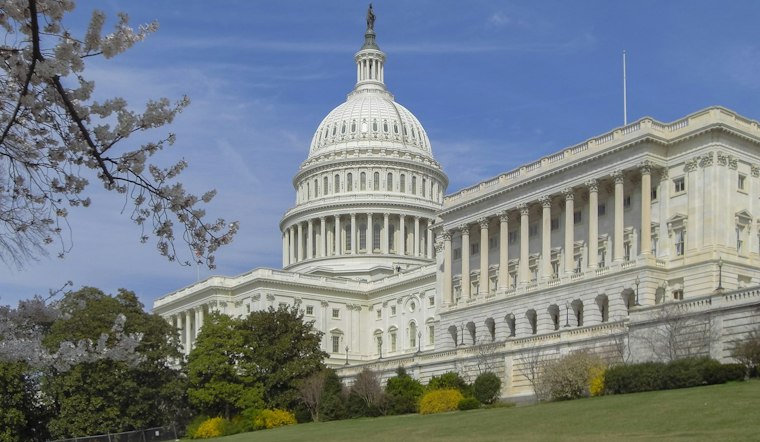
Michael LoSapio, President Trump's nominee to lead the Cybersecurity and Infrastructure Security Agency, told senators on Thursday that he does not believe the Jan. 6, 2021 breach of the U.S. Capitol was an attack, and he declined to say who won the 2020 presidential election. The exchange played out during his confirmation hearing before the Senate Committee on Homeland Security and Governmental Affairs, where LoSapio is seeking to take over an agency that has gone without a Senate-confirmed director for years.
No, I Don't Believe It Was an Attack
Pressed on his view of Jan. 6, LoSapio was blunt: “No, I don't believe it was an attack,” he said, according to Nextgov/FCW. When Sen. Richard Blumenthal of Connecticut pushed further, LoSapio explained his reasoning by distancing himself from the events entirely. “I wasn't involved in politics. ... I know what I saw on the news,” he said, per Cybersecurity Dive.
Blumenthal also asked LoSapio who won the popular vote in the 2020 presidential election. LoSapio said he would not answer the question, telling the committee that his only involvement in that election was voting for Trump. Cybersecurity Dive's account of the hearing states that LoSapio refused to acknowledge that Joe Biden won the 2020 election.
A Palantir Executive Headed for a Leaderless Agency
LoSapio currently serves as chief information security officer at Palantir, the artificial intelligence firm, and is nominated to lead an agency charged with protecting the nation's critical infrastructure, including dams, nuclear power plants, banks, and voting systems. Formed in 2018 and nested within the Department of Homeland Security, CISA has been without a Senate-confirmed director since the start of the Trump administration, according to Cybersecurity Dive's reporting — a gap that opened after Jen Easterly left the agency when Trump returned to office in 2025. Nick Andersen has led the agency in an acting capacity since February 2026.
LoSapio would not be the first Trump CISA pick to run into trouble. Sean Plankey withdrew his own nomination in April 2026 after it stalled for more than a year, saying at the time, “After thirteen months since my initial nomination, it has become clear the Senate will not confirm me,” according to POLITICO. That outlet reported that resistance from Sen. Rick Scott of Florida had stalled Plankey's nomination for over a year.
Senators Signal Holds as Republicans Race the Clock
Sens. Ron Wyden and Thom Tillis separately said they plan to place holds on LoSapio's nomination following his remarks, the same Nextgov/FCW report states. A hold signals that a senator will object to moving a nomination quickly by unanimous consent, though Senate leaders can still pursue confirmation if they have the votes to do so. Republicans are seeking to confirm Trump's picks before Democrats take power in Congress early in 2027, adding urgency to the push even as the hold threats loom.
Asked about the administration's proposed $385 million cut to CISA's budget, LoSapio did not commit to a position, telling the committee, “I will come back to this committee with a gap analysis,” per Cybersecurity Dive. The White House did not immediately return a request for comment on LoSapio's remark, The Virginian-Pilot reported, citing Associated Press coverage of the hearing.
CISA's Role in Elections Faces Fresh Scrutiny
CISA plays a key role in protecting U.S. elections, a responsibility that has drawn renewed attention after earlier staffing reductions. State officials have said those cuts weakened their relationships with the agency and their access to federal cybersecurity expertise, according to a separate Nextgov/FCW report. CISA's 2026 election-security plan names its 10 regional directors as election security advisers, but that same report notes the plan does not specify how many employees will actually carry out the work.
Former CISA Director Chris Krebs — whom Trump fired after Krebs highlighted election officials' statement calling the 2020 election the most secure in American history — told NPR that malicious actors have shifted their focus away from hacking elections and toward online disinformation operations. Krebs described recent elections discussed in that interview as “as secure as any election in the last several years,” pointing to resilience measures such as paper ballots that allow voting to continue manually if technical problems arise, according to NPR.





