

























































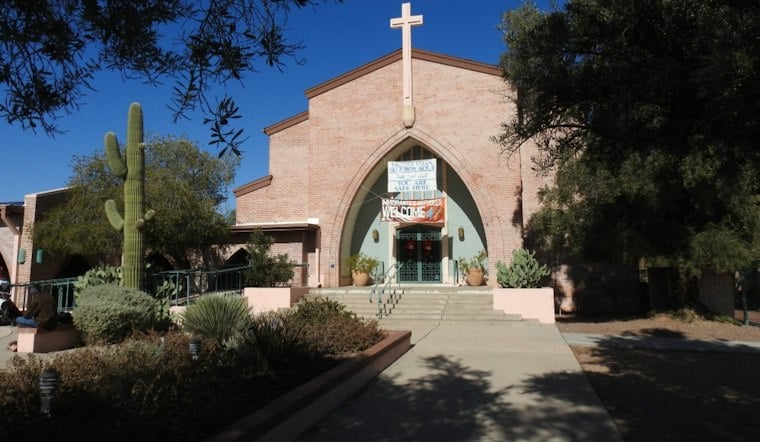
A Pima County Superior Court judge has ordered neighbors and a Tucson church to decide whether they are willing to try mediation or a settlement conference in a lawsuit over the church's longtime homeless outreach program. The order from Judge Cynthia Kuhn comes after a group called Friends of Blenman-Elm sued Grace St. Paul's Episcopal Church, arguing that the services it offers to homeless and low-income people have turned their residential neighborhood unsafe.
Lawsuit Targets Joseph's Pantry Operations
According to Arizona Daily Star, Friends of Blenman-Elm filed suit against the church, alleging that its Joseph's Pantry services constitute a nuisance under the law. The group has requested a preliminary injunction that would shut down or relocate the church's services, which take place three times a week at the church's property on East Adams Street. Grace St. Paul's describes those offerings on its own site as monthly food boxes, daily snack bags and toiletries for people who are unhoused or living on low income, according to Grace St. Paul's Episcopal Church.
Per the church's website, Joseph's Pantry currently operates Monday, Wednesday and Friday from 9 a.m. to noon, and the ministry has served the Tucson public for more than 20 years. The site also notes that guests can use two showers on a first-come, first-served basis, with towels and toiletries provided. A separate listing from 211 Arizona adds that the church's social services extend to pet food and assistance getting state identification and Arizona birth certificates.
Neighbors Describe Conflicting Experiences
At a hearing on November 5, Blenman-Elm residents testified that the church's services have made their residential neighborhood unsafe, reporting violent threats, public drug use, homeless people sleeping on private property, and fires, the Arizona Daily Star reported. Friends of Blenman-Elm said the church's services negatively affect its direct neighbors.
But not every account at the hearing matched that picture. Other nearby residents testified the same day that they frequently pass the church without experiencing significant problems, per the Star's report. The civil complaint itself draws a distinction between residents, noting that those living east of North Tucson Boulevard experience different conditions than the church's direct neighbors.
Church Points to Security and Cleanup Efforts
The Rev. Steve Keplinger, the priest who leads Grace St. Paul's, said the church has implemented security measures and uses a security service, according to the Star's account of the proceedings. The church also conducts daily trash cleanups, bans drug users from its campus, and moves encampments when they appear, per the same report.
The church's own guidance to pantry visitors reinforces that stance: it directs people not to come under the influence of, or in possession of, drugs or alcohol, according to Grace St. Paul's Episcopal Church. Judge Kuhn's order now leaves it to both sides to decide whether mediation or a settlement conference could resolve the dispute before it proceeds further in court.
A Backdrop of Shrinking Shelter Capacity
The fight over Joseph's Pantry unfolds against a tightening homeless-services landscape countywide. Pima County's January Point-in-Time Count identified 2,130 people experiencing homelessness, about 4% fewer than the year before, according to tpch.net. The same count found 881 shelter beds available against 861 people counted staying in shelter.
That capacity has been shrinking: Pima County lost nearly 200 shelter beds between 2025 and 2026, largely attributed to reduced Arizona Department of Housing funding, the tpch.net report found. The state housing department had previously supported 117 emergency shelter beds through hotel vouchers, underscoring how community food and shower programs like Joseph's Pantry can become more heavily relied upon even as formal shelter options contract.





