

























































For 26 years, he was just a burned body found in a torched vehicle behind a business near Broadway and Kolb. Now he has a name: Jack Lee Prehoda, a 61-year-old Marine veteran whose murder in Tucson has gone unsolved since January 2000. Investigators say genetic genealogy finally cracked the case open, though the person responsible for his death has not been identified publicly.
A Body Burned Beyond Recognition
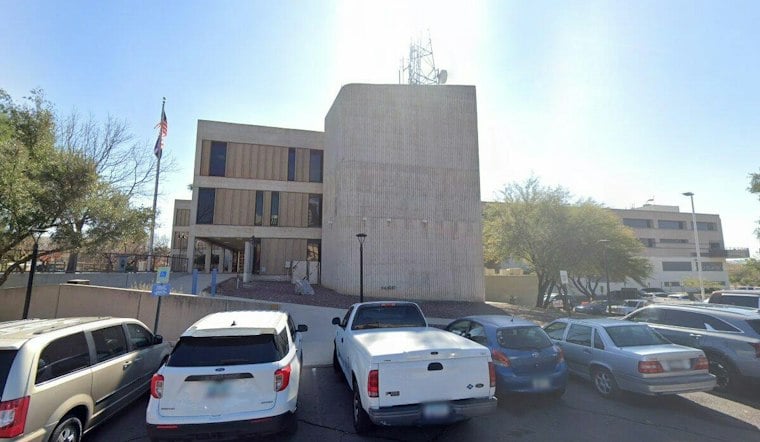
In January 2000, a vehicle was set on fire behind a business near Broadway and Kolb, according to KOLD. Inside, police found a body burned beyond recognition, with only a few remnants of clothing left to work with. For over two decades, that was essentially all anyone had to go on.
Investigators initially believed the victim was a male somewhere between 50 and 65 years old, based on the limited physical evidence available at the scene, according to David Miller, who said as much per the same KOLD report. That rough estimate turned out to be close: Prehoda was 61 when he died. But without a name, there was little more detectives could do beyond waiting for science to catch up.
Genetic Genealogy Cracks a 26-Year Mystery
That wait ended when the Pima County Office of the Medical Examiner partnered with Tucson Police and GenGenies, which worked the case pro bono, to pursue a genetic-genealogy approach to the unidentified remains. Investigators built a DNA profile from parts of the skeletal remains, and as the station's report describes it, that profile was large enough to be searched against missing-persons and familial-association records. The search led them to Prehoda.
“Thanks to genetic genealogy, we now know the identity of a Marine veteran who was murdered 26 years ago — Jack Prehoda,” the station's reporting states, crediting the breakthrough directly to the genealogy work that connected family DNA to the unidentified remains.
The case drew attention beyond local news coverage too. On LinkedIn, Danny Hellwig wrote, “We're proud to have played a part in identifying Jack Lee Prehoda, formerly known as Tucson John Doe 2000. Jack was found in a burning vehicle in January 2000, making this a particularly interesting case from a forensic DNA perspective.”
A Life on the Move Before Tucson
Prehoda was originally from the East Coast, per David Miller, and investigators have a record placing him in the Florida area about a year before his death, in 1999. His last-known residences were in St. Petersburg and the Florida Keys before he ended up in Tucson, where his life was cut short.
How he came to be in Arizona, and what led to his death there, remains part of what investigators are still trying to piece together. Miller said that in cases like this, investigators examine a victim's hobbies, work, and vices to build timelines and understand what may have led to murder — the kind of groundwork now underway as Tucson Police dig into Prehoda's final months.
Leads Exist, But the Case Isn't Closed
Tucson Police say they have leads on a suspect in Prehoda's homicide, but investigators are still seeking information from people who knew him. Anyone with information is asked to contact 88-CRIME.
Identifying a victim is often only the first step in cases this old. Elsewhere in Arizona, genetic genealogy and DNA testing have unraveled similarly long-dormant mysteries: KTAR News reported that Willie Blanton Mills was identified through DNA and genetic genealogy as the victim in an unsolved 1992 case near Lake Havasu City, though an autopsy never determined his cause of death even after the case was classified a homicide. In Tucson, the KVOA has reported that the Pima County Medical Examiner's Office has turned to the same investigative technique repeatedly, identifying James “Mark” Chaparro — who collapsed at a Tucson shopping center in 2019 — through the DNA Doe Project in 2022, and connecting a man found dead in a Nogales motel room in 2002 to his identity, Donald Hadland, after investigators tracked down his ex-wife.
Why These Cases Keep Surfacing Now
Forensic anthropologist Dr. Bruce Anderson has explained that investigators can now identify people whose own DNA was never in the FBI's database by instead matching DNA from relatives who have taken consumer ancestry tests, according to KVOA. KGUN9 has reported that recent advances in DNA technology are enabling identifications that simply weren't possible when some of these victims died in the 1980s — including two of 66 sets of remains exhumed from a Pima County cemetery that have already been matched through DNA testing.
The scale of the problem helps explain why these breakthroughs matter. From 1965 through 2024, Arizona recorded roughly 18,490 homicides, and about 6,695 of them remain unresolved — nearly one out of every three, according to the Arizona Mirror. Jack Prehoda's name is no longer among the unknown. Whether his killer will ever be identified is still an open question Tucson Police are working to answer.





