

























































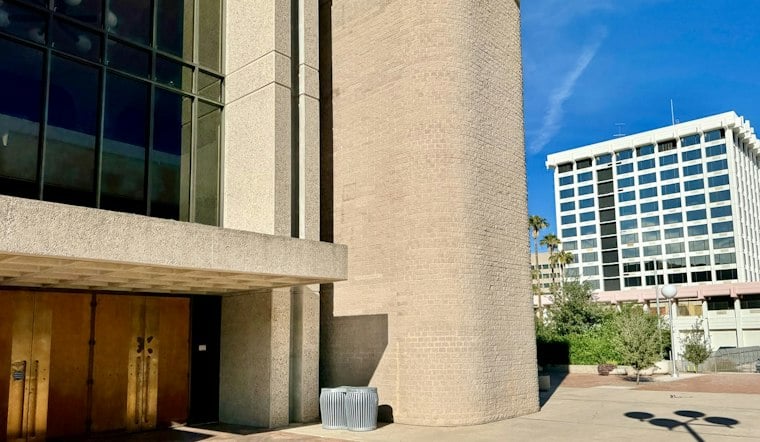
Tucson is in the early stages of building a policy that would give people once pushed out of their neighborhoods a leg up in the competition for affordable housing. The idea, still taking shape inside City Hall, is aimed squarely at families uprooted decades ago by projects like the Tucson Convention Center and the expansion of Interstate 10 — and at a housing market where even current residents are struggling to hang on.
A Policy Still Being Sketched Out
According to Arizona Daily Star, the City of Tucson is in the early stages of forming a policy that would give residents previously pushed out of neighborhoods higher priority to enter affordable housing. The effort traces back to the city's Housing and Community Development department, which approached the University of Arizona's College of Architecture, Landscape and Planning to help accelerate discussions of a preference policy. Graduate students there have since floated a concrete framework: a weighted scale that ranks applicants across four displacement circumstances.
Under that proposed scale, historic displacement — especially from projects like the Tucson Convention Center — would be worth two points, the most of any category. Applicants living within a specified radius of an affordable housing development would get one point, as would those living in areas at risk of future gentrification. A personal displacement event, such as foreclosure, eviction or a natural disaster, would add half a point. The students recommend assigning 40% of the units developed by the city's nonprofit housing arm, El Pueblo Housing Development, to displaced residents through the policy, the Arizona Daily Star reports.
Where the Units Would Be and Who Decided on 40%
That 40% allocation would touch existing complexes like Milagro on Oracle and Sugarhill on Stone, plus developments still under construction such as South 10th and El Rincón, per the newspaper's reporting. The figure isn't arbitrary: HCD is currently hiring a consultant to conduct a disparate impact study that will assess how many people have been affected by displacement and what percentage of units should reasonably be set aside. The study itself states that setting aside a maximum of 40% of affordable units will avoid the majority of disparate impacts.
Big questions remain unresolved. The city still needs to determine how people will show their historical ties to a neighborhood, according to the Arizona Daily Star's reporting, and no final policy, eligibility rules or ranking system have been adopted. Eventually, a committee will be formed to help draft a policy proposal, though its composition and timeline weren't detailed in the available reporting.
The Weight of Tucson's Displacement History
The push for a preference policy is rooted in a documented history of upheaval. Vice Mayor Lane Santa Cruz said the Tucson Convention Center displaced people in six neighborhoods — Menlo Park, Barrio Sin Nombre, Barrio Anita, Dunbar Spring, Barrio Viejo and West Ochoa — and that Tucsonans on the westside, southwest and downtown also experienced displacement from the expansions of I-10 and I-19. Santa Cruz said a successful policy would bring residents back to the downtown areas they left, and attributed much of Tucson's displacement history to racism and redlining.
Tucson's history includes displacement tied to urban renewal and freeway construction.
Mapping Where Displacement Pressure Is Highest Today
The displacement conversation isn't purely historical. University of Arizona urban planning students used geographic information systems and other data-driven tools to identify and map the parts of Tucson most susceptible to displacement pressures, according to a project summary from the university's architecture college. That mapping work identified at-risk areas spanning downtown, the westside, Amphi, Blenman-Elm, midtown and stretches east toward Broadway and Pantano.
Affordability pressure in those areas has been building for years. Tucson's median rent hit $1,795 in June, up 30% from June 2021, according to Zillow data cited by Cronkite News. That same reporting noted a 2021 study concluding Tucson's GPLET tax-incentive projects were not themselves the cause of gentrification, since they make up only a small share of downtown development, though the program could do more to help displaced residents and businesses. The Hispanic and Latinx share of the Central Business District's population fell just 0.4% from 2012 to 2018, the outlet reported, while declines were steeper in some surrounding, traditionally Latino neighborhoods.
More recent data underscores how thin the margins are for low-income Tucsonans. About 76% of people living in poverty in Tucson were severely housing cost burdened — spending more than half their income on rent — according to a 2025 report from the University of Arizona. Some respondents to that research reported rent increases of $100 to $600, forcing families to choose between housing and basics like groceries, medicine or health care, the university reported.
What's Been Tried Elsewhere
Tucson wouldn't be the first city to try a community-preference model. Right to return or community preference policies generally designate a percentage of affordable housing units for people forced to leave their neighborhoods, a concept with precedent — and legal scrutiny — in other cities. In Noel v. New York City, which settled in 2024, plaintiffs argued that New York City's policy of reserving 50% of affordable units for local community-board residents perpetuated segregation and restricted Black and Latino applicants' access to predominantly white neighborhoods. As part of that settlement, New York City agreed to reduce its reserved share to 15% by 2029.
Closer to home, the Pima County Community Land Trust has provided homes to 111 low- to moderate-income families since 2010, per Cronkite News, through remodeling or new construction on land purchased with donations and funding from Tucson and Pima County — one existing model for keeping housing affordable for longtime residents even as the broader market tightens.
How Residents Can Weigh In
City officials are inviting public input before the policy takes firmer shape. Ernesto Portillo is inviting elders to attend upcoming city listening sessions, according to the Arizona Daily Star. Those sessions are scheduled for 5:30 to 7:30 p.m. on Thursday, Nov. 19 at the Santa Rosa Neighborhood Center, 1070 S. 10th Ave.; 9 to 11 a.m. on Saturday, Nov. 21 at the Donna R. Liggins Recreation Center, 2160 N. 6th Ave.; 5:30 to 7 p.m. on Monday, Nov. 23 via Zoom; and 5:30 to 7:30 p.m. on Dec. 2 at the Quincie Douglas Center, 1575 E. 36th St.
The university's graduate student report recommends adopting a policy as a way to repair past harms and prevent future injustice — language that frames the effort as both corrective and preventive. Whether Tucson's City Council ultimately adopts the 40% figure, the proposed point scale, or some other framework remains an open question as the disparate impact study and committee process move forward.





