

























































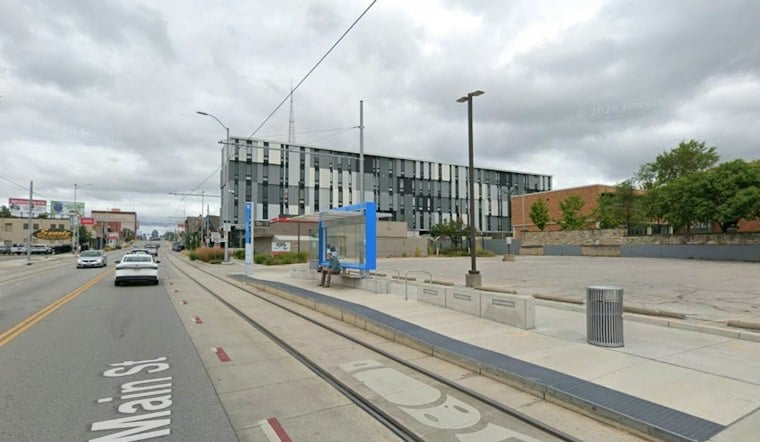
Kansas City's zoning board has rejected U.S. Bank's plan to build a new branch with a drive-thru ATM at 3441 Main St., right next to the Armour streetcar stop, leaving the company's next move in Midtown uncertain as its current lease nears its end. The proposed site currently holds a vacant former Burger King building that has sat empty for several years.
According to the Kansas City Star, U.S. Bank currently operates out of 1 W. Armour Blvd., occupying part of an existing four-story building. The bank sold that branch building to a developer in 2020, per county records cited in the report, and now leases its space there. Bank officials say the lease is set to expire in 2027, prompting the search for a new spot nearby, and the company has said moving across the street while staying in the urban core matters to its operations. MAC Properties has reportedly eyed the current bank site for housing and mixed-use development.
Why the City Said No
Kansas City's Main Street overlay, passed by the City Council in 2017, was designed to encourage dense, walkable development and sharply restrict where drive-thrus can go along the streetcar corridor, which saw its extension open in October 2025. U.S. Bank asked the Board of Zoning Adjustment for exceptions to allow both the drive-thru ATM and a less-dense branch design, but the board can only grant exceptions tied to things like building size, height or density when strict enforcement would cause a property owner particular hardship — it cannot grant outright use variances under state law or city code.
The corridor rules restrict drive-through access, and those standards frame the bank’s proposal as a test of how much car access can fit within a transit-oriented corridor. The city’s overlay standards set those limits.
City planner Ahnna Nanoski told the board the bank's request undermined the overlay's core purpose, saying, “They're specifically degrading and avoiding the transportation development goals that the overlay district has,” the Kansas City Star's report notes. City staff suggested U.S. Bank could still operate a branch on the property, just without a drive-thru, floating a walk-up ATM as an alternative.
The Bank's Pushback
Attorney Mark Bryant, representing U.S. Bank, argued that 88% of the bank's customers use the ATM and warned the branch could be forced to close if it can't have the drive-thru feature. He described the proposed ATM as more akin to a driveway than a true drive-thru, noting it would have no windows and that the new site would actually carry fewer drive-thru lanes than the bank's current branch, which has grandfathered lanes predating the 2017 rules.
State law adds a significant constraint: in Kansas City, the Board of Zoning Adjustment cannot vary zoning rules relating to the use of land. That makes the distinction between a building-design variance and permission for a restricted land use more than a technicality; the board’s variance authority is limited by Missouri law. A denied applicant may seek a rehearing or appeal the decision in court. More information is available in the city’s BZA procedures.
Vice president and district manager Brandon Dial laid out the branch's local footprint for the board: about $60 million in consumer deposits, roughly $6 million tied to small-business customers, and about $2.5 million in small-business loans. Zoning board commissioner Jaz Hays said he saw little merit in the bank's case beyond the use-variance question itself, per the same account.
The McDonald's Comparison
Supporters of stricter drive-thru limits and the bank itself have both pointed to a McDonald's case as a reference point. That restaurant, open since the 1980s near 3255 Main St. by Home Depot, sought a special use permit in 2023 to allow a drive-thru on a property where one normally wouldn't be permitted, with owners saying they wanted to replace an outdated building needing updates. A judge sided with McDonald's in April 2024, reversing the zoning board's earlier decision and sending the case back for another hearing, and the city ultimately approved the request after a lengthy process. The rebuilt restaurant at 3255 Main St. was under construction as of March, and has since reopened with its drive-thru intact.
Hays said the McDonald's situation carried more weight because it replaced an existing business within the same footprint, a distinction he drew when weighing U.S. Bank's request. The Main Street overlay otherwise bars new restaurant drive-thrus altogether, making the McDonald's approval something of an outlier along the corridor.
The McDonald’s comparison has a later chapter: after a judge reversed the board’s initial decision and sent the case back, the board approved a special-use permit in November 2024, allowing the restaurant to be rebuilt with a drive-thru. The overlay also provides a narrow pathway for certain preexisting drive-thru restaurants in urban redevelopment or master-planned districts to rebuild in substantially the same footprint. That history distinguishes a rebuild from a new bank facility on the former Burger King site. The McDonald’s case’s eventual approval followed years of review.
Neighborhood Opposition
Brett Seskis, a UMKC urban planning student and neighborhood resident, opposed the bank's proposal, pointing out that a Chase branch near Armour and Troost avenues operates without any drive-thru at all. Kansas City officials separately considered modifying drive-thru rules earlier this year for a Westport dispensary, though that case was not directly tied to the bank's request.
With the zoning board's denial now on record, U.S. Bank representatives may seek a rehearing or pursue an appeal in court. For now, the fate of the Armour streetcar-stop site — and whether Kansas City bends on drive-thru access for one of Midtown's few remaining bank branches — remains unresolved.





