

























































U.S. Steel broke ground Friday on a $1.9 billion direct reduced iron facility at its Big River Steel Works campus in Osceola, Arkansas, a project the company is calling the first of its kind in the United States. The plant is designed to connect the company's Minnesota iron ore mines with its Arkansas steelmaking operations, producing up to 2.5 million metric tons a year of hot direct reduced iron and hot briquetted iron once it comes online.
According to Construction Review, the new facility sits in Mississippi County in northeastern Arkansas, right beside the Big River 2 expansion, allowing hot DRI to be fed directly into adjacent electric arc furnaces without the material handling and energy losses that come from cooling, storing, and reheating the iron before it is melted down. U.S. Steel confirmed the groundbreaking took place on October 30, describing the investment in a statement posted on ussteel.com as one that will connect its Minnesota iron ore mines with Big River 2 to supply direct reduced iron for what the company calls more sustainable, next-generation steelmaking.
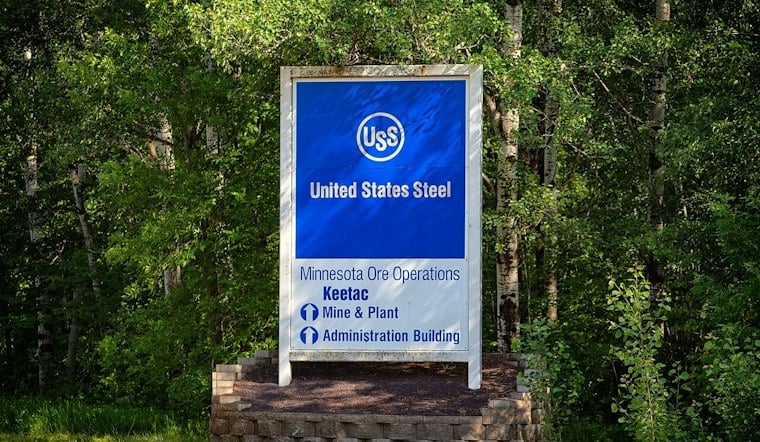
The company first announced plans for the Osceola plant back in April, calling it the first facility of its kind built in the U.S. Feedstock for the operation is expected to come from U.S. Steel's Keetac mining operations in Minnesota, tying the company's iron ore business directly to its downstream steel production in Arkansas.
What Direct Reduced Iron Actually Does
Direct reduced iron is made by stripping oxygen out of iron ore without melting it, a process that differs from the traditional blast furnace route. U.S. Steel selected Midrex Technologies in June to supply the direct reduction technology for the Osceola plant, with the companies describing the project as a 2.5 million metric ton per year HDRI/HBI facility, according to a release from Midrex. The plant is designed to supply hot DRI to the neighboring electric arc furnaces while also producing hot briquetted iron intended for transport to other steelmaking facilities and potential merchant sales and export.
Midrex says first production from the plant is expected in 2029. The company also states that its natural-gas-based process, paired with an electric melter, can cut carbon dioxide emissions by up to 50% compared with traditional blast furnace-basic oxygen furnace steelmaking, though actual reductions would depend on factors including the gas supply, electricity source, and overall plant configuration.
Jobs Estimates Vary Between Accounts
Figures on the employment impact differ depending on the source. The Arkansas Democrat-Gazette reported the factory is expected to bring an estimated 200 full-time jobs to Big River Steel Works, while a U.S. Steel release distributed through Business Wire described the project as supporting approximately 200 full-time Big River Steel Works employees plus 35 full-time embedded contractor roles once the plant is operational. Both accounts agree the project is projected to generate roughly 2,000 construction jobs at its peak building phase.
The newspaper's report also noted that site preparation was already underway at the time of the groundbreaking, with construction set to ramp up soon. Arkansas Democrat-Gazette's coverage adds context on the broader campus: U.S. Steel acquired Big River Steel in 2021, and the $3 billion Big River 2 facility began producing steel in 2024. Together, the campus's four electric arc furnaces now produce over six million tons of steel annually, per the same report.
A Smaller Echo of a 2011 Louisiana Project
The Osceola investment recalls an earlier DRI buildout by a rival steelmaker. Nucor broke ground on its own DRI facility in St. James Parish, Louisiana, in March 2011, describing that project at the time as a $750 million investment, according to a report from AIST. That first phase was projected to create 150 permanent jobs, with the St. James Parish site permitted for two DRI plants carrying a combined annual capacity of 5.5 million tons — part of a broader plan that could eventually have included a coke plant, blast furnace, pellet plant, and steel mill.
Government data from the U.S. Geological Survey has previously noted that only a handful of such facilities operate in the country, citing one DRI plant in Louisiana and three hot-briquetted iron plants in Indiana, Ohio, and Texas that supplied steelmaking raw materials in a given year. That scarcity underscores why U.S. Steel is billing the Osceola project as a first-of-its-kind addition to the domestic steel supply chain.
For now, the Osceola plant remains in its earliest construction phase, with delivery of its full capabilities still dependent on completion, integration with the existing Big River Steel Works operations, and commissioning before commercial production can begin. Midrex expects the plant's first output in 2029, a timeline that will determine whether the $1.9 billion bet on Arkansas pays off as planned.





