

























































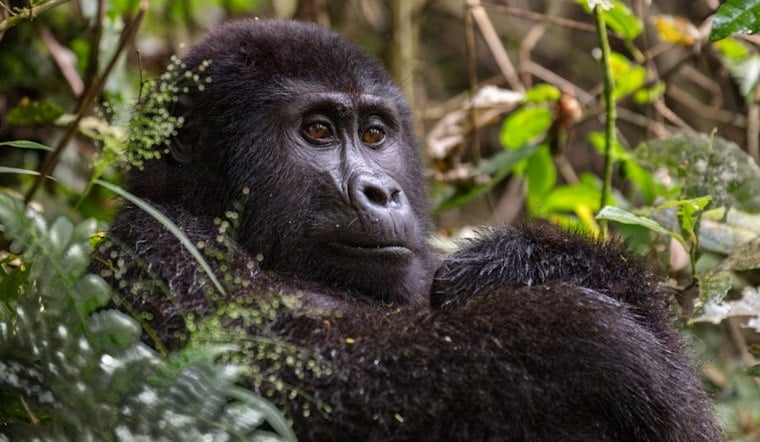
Dr. Gladys Kalema-Zikusoka is one of CNN's Top 5 Heroes of 2026, and CNN selected each person on that list to receive a $10,000 prize. The selection is the news. The work behind it runs through Bwindi Impenetrable National Park, where she has treated mountain gorilla survival and conditions in neighboring communities as one problem.
In an Oct. 28 report, CNN named the five while asking who will be the next CNN Hero of the Year. A July profile had already set down the earlier record: she became Uganda's first wildlife veterinarian in 1996, then founded Conservation Through Public Health in 2003 after concluding that the gorillas' survival was intertwined with conditions in local communities.
The First Post, Then A Different One
Nineteen ninety-six is the year CNN says she became the first wildlife veterinarian in Uganda. The title is a personal milestone and a national one. On that account, the country had not had someone in the role before her.
The nonprofit followed in 2003, and it did not follow from a slogan. CNN reported that she founded Conservation Through Public Health when she realized gorilla survival was intertwined with conditions in local communities. The households were not a side audience for a wildlife story. In CNN's telling, they were the reason the organization had to exist.
She was building a profession and, seven years on, an institution that refused to treat the park boundary as the edge of the job. Later profiles keep that pairing. Health initiatives sit beside economic ones, and a coffee enterprise sits beside a gorilla count.
The October prize does not fund that machinery. CNN said each of the five was selected to receive $10,000. That is a numbered recognition, not an endowment for two decades of field work.
Households On One Count, People On Another
Since 2003, CNN's Top 5 report said, the organization's health and economic initiatives have educated and empowered more than 10,000 households. The July profile measured engagement differently: more than 50,000 local people in health and economic initiatives. Add those numbers and you have invented a total. One is households. The other is people.
The household figure is the one that sounds like daily life. More than 10,000 households means the work CNN describes is inside family economies, not confined to a ranger post. The 50,000-person count is the check against a too-small reading. It keeps 10,000 households from looking like a contained demonstration.
CNN dates the household claim to the years since the 2003 founding. It does not publish either figure as a single-year snapshot. The verbs stay broad. October's phrase is educated and empowered. July's is engaged.
Neither profile reduces the work to one clinic or one crop. The founding sentence is the mechanism they leave standing: gorilla survival ran through community conditions, so community conditions became the conservation plan.
A Premium Of Fifty Cents A Kilo
Since 2015, Gorilla Conservation Coffee has paid farmers above the market price, CNN reported. The enterprise names the margin. Gorilla Conservation Coffee says it pays farmers living near Bwindi Impenetrable National Park a premium of $0.50 per kilo above the market price. It also says $1.50 per kilo of coffee purchased will be donated to support mountain gorilla conservation.
Those are different checks. The fifty cents is what a grower is paid above market. The dollar-fifty is a donation tied to coffee purchased, directed at conservation work rather than added again to the farm gate.
On a per-kilo basis, the published donation is three times the published premium. The organization states both. A buyer who folds them into one farmer bonus is reading past the label.
The roster grew with the brand. CNN reported a start of 75 farmers and a current list of more than 630, more than one third of them women. That women's share comes to more than 210 growers. The premium is the incentive. The head count is how far the incentive has traveled.
Daily Monitor has described a related effort that should stay on its own line. Reformed poachers who are now farmers, the paper reported, receive training in sustainable coffee farming and processing, meant to improve quality, increase production, and protect wildlife habitat. The article does not place them in Kalema-Zikusoka's enterprise. Same country, a coffee livelihood, and an explicit aim of protecting habitat. Not her farmer list.
The 2018 Census And The 2023 Crowd
Bwindi's mountain gorillas increased from around 300 in the 1990s to 459 during what CNN called the last gorilla census, in 2018. In the Top 5 report, CNN said the area's gorilla population has grown by more than 50 percent alongside Conservation Through Public Health's work. A rise from about 300 to 459 lines up with a gain of more than half.
Alongside is the careful word. It keeps the nonprofit in the frame and does not parcel the result out among vets, rangers, tourism rules, and farm income.
Visitors moved faster than the census. CNN said tourist visits to Bwindi rose from around 1,300 in 1993 to almost 39,000 in 2023, roughly thirty times the early traffic. The animal count and the visitor count share a park and a narrative. They are not interchangeable proof. One records gorillas. The other records people who came to see them.
Global totals do not agree. CNN has reported an overall mountain gorilla population of 1,049, including gorillas in the Virunga Mountains. Virunga has reported the global population at 1,063, with 459 in Bwindi-Sarambwe and 604 in the Virunga Massif. Quoting a single world number means choosing a publisher. The dated local result CNN gives for Bwindi is 459, from 2018.
What Northwood Is Offering
Northwood School advertises a Uganda LEAP trip combining adventure, conservation, and community service with work alongside Dr. Gladys Kalema-Zikusoka, Lawrence Zikusoka '93, and Conservation Through Public Health. The school's description includes a trek through Bwindi to observe mountain gorillas. Lawrence Zikusoka is identified there as a 1993 Northwood graduate, listed with the veterinarian and the nonprofit.
The page is an invitation, with her name and the park written into the itinerary. It offers work with Kalema-Zikusoka, Lawrence Zikusoka, and Conservation Through Public Health, plus gorilla observation in Bwindi. That is the published connection between her organization and a school program aimed at the park.
CNN already attached $10,000 to each Top 5 selection. Hero of the Year was the question the Oct. 28 package asked around those five names. Near Bwindi, the terms already in print are more specific: $0.50 per kilo above market for farmers by the park, and $1.50 per kilo of coffee purchased donated to mountain gorilla conservation. The last park census CNN dates is still the 2018 count of 459.




