

























































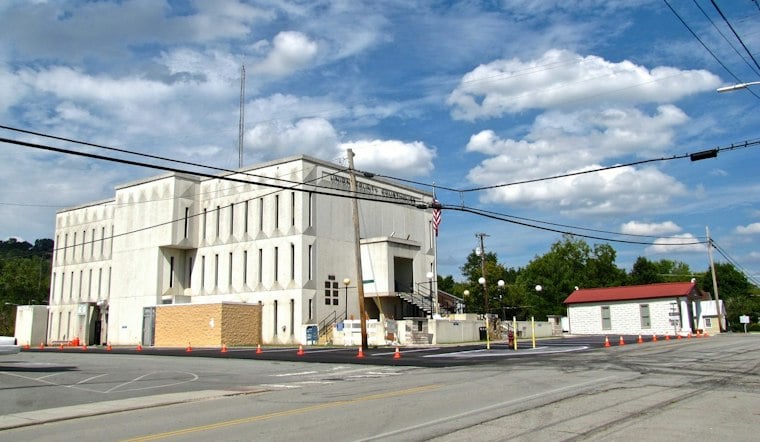
Union County commissioners voted to freeze both data center development and Flock license-plate reader cameras for two years, following a meeting in Maynardville where residents packed the room to voice concerns about privacy and surveillance. The commission approved the data center moratorium and then voted 15-1 to pause the camera program, pumping the brakes on two of the most contentious local policy questions facing Tennessee counties right now.
The Monday meeting, first reported by WBIR, drew a majority of speakers opposed to the Flock cameras, which use automated license plate reader technology that law enforcement agencies increasingly deploy to track vehicles. One speaker invoked stark language about civil liberties, telling commissioners, “Once you have a freedom taken, you're not gonna get it back… until there is a lot of bloodshed. And then you may still not get it back.” Another resident pushed back on the idea that the cameras improve public safety, arguing he was responsible for knowing where his own children were, not the county.
Commission Leaves Door Open to Reverse Course
Not every voice at the meeting opposed the technology. Some speakers favored letting data center development mature further before Union County decides how to regulate it, according to the WBIR report. The commission structured both moratoriums with built-in flexibility: members can end either pause early by passing a motion before the two-year mark, meaning the freeze on data centers and cameras isn't necessarily locked in for the full term.
The vote effectively pauses planning for both data centers and Flock cameras in Union County while officials sort out their next steps. That mirrors a pattern playing out elsewhere in Tennessee, where at least 10 cities and counties have moratoria on data center construction in place, according to research cited by WKRN. DataCenterMap and Baxtel have each identified 65 operational data centers across 10 Tennessee counties, with Davidson County leading at 28 facilities, followed by Shelby County with 13 and Knox County with nine, per the same WKRN report.
Rising Bills Fuel Statewide Pushback
The debate in Union County lands amid broader unease about data centers' footprint on local utility bills. Think Tennessee researchers found that residential electricity bills rose by an average of 1.6% between 2023 and 2024, and the station's report also cites a separate 3.2% increase for residential customers that pushed the average monthly electric bill to about $150. Nationally, American opposition to data centers had nearly doubled since January, according to an October poll conducted by PF Global for The POLITICO Poll, as noted in the WKRN article.
Rutherford County took a similar path on Nov. 12, when its County Commission unanimously passed a 12-month moratorium on building data centers. Per WKRN, that pause took effect immediately and is set to expire Nov. 12, 2027, unless commissioners terminate it early or extend it. Rutherford County's planning director said the county currently lacks specific zoning and land-use rules for data centers, and Planning Director Doug Demosi said the commission will hold multiple public meetings so the community can help craft them.
Other Tennessee Counties Choose Regulation Over Bans
Not every local government is reaching for a pause button. Shelby County commissioners voted 9-4 to approve an ordinance regulating data centers' water and energy use, amending the Memphis and Shelby County Unified Development Code, according to WREG. Commissioner Amber Huett-Garcia said the commission is also considering fees, fines and enforcement mechanisms tied to those rules.
Meanwhile, the board overseeing the Memphis Regional Megasite is weighing whether to set its own standards. The Megasite Authority has exclusive authority to regulate land use within the sprawling site and discretion over which leases it approves, and data centers are currently permitted by right in its general industrial zoning district, according to Tennessee Lookout. Board Chairman Charlie Tuggle said he planned to form a subcommittee to begin discussing proposed guidelines for data centers and other resource-intensive projects, with roughly 300 acres of the Megasite's 4,100 acres left available for future industrial use.
Camera Debate Echoes a National Reckoning
Union County's skepticism toward license-plate cameras also fits a wider trend playing out far beyond Tennessee. In California, Santa Ana's City Council voted 6-0 to terminate its contracts with Flock Group and Motorola Solutions, planning to turn off four dozen automatic license plate readers and remove them from the community, the Los Angeles Times reported. A city memo there credited the camera system with helping solve 55 cases between April 1 and Sept. 30, including 18 stolen-vehicle crimes and six firearm crimes, even as the council chose to end the program.
Santa Ana's vote came just one day after San Diego's City Council unanimously voted to end its own Flock contract, the Los Angeles Times noted. Fullerton took a middle path in October, with its City Council voting to temporarily turn off its Flock camera system for six months rather than cancel it outright. Union County's own two-year pause, with its built-in option for commissioners to act sooner, places it somewhere between those full cancellations and Rutherford County's time-limited approach to data centers.





