

























































Cross-agency accountability remains unresolved
The scale of out-of-state access to Utah plate-reader networks raises questions about who can verify how searches are used. A Utah Civic Compact analysis of Weber County records found that 3,343 law enforcement agencies in 45 states made 5,171,087 searches of networks administered by the county between February 2022 and July 2026. The group said 98.6% of searches in the first seven months of 2026 came from outside Utah. It classified 2,141,406 searches — 41.4% of the total it reviewed — as having a stated reason that did not match a purpose allowed under state law. That classification is the group’s finding, not a determination that the searches were unlawful. The Civic Compact also says Utah law enforcement has no mechanism to verify whether other agencies comply with the state’s restrictions, according to the group’s analysis.
The Civic Compact said the Weber County Sheriff’s Office told it, “This is not a record that we maintain,” in response to a request for audit, compliance-review or self-assessment records. The group later reported that the office said audits had taken place but were not logged, and that it had since created a form to record future network audits. Utah Gov. Spencer Cox has asked state privacy officials to review the rules surrounding the cameras, Utah Public Radio reported.
A documented misuse case
Former Tooele County Sheriff’s Office detective Jose Baires’s case illustrates one kind of misuse. KSL reported that internal affairs records showed Baires searched for a vehicle belonging to the estranged husband of a woman he was seeing. He used a case number linked to a closed case and viewed 20 detection records; investigators found no legitimate reason for the search. Utah’s Peace Officer Standards and Training Council voted to suspend his certification for 18 months. KSL said Baires told the station he no longer worked in law enforcement and declined to comment; the sheriff’s office did not answer its questions. Misusing a license-plate-reader system is a misdemeanor under Utah law.
What POST’s public records show
Utah POST’s annual statistics page lists disciplinary-action reports for 2023 and 2024. Those listings identify reports for those years, but the verified information here does not establish how many disciplinary actions occurred or whether database or privacy-related misconduct is identified as a separate category. POST says investigators may consider a department’s internal-affairs investigation, but it cannot be the sole source of information in a POST investigation, according to Utah POST. The annual reports are listed on POST’s statistics page.
Safeguards differ by department
KSL surveyed more than 30 Utah law enforcement agencies and received responses from 23. Its reporting found that departments use different combinations of access limits, required case numbers or search reasons, and audits. Reported data-retention periods ranged from seven days to nine months. West Jordan said it audits weekly, Ogden reported monthly audits, and Clearfield said it completed an audit in 2026 after not conducting one in 2025. Salt Lake City began monthly civilian audits in August and was developing a tool to flag unusual activity. Most responding agencies told KSL they had not identified misuse in their systems.
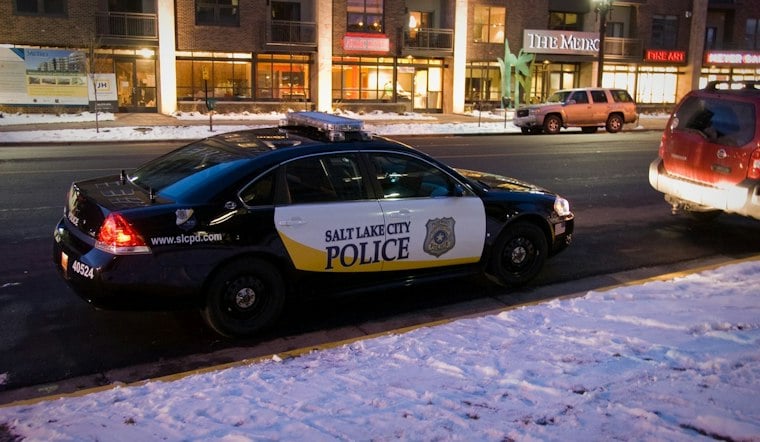
Some departments have also set rules for access. Ogden revised its policy this year so outside agencies must request access through the department. Salt Lake City police operate about 70 cameras, require an active case number for a search, and used the system in more than 6,400 investigations since 2021, according to KUER’s reporting and its review of public records. Summit County deputies must have an open case and case number before searching, TownLift reported.
Statewide rules under discussion
Utah lawmakers are expected to consider license-plate-reader regulation in the 2027 session, with questions including access, data retention, sharing and oversight, according to TownLift’s reporting. The Civic Compact supports uniform statewide safeguards rather than a ban, and its president, Clark Dice, has argued for audits conducted by an independent third party. Law enforcement officials have said they want a role in shaping any statewide rules.





