

























































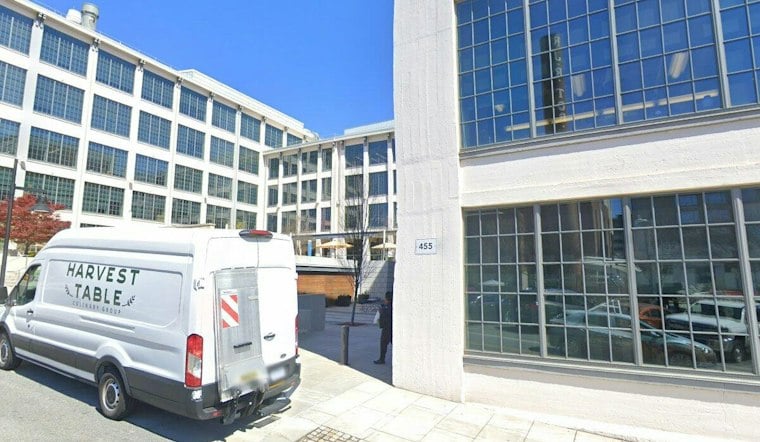
Faculty at Wake Forest University are pushing back hard after contractors were spotted installing security cameras equipped with microphones inside academic buildings on the Reynolda Campus and at Wake Downtown, with many of the devices going up in just the past few weeks. The discovery has triggered a formal faculty letter, a student government resolution, and a wave of questions about what the cameras can actually record — and who gets to watch the footage.
Professors Say They Were Never Consulted
The installations came to light through an investigation by student newspaper Old Gold & Black, whose reporters Miriam Fabrycky and Griffin Lamphier found that faculty members first noticed contractors mounting microphone-equipped cameras in academic spaces, an account the outlet attributed to professors Mir Yarfitz and T. H. M. Gellar-Goad. Yarfitz sent a letter to Wake Forest President Peter Rodriguez on Nov. 2 petitioning the university to pause installations until stakeholders could discuss threats to academic freedom and receive assurances that microphones would be disabled. Eighty-one named faculty and staff signed the letter, along with seven anonymous signatories, according to the student paper's reporting.
The letter reportedly raised privacy concerns tied to FERPA, Title IX, the National Labor Relations Act and other protective laws. Gellar-Goad urged the university to halt installations, cover the cameras already in place, and engage faculty, staff and students before moving forward — though he also told the paper he expects the installations to continue regardless. Yarfitz said collecting feedback from colleagues felt productive specifically because so many had not yet grasped the full implications of what was being installed, and described attendees at a related meeting as appalled that professors were never consulted first.
What the Cameras Can Actually Do
According to the Old Gold & Black investigation, the university installed three main Hanwha Vision camera models, alongside devices made by Axis Communications and Avigilon — Hanwha Vision being identified in the report as a South Korean manufacturer. Two of the models, the XNF-9013RV and the XNF-9010RVM, reportedly have built-in microphones and audio-surveillance capabilities, while the XNF-9013RV is also advertised by the manufacturer as using AI to detect and classify people and vehicles. A third model, the PNM-C34404RQPZ, reportedly uses AI to enhance video quality and track people and vehicles, and the paper found those units positioned outside the Manchester Plaza buildings and along the University Parkway walkway. Separately, Avigilon H5A fisheye cameras installed at Wake Downtown are reported to carry both AI and audio-recording capabilities.
Gellar-Goad told the student paper that campus police have claimed none of the department's cameras actually record audio, but said the audio capability built into the hardware could reportedly be switched on through a computer program. Wake Forest, for its part, has said its cameras record video only and are not placed in classrooms, offices or other private settings — a position the university reiterated even as the identified hardware models raise a separate question about what those cameras are technically capable of versus what they are actually being used for.
University Points to Policy, Students Pass Resolution
Jackie Krasas identified the camera rollout on Nov. 13 as an initiative of Deacon One, also known as the Office of Physical Security Technology, and asked professors to submit feedback through a private Google form. The introduction to that form states that cameras are not installed in classrooms, studios, offices, conference rooms, labs or storerooms and that they collect video only, according to the student paper's reporting. Faculty had already raised questions about camera installations during a presentation on the university's digital ID pilot program at a Nov. 9 faculty meeting.
Wake Forest's video surveillance policy was last updated in 2012, and the university issued a separate surveillance policy memo in 2020 that mentions the possibility of posting signage warning that an area is under audio and video surveillance, per the Old Gold & Black report. The Office of Physical Security Technology and Deacon OneCard may share video with local law enforcement or campus partners if approved by the chief of police and the university's legal department, the paper reported. Wake Forest began installing security cameras in residential communities in 2014 and added nearly 300 cameras to South Campus communities the following year, and cameras have reportedly been deployed less frequently in academic buildings than in residential spaces until this latest wave.
Student Gray Lowder condemned the use of AI-powered surveillance devices in a statement to Old Gold & Black, and student government has since passed a resolution calling on university leadership to reject future use of AI-powered, privately owned surveillance systems. Campus Life and University Police did not provide a statement before the article's publication, according to the outlet. Separately, Wake Forest University Police has said that “Wake Forest University does not use Flock cameras as part of the security camera network with no current plans to incorporate them into the system,” addressing a different brand of license-plate-reading camera used at some other campuses.
Part of a Wider Campus Surveillance Debate
Wake Forest is far from alone in facing scrutiny over camera technology. A research paper published in Policing & Society estimated that Flock Safety works with roughly 150 colleges or schools nationwide, and a Guardian report cited by CNET identified dozens of campuses, mostly colleges, where Flock contracts have ended or where student activism is pressuring administrators to cut ties. Cornell, Emory, Penn State and Stanford are among the schools reported to have dropped Flock, with Stanford switching to a Genetec system that stores data for just an hour and does not share it with third parties. The University of North Carolina ended its automatic data-sharing agreement with Flock Safety in October, according to the dossier's reporting.
At MIT, the backlash grew loud enough that administrators said the school would not use AI to observe or analyze campus activity, after community members objected to an AI-enabled feature planned for hundreds of newly installed cameras.
In Massachusetts, public records examined by MassLive showed five campuses — North Shore Community College, Springfield Technical Community College, UMass Chan Medical School, UMass Dartmouth and Worcester State University — using Flock cameras or other automatic license plate readers. Bristol Community College has spent more than $18,000 since 2025 on two Flock cameras that collect license-plate data and share it with dozens of police departments, while UMass Chan Medical School said its 28 license-plate-reading cameras are used only for parking operations and that the data isn't shared with outside agencies, per the same MassLive investigation. UMass Dartmouth, according to Government Technology, paid roughly $8,300 for nine cameras — four license-plate readers and five AI-assisted units — under a 2023 invoice.
The Legal Gray Area
Any eventual dispute over Wake Forest's cameras would likely run into North Carolina's wiretapping statute. The statute makes specified willful interception offenses a Class H felony; its disclosure provisions apply to disclosure of communications known or reasonably understood to have been obtained in violation of the article, according to the North Carolina General Assembly. That statutory language does not by itself resolve whether any specific camera's operation at Wake Forest would meet the law's requirements. Separately, the U.S. Department of Education has said that records created and maintained by a school's law-enforcement unit for a law-enforcement purpose are excluded from the definition of education records under FERPA, according to guidance published by the U.S. Department of Education's Protecting Student Privacy office.
For now, the central dispute at Wake Forest remains unresolved: the university maintains its cameras are video-only and kept out of private spaces, while faculty point to hardware specifications showing several installed models are built with microphones and AI-tracking features. Whether any of that audio capability has been activated is not something either side's public statements have settled, and the letter from Yarfitz and dozens of colleagues is aimed squarely at getting that question answered before more cameras go up.





