

























































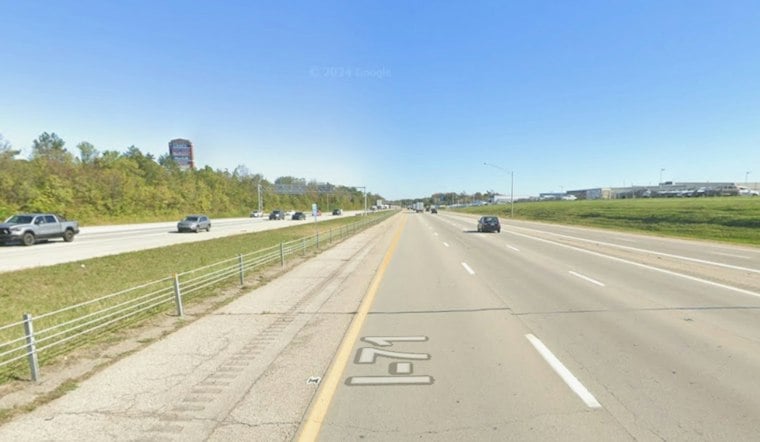
Warren County residents packed a meeting Tuesday night to confront officials over six preliminary routes being studied as a possible new highway connection between I-75 and I-71, with some in the crowd demanding the whole idea be scrapped. County Engineer Kurt Weber told the group the proposals remain nothing more than conceptual maps, and that no route has been chosen and no construction project has been approved.
The long-range study, which began in April, is examining whether northern Warren County needs a better east-west link between the two interstates, according to WCPO. It covers territory stretching from the southern Turtlecreek Township line to the northern county line, and six possible roadway concepts are on the table — two northern, two central and two southern alternatives, as Warren County Post reported. As WKRC reported, regional governments are weighing whether to advance just one or two of those six options.
A County Growing Faster Than Its Roads
Weber has said Warren County is generally Ohio's second- or third-fastest-growing county, per WKRC's reporting, and that growth is straining the existing road network. The county has added roughly 100,000 residents over the past 25 years, the station's report notes, and continues to experience growth that keeps piling pressure onto its roads. Officials have also said one goal of the study is to figure out whether truck traffic can be pulled out of or diverted from Lebanon, where trucks routinely drive through the city center.
Weber has stressed that any connector, if one is ever built, is intended for 10, 20 or 30 years down the road, not anything imminent. He has acknowledged that no construction funding has been identified and that eventual improvements could be decades away — or might never happen at all, according to the same Warren County Post account. Phase 1 of the study is expected to wrap up in July 2027, after which any concepts chosen for further review would face more detailed evaluation.
Residents Rally Against Routes Through Their Backyards
Tuesday's turnout was large enough that the meeting moved to the Turtlecreek Township firehouse, and it came about a month after homeowners organized their own question-and-answer session following the official open house. Some attendees called for the entire study to be cancelled outright, per WKRC. Nicole Derrickson, who lives near the proposed Northern Connection Option 2 route, told the station she'd rather see existing roads upgraded instead of a new connector built through the area.
Derrickson warned that potential hazmat truck traffic, road salt and chemicals could seep or leak into the Little Miami River, and said residents in the area currently enjoy a notable lack of light and noise pollution they fear a new highway would destroy. Northern Connection Option 2 would bridge over the Little Miami River in Wayne Township, while Central Connection Option 2 would cut through Union and Turtlecreek townships, according to WKRC's reporting.
The environmental stakes around the river crossing aren't limited to local worries. An Ohio Department of Natural Resources official previously raised concern about any option that would affect Caesar Creek State Park or the Little Miami River around Fort Ancient Valley, as reported by Dayton Daily News. Weber has said any proposed crossing of the river would require environmental studies and could involve substantial construction expenses, per the Warren County Post.
Officials Urge Residents To Weigh In Before Decisions Firm Up
Turtlecreek Township Trustee Jonathan Sams urged residents to submit formal comments through the project website if they want their voices to carry weight in the study, warning that without broader participation, officials risk hearing mostly from northern Warren County residents since Turtlecreek has fewer residents than that part of the county. By the Nov. 3 meeting in Wayne Township, the study team had already logged around 100 attendees at the Oct. 28 open house and about 480 responses and comments overall, the Warren County Post reported.
Weber told the Tuesday crowd that all feedback would be factored into the study, though he could not commit to eliminating any option from consideration at this stage. Doing nothing remains one of the choices on the table — Weber has previously said a no-build outcome is possible if that's what the study ultimately supports. Project officials expect to provide another public update at the next open house in spring 2027, giving residents another chance to weigh in before Phase 1 concludes.



