

























































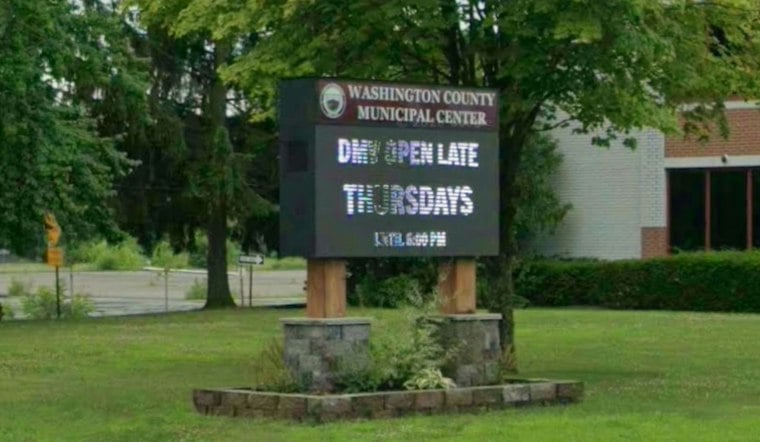
Washington County's Board of Supervisors passed the 2027 county budget this week, capping budget negotiations that included salary disagreements. A tax levy increase drew pushback from residents at a public hearing. Supervisors used the vote to protest what they described as unfunded state mandates squeezing their ability to govern.
According to The Post-Star, the board passed the budget, with several supervisors casting protest votes against it over state mandates, and the 2027 county budget increased by 9.26%. The tentative plan called for a $153.8 million net spending plan carrying a proposed 9.79% property-tax-levy increase, which would have brought the levy to $48.67 million, while Citizen Portal put that tentative increase at $4,340,764. The Post-Star reported that the county budget increase was later reduced to 9.26% after salary changes.
The board held a public hearing on the 2027 budget on November 20, where Washington County residents spoke in opposition to rising taxes. Budget Officer Brian Campbell told the room the spending plan came together better than expected through compromise, and said, “We can’t live on 9%.” Campbell added that he expects future budget increases to be limited to 3 or 4 percent.
Mandates Eat Up Most of the Budget, Supervisors Say
Board of Supervisors Chairman Robert Henke told the Glens Falls Business Journal that mandated costs account for roughly 80% of the county budget — “80% of our budget is mandated costs, and we cannot do anything about it,” he said. Henke also said New York State is divided between rural and urban areas and run by urban areas, and told the paper the county currently has the distinction of being the lowest-paid, staff-wise, county in New York State.
Tim Havens, who had followed Washington County's budget for 35 years, discussed the county budget. Washington County supervisors have said they are paying $250,000 per week for Medicaid, a cost cited as part of the mandate burden squeezing the county's finances.
The pattern isn't unique to Washington County. In Albany County, Executive Daniel McCoy proposed a $950 million 2027 budget, a little more than 5% above the prior year's adopted spending, and told CBS6 Albany that state-mandated programs account for more than 60% of that county's budget, with unfunded mandates estimated to cost Albany County $22 million to $25 million. Steuben County, meanwhile, adopted a 2027 budget that raised its property-tax levy just 1.74% while the tax rate actually fell 5.75%, according to WENY, which also reported that county budgeted $62.6 million for nine state-mandated programs — an amount equal to 112.3% of its own tax levy.
Pension and Health-Care Costs Outpace Overtime
Campbell told the Glens Falls Business Journal that the county eliminated about 50 positions the previous year. A Washington County Finance Committee review earlier in the year had already flagged the strain: Citizen Portal reported the committee warned that projected personnel and fringe-benefit increases could push 2027 costs well beyond the tax cap, and on July 9 the committee voted to require department backfill requests be reviewed by oversight committees before Personnel consideration, while urging departments to prioritize cuts over expansion.
Those pressures shaped the county's internal budget talks, which focused on keeping the overall increase low while still raising government employee salaries. Fort Ann Supervisor Samuel Hall described some of the salary negotiations as testy, though he later thanked fellow supervisors for their cooperation and understanding. County officials argued that without competitive pay, employees may leave and services could decline.
Sales Tax Windfall and Sewer Investments
The budget presenter also noted that revisions to the Department of Social Services' initial figures had reduced net costs by $380,000 since the previous joint meeting, per Citizen Portal. On the revenue side, Washington County has its highest-ever budgeted sales tax revenue, according to Campbell, with increased fuel and electricity costs cited as a driver of the higher sales-tax projections. The Glens Falls Business Journal reported the 2027 budget relies on a record $31.5 million sales-tax projection, boosted partly by electricity and fuel prices that may fall — a figure that differs from the county's own projection of sales tax revenue above $32 million for 2027.
Sewer infrastructure also factored into the budget picture. Washington County received $32 million in state grants for sewer-related projects, Campbell said, with the money expected to help bring businesses to the area — though the Glens Falls Business Journal separately reported a $32 million New York state grant to the Washington County Sewer District intended to open key corridors to shovel-ready industrial and commercial development. Upcoming sewer work includes projects in Fort Edward and Hudson Falls, including an upgrade to the Sewer District No. 2 wastewater treatment plant in Fort Edward. Both the Fort Edward and Hudson Falls projects involve sewer separation, which divides stormwater runoff and sewage into two distinct systems.





