

























































At least 1,352 Washington residents died by suicide in 2025, pushing the state's rate to 15.5 deaths per 100,000 people, according to the Washington State Department of Health. It is a grim milestone that state health officials and reporters have described in starkly different terms, with one count putting the toll near 1,400 deaths and calling it the highest total in 25 years.
According to the Washington State Department of Health, the 2025 rate marks a continuation of a troubling pattern for the state. As reported by KUOW, nearly 1,400 people died by suicide in Washington in 2025 — the highest total in a quarter century — and the state has held a higher suicide rate than the national average for more than two decades.
Michele Roberts, assistant secretary for the Prevention and Community Health Division at the Washington Department of Health, told the station that the exact reasons for the increase remain unclear, though patterns are emerging. “There are some themes: isolation, financial and job stress, and not knowing where to turn,” Roberts told the outlet. She added that the numbers represent real people, and that the increases underscore the need for support across all ages, according to KOIN.com.
Who Is Most Affected
The toll is not spread evenly across Washington. KUOW's reporting found that suicide rates are highest among men older than 65, people living in rural areas, and Native Americans. Among children and teens ages 10 to 17, the rate climbed from 4.7 per 100,000 in 2024 to 7.7 per 100,000 in 2025, per KOIN.com, with the increase concentrated most among 12- and 17-year-olds and occurring mostly among male-identifying youth.
Rural communities have seen some of the sharpest jumps. Some rural Washington counties saw suicide deaths double or triple between 2024 and 2025, according to the state's 2025 suicide report as cited by KOIN.com. Washington's American Indian and Alaska Native population had a suicide death rate of 28.8 per 100,000 in 2025 — 86 percent higher than the state rate overall, per the same report.
A Longer-Running Pattern
The increase did not emerge overnight. A Washington Department of Health summary notes that deaths by suicide among adolescents and transition-age youth have been rising across the state even before the COVID-19 pandemic began. The agency's data also show Washington's overall suicide rate peaked in 2017, according to KOIN.com, before the 2025 numbers pushed the toll back toward record territory.
Roberts told KUOW that suicide rates among young people had actually been lower than expected following the launch of the 988 crisis hotline, particularly in states where more residents called or texted the service. A recent study in the Journal of the American Medical Association found that the 988 Suicide & Crisis Lifeline's launch was linked to fewer suicide deaths among teens and adults, and that the decline was larger in states with greater 988 use, including Washington, according to KOIN.com.
What The State Is Doing
Washington released a 10-year strategic suicide-prevention plan in 2025, titled the 2025 Washington State Suicide Prevention Plan. The plan emphasizes well-being, connectedness, treatment and support services, research, and data collection, per KOIN.com's reporting. The state also developed Find Your People, a program designed to help residents find community, and the health department has launched a separate tool to help older adults locate social activities in their area, per KUOW's reporting.
The Washington Department of Health said it will continue working with tribal partners, schools, families, and communities statewide, according to KOIN.com. Roberts said suicide can be prevented through human connection, support for at-risk communities, and better data, the outlet reported.
Where To Find Help
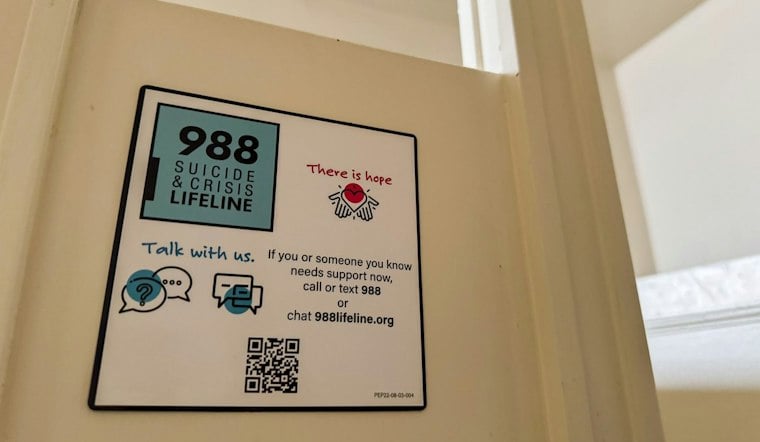
Anyone experiencing a mental health crisis can contact the 988 Suicide & Crisis Lifeline by calling or texting 988, or chat online at 988lifeline.org. For people working in agriculture, forestry, logging, or fishing, the AgriStress Helpline offers 24/7 crisis and emotional support, suicide intervention and prevention, and mental-health and agriculture resource information nationally; it can be reached by calling or texting 833-897-2474 or visiting agrisafe.org.




