

























































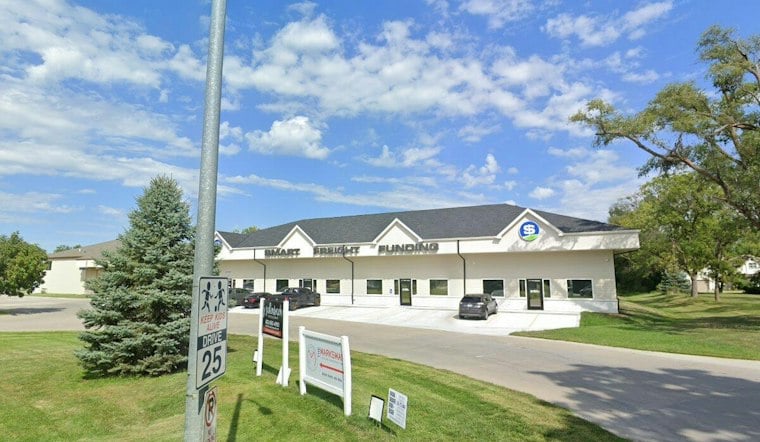
A food bank founded less than a year ago in Waterloo has quietly become a lifeline for families in some of Douglas County's most affluent suburbs, with 144 families served since September alone. Hope402 founder Lisa Nielsen says the need is showing up in places many people would never expect — nice houses, newer cars, and all.
Hope402 is a food bank in Waterloo serving northwest Douglas County, according to 3 News Now. Nielsen started the organization in December 2025, and since September it has served 144 families from across the area. Of those families, 39% came from Bennington, 22% from Valley, 20% from Elkhorn and 9% from Waterloo, per the station's reporting.
Those towns sit among the wealthier pockets of the Omaha metro, which is exactly why Nielsen says the growing demand caught her off guard. Neighbors from Elkhorn, Bennington, Valley and Waterloo are coming to Hope402 in numbers she has never seen before, she told the outlet. She said people in these areas may be viewed as wealthy and not needing assistance simply because of their zip code.
Behind the Nice Houses, Real Struggles
Nielsen said owning a house or a car doesn't erase the possibility that a family is quietly struggling. “Doesn't mean that you just didn't suffer a job loss (or) you didn't have a kid that got sick,” she said, per the same account. She added that she wanted Hope402 to address an often-overlooked need for food assistance in one of Douglas County's most affluent areas.
The circumstances bringing people through Hope402's doors range widely, Nielsen said, from surgery recovery to kids as young as 11 signing up their families for help, the station reported. She also pointed to broader economic pressure as a driver, saying that as the economy changes and things in life are getting more expensive, people can find themselves closer to hardship than they expected.
A Judgment-Free Zone for the Whole County
Nielsen said she wanted Hope402 to be a no-judgment support zone no matter where in Douglas County someone lives, according to the outlet's reporting. She framed the pantry as a solution built specifically for people who need help, regardless of their address or appearance of wealth.
Hope402's website lays out ways to get involved, make a donation or receive care, the station noted. A separate report from Douglas County Post-Gazette states that the walk-in pantry, located at 2487 River Road Drive, Suite 6, is open Tuesdays and Thursdays from 4 to 7 p.m.
Part of a Wider Regional Pattern
Hope402's experience lines up with broader trends hitting food banks across the region. The Food Bank for the Heartland has reported that every county in its 93-county service area spanning Nebraska and western Iowa saw higher food insecurity, with a 38% annual increase among individuals and a 56% increase among children, according to the Nebraska Examiner. Those figures were based on Feeding America's 2024 Map the Meal Gap report, which compared 2022 data to 2021.
Experts cited in that same reporting pointed to escalating housing costs, wages that haven't kept pace with inflation, and rising food and living expenses as factors pushing more households toward food assistance. Together Omaha and Council Bluffs saw pantry visits jump from 42,000 in 2019 to 160,000 in 2020, later settling at a new baseline of around 130,000 visits annually, the Nebraska Examiner reported. In Norfolk, the Good Neighbors pantry has reported seeing an average of 30 brand-new families each month.
Separate research from Voices for Children found that food insecurity among U.S. households with children climbed from 13.6% in 2019 to 18.4% in 2024, after dipping to 12.5% in 2021. The same report noted that 19.9% of children in Douglas County were food insecure, and that even among households earning 185% or more of the federal poverty line, 8.7% experienced food insecurity in 2024 — while children in suburban households had the lowest rate among geographic categories, at 16.2%. The evidence doesn't establish that these regional figures describe Hope402's specific client base, but they paint a picture of the pressures Nielsen says she's now seeing walk through her own doors.





