

























































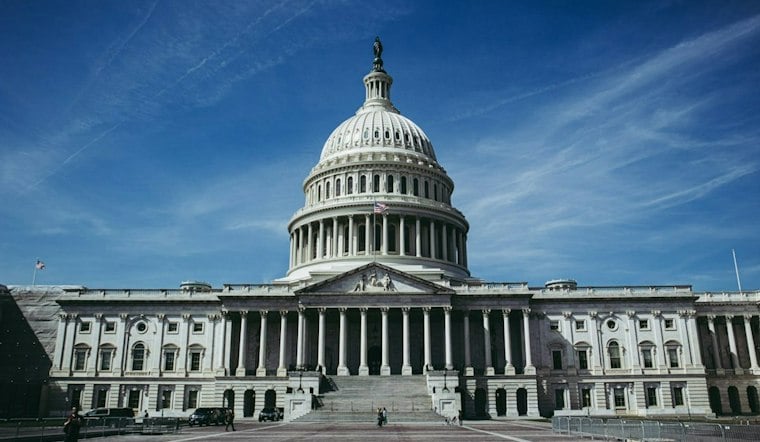
Inside the West Wing, aides have spent the past several months quietly building a playbook for a scenario Republicans hope never arrives: a Democratic-controlled Congress. Senior officials Stephen Miller and Russell Vought have worked with the White House Counsel's Office since April to identify executive actions President Trump could take without lawmakers' approval, according to officials familiar with the planning. Federal agencies have already submitted proposals and legal reviews of actions the administration could pursue on its own.
The preparations, first detailed by Reuters and carried locally by The State, outline a range of unilateral options under consideration, including new tariffs on imports of critical minerals and wind turbines, tighter visa rules for international students and temporary foreign workers, and measures aimed at lowering housing and construction costs. Trump has been briefed on the preparations and has taken part in discussions about them, the outlets reported.
Vought, the budget director, is separately examining which of the administration's priorities can move forward using money Congress has already appropriated, rather than new funding that would require lawmakers' sign-off. He also wants to change federal grant rules to give political appointees more say over which government programs receive taxpayer money. A related OMB proposal reported by TIME would require senior appointees to review federal grant awards for whether they advance the president's policy priorities, with agencies gaining broad authority to terminate awards they decide no longer align with government goals.
Bracing for Subpoenas and Document Requests
It isn't just policy moves being mapped out. White House lawyers have briefed political appointees and agency leaders on how to handle congressional inquiries, document requests and subpoenas, and have advised officials to be careful about what they put in writing, per the same Reuters account. Trump aides have also sought a Justice Department opinion that could allow the president to invoke executive privilege to shield communications with private advisers from congressional scrutiny.
On the other side of the aisle, senior House Democrats and committee aides have discussed using hearings, subpoenas and document requests to examine whether Trump used presidential power to benefit himself, allies or donors, the same reporting notes. The BBC reports that Democratic staffers have begun assembling a list of possible investigations and witnesses, with immigration enforcement — including allegations of misconduct by ICE agents during raids — identified as a key priority, according to the BBC. Control of a chamber would bring subpoena power and additional funding for such probes.
The Math Democrats Are Up Against
Even a Democratic sweep wouldn't hand the party unchecked power over Trump's agenda. Democrats need a net gain of four House seats to overturn Republicans' 218-214 majority, and a net gain of four Senate seats to flip the chamber's 53-47 Republican edge. Opinion polls favor Democrats to win the House, while the Senate contest remains too close to call, the Reuters report says.
Even with majorities, Democrats would likely lack enough House votes to override a presidential veto, which requires two-thirds majorities in both chambers. Trump could veto Democratic legislation he opposes, and could also veto a congressional vote to end a national emergency he has declared — authority he has already used to expand his ability to act without new legislation. Courts, however, could block executive actions found to exceed his legal authority, the report notes.
Control of the Senate would still matter significantly: Democrats could block Trump's judicial and executive-branch nominees, including any Supreme Court pick, if they hold that chamber. Election analyst Andrew Busch said Democrats would be very reluctant to approve the president's appointments under those circumstances. Nathan Gonzales said Trump has largely ignored Congress and relied on executive orders and executive power throughout his term, and would likely continue doing so regardless of who controls the Hill.
A Presidency Already Built on Unilateral Action
None of this would be new territory for Trump, who returned to office in January 2025 and has since used executive authority to impose sweeping tariffs, intensify immigration enforcement, shrink the federal workforce and pursue foreign-policy goals including the war against Iran. His tax and spending cuts package was passed and signed into law in July 2025, but much of his second-term agenda has moved through executive orders and emergency declarations rather than new legislation.
Historians see this as part of a longer arc rather than an aberration. NPR reported that presidential historians describe Trump as having inherited an increasingly powerful presidency, with analyst Tevi Troy characterizing his approach bluntly: “He's what I call a unilateralist. He doesn't have an ideology, he has a methodology, and the methodology is unilateralism.” NPR also noted that George W. Bush issued signing statements to challenge or reinterpret bills passed by Congress, while Barack Obama famously said he had a pen and planned to use it — a reminder that expanding executive reach has crossed party lines before.
Vought in particular has a track record of pushing budgetary boundaries. ProPublica reported that in 2019, as acting OMB director, he redirected billions of dollars in Defense Department money to build the border wall after Congress declined to fund it. More recently, ProPublica reported that Vought threatened mass firings across the federal workforce and paused or canceled $26 billion in infrastructure and clean-energy funding during a government shutdown.
What the White House Is Saying
White House spokeswoman Lauren Bis said the administration and commonsense Republicans will continue to secure borders, restore law and order, put more money in Americans' pockets and deliver wins. Trump has spent the month before the midterm elections holding rallies across the country in an effort to preserve Republican control of Congress.
Should Democrats capture either chamber, they would gain the power to investigate Trump, block legislation and constrain his spending priorities — but congressional investigations themselves cannot be sidestepped through executive action, regardless of how much of his agenda the White House manages to advance unilaterally. White House Counsel Will Scharf and his team are examining what Trump can legally do alone, the limits of his authority, and how to defend those actions in court, while the administration separately plans to seek Justice Department legal opinions on the same questions.





