

























































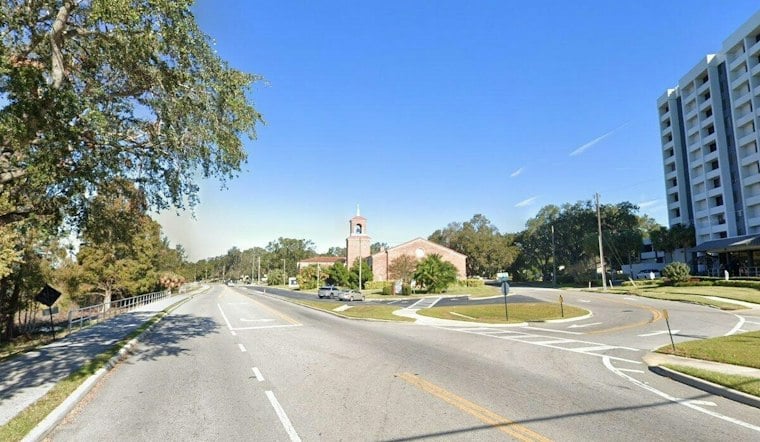
Winter Haven residents living along 8th Street NW say they want hard numbers and real design choices before the city moves forward with a project meant to slow traffic and improve pedestrian safety in their neighborhood. City staff say they're listening, with a community meeting set for December 7 at Beymer Church where three design options will be presented to the public.
The project, which also covers Avenue L NW, remains in what city staff describe as the very early conceptual design phase, according to Daily Ridge. City Manager T. Michael Starves said no design has actually been developed yet, even as neighbors press for specifics. Staff plan to use whatever feedback comes out of the December meeting to draft the next version of a potential design, and Starves said public engagement will continue throughout planning, with residents getting significant input on the final design.
What Residents Are Actually Worried About
A city survey conducted from October 8 through October 31 drew more than 130 responses, and the results point to a neighborhood fixated on traffic, not amenities. Respondents ranked vehicle speeding and high traffic volume as their top two concerns, with walking safety also flagged as a major issue — even though it was rated the lowest-performing travel mode overall. When it came to priorities for the project itself, preserving neighborhood character topped the list, followed by addressing speeding and maintaining mature trees and landscaping. Driver behavior, intersection safety, and bicycle safety also came up as additional concerns, per the Daily Ridge report.
Project leaders have framed the core problem simply: once you get out of the car, the road no longer feels safe. But over 43% of survey respondents said they wanted to see specific design proposals before they'd even form an opinion on the project — a sign that vague promises of safety upgrades aren't landing with skeptical homeowners.
Neighbors Question Whether the Plan Will Work
Resident Jorge Dopico said homeowners remain unsure how to assess the proposal without concrete design details, and he added that traffic mitigation would be helpful in theory, but that previous efforts in the area have not really worked. Carter Wampler, another resident, cited poor drainage and heavy rainfall as existing hazards around his home, separate from the traffic concerns driving the broader debate.
Tamara Lee Antemesaris said she supports the underlying goals of improving safety for walkers and cyclists and reducing carbon emissions, but she questioned whether the project's current approach would meaningfully reduce cut-through traffic, and said she questions whether it addresses the problems residents are actually experiencing. Linda Bishop raised a different objection, arguing that additional pedestrian traffic could increase trespassing, theft, and littering in nearby neighborhoods. Some residents have also worried that design features could reshape neighborhood character or inadvertently create a cut-through route that draws more traffic in, according to citizenportal.ai.
City Officials Defend the Outreach Effort
Mayor Brian Yates praised the city's outreach efforts so far, and Commissioner Chad Davis stressed the importance of transparency and keeping residents informed throughout the process. Davis said the process will remain open and that the city's goal is to produce a result residents are proud and happy with.
That outreach has included more than talk. City staff launched a dedicated project page in early October that offers updates, presentations, project information, and a way for residents to submit input. Staff also placed thirty signs along the project area directing people to that page and the survey, mailed letters to residents along the corridor and within several surrounding blocks, and conducted door-to-door outreach, per the Daily Ridge account.
Funding, Design Fees, and a Disputed Timeline
The city has said the project is funded in part by an FDOT grant aimed at pedestrian safety and connectivity improvements, and according to the Daily Ridge report, the road project's construction is expected to cost $3.3 million, with the Florida Department of Transportation grant covering roughly $1.7 million of that and the city's transportation fund covering about $200,000. The design phase itself is estimated at $507,584. Separately, citizenportal.ai reported an FDOT-related construction grant of $1,256,720 and a design fee of $390,584 from consultant Kimley Horn, against a budgeted $285,000 — figures that don't line up cleanly with the Daily Ridge numbers, underscoring how unsettled the project's financial details still appear across different accounts.
Water and wastewater infrastructure improvements tied to the corridor are expected to cost roughly $1.4 million, to be paid for by the city's water and wastewater fund. City staff have said the road work is being timed alongside those water upgrades specifically to minimize construction disruptions for residents.
The construction timeline itself is similarly murky. Daily Ridge reported construction is tentatively scheduled to begin in 2028, while TampaBay28 reported construction slated to begin in late 2027, and Bay News 9 reported the start is expected in fiscal year 2028. Final design plans are anticipated by late 2027, according to Daily Ridge, though citizenportal.ai separately cited fall 2027 as the target for final plans. Bay News 9 has also reported that Winter Haven was awarded $1.2 million from FDOT for traffic improvements, and that the city commission voted to direct that funding toward 8th Street NW pedestrian-safety and traffic-calming work.
A Trail Connection and What Comes Next
Beyond the immediate safety fixes, Winter Haven Public Works Director Brittany Hart has said the project would connect the Chain of Lakes Trail and Lake Howard Trail by closing gaps in the city's trail network. The broader aim, per Daily Ridge, is to improve accessibility and pedestrian safety through new sidewalks, safer crossings and intersections, traffic calming, and drainage upgrades along the corridor. Bay News 9's reporting similarly described planned improvements focused on filling sidewalk gaps, enhancing crossings, and adding measures intended to slow traffic down.
For now, the project's fate rests on the conversations still to come. City staff have said they will present two conceptual designs before the project reaches 30% design, according to citizenportal.ai, while Daily Ridge reported that three design options are planned for the December 7 meeting at Beymer Church, which is open to all citizens. Residents like Dopico and Antemesaris say they'll be watching closely to see whether those designs actually answer the questions that have dominated the conversation so far — speeding, cut-through traffic, and whether the neighborhood they know will still feel like itself when the work is done.





