

























































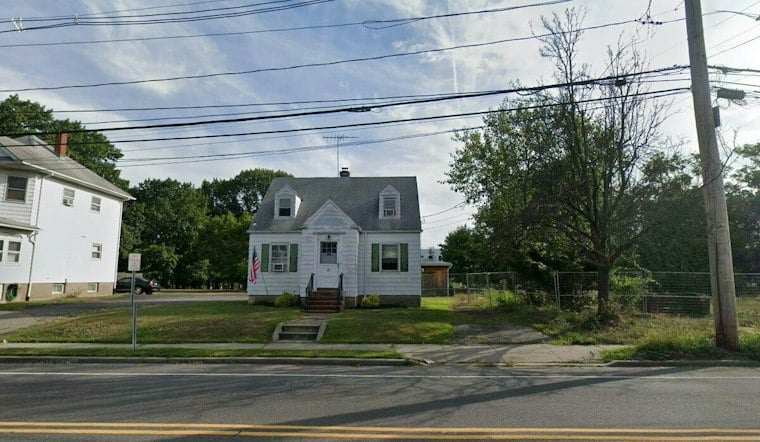
Woodland Park’s Zoning Board of Adjustment voted 6-1, with one member abstaining, to deny a proposal that would have combined four properties at 29-33 Lackawanna Avenue into a three-story building with 12 apartments, a 730-square-foot commercial space, and parking. The board rejected the application over zoning-exception and neighborhood-density concerns, ending a review of a project that had already been reworked once to address earlier objections.
A Project Built On Exceptions
The proposal, submitted by Hazem Asad on behalf of Odeh Group, LLC, needed a string of zoning exceptions before it could move forward, according to TAPinto. Because Linden Avenue is still officially treated as a street — even though it has never actually been opened to traffic — the development required waivers for setbacks, parking locations, and other zoning rules tied to that classification. The site plan also covered roughly 92 percent of the property with the building, parking, and other paved surfaces, well above the borough’s maximum allowed lot coverage of 85 percent.
Board member Russel Juzdan said the sheer number of variances and waivers being requested signaled overdevelopment, per the same TAPinto account. Fellow board member Ruth Patterson said simply that the proposal was too dense and too close, while Darlene Green noted that roughly 65 percent of the first floor was slated for residential-related space rather than the retail or service uses required there.
Parking Questions Linger
The plan included 23 parking spaces, one fewer than required after applying an electric-vehicle-charging-space credit. The project also would have needed additional approvals from the New Jersey Department of Environmental Protection before any construction could begin.
To address earlier concerns, Odeh Group had already made design changes, removing a rooftop stairwell enclosure, wrapping the building in brick, and adding a rear retail entrance. The developer also agreed to move most electric-vehicle charging stations outside the building following fire-prevention recommendations.
Traffic Study Clashes With Board And Police Concerns
Traffic engineer William Stimmel conducted a study on October 6 that counted roughly 1,600 vehicles passing through the intersection during the busiest morning hour and 1,950 during the busiest evening hour. Stimmel estimated the project would add only about eight vehicle trips during evening rush hour — roughly one additional vehicle every seven to eight minutes — and projected the development would increase average intersection delays by just 0.1 to 0.2 seconds per vehicle. He concluded the project would have little impact on traffic overall.
Board members weren’t convinced. Some questioned whether the study accurately reflected conditions near Amazon’s driveway nearby, and others raised concerns about how holiday-season traffic increases might change the picture. Phyllis Hornstra referred the board to a police department report from Captain Dan Aguilera that raised its own traffic, crash, and density concerns about the site.
As part of the application, Odeh Group agreed to prohibit left turns when exiting the property, contingent on approval from Passaic County, and indicated it would be willing to have that restriction enforced under state traffic laws. The attorney for Odeh Group argued the project would replace deteriorating buildings, add housing and retail, improve Lackawanna Avenue’s streetscape, and generate new property-tax revenue for the borough.
A Street With A Troubled Safety History
Board members referenced two fatal incidents near the intersection of Lackawanna and McBride avenues, according to the TAPinto report on the board’s decision. Separately, News 12 has reported that four pedestrians were struck in Woodland Park over a two-day span, including a crossing guard who was killed and two children who were also hit. A pedestrian was struck on McBride Avenue the day after that fatal crash, on a stretch of road where, as News 12 put it, “there is no crosswalk on this part of the road.” The borough had added pedestrian walk signs with push buttons and left-turn lights at the intersection the year before in an effort to improve safety there.
Woodland Park’s zoning chapter states that its regulations exist to govern building size, density, and land uses in support of public health, safety, and general welfare, according to the borough’s Chapter 22: Zoning code. That general purpose, rather than any single finding, formed the backdrop against which the board ultimately weighed the Lackawanna Avenue application and voted it down.





