

























































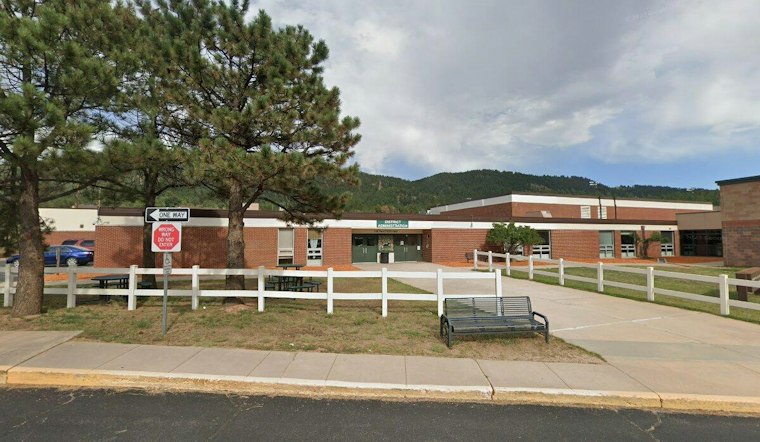
Every school in the Woodland Park School District RE-2 could soon operate under one unified safety and security plan, after the district's Board of Education spent part of its regular meeting Wednesday night reviewing a sweeping new resolution. The proposal would direct the superintendent to build and continually update an integrated all-hazards plan applying uniformly across every district public school. No vote happened, since the resolution was only up for its first reading.
A Single Playbook for Every Campus, Including Charter Schools
As reported by the Colorado Springs Gazette, the resolution was drafted and read by board member Robb Davidson and calls for comprehensive coverage, mutual collaboration between schools, and site-specific requirements tailored to individual buildings. Notably, the plan wouldn't stop at traditional district schools — it would also apply to Merit Academy, the district's existing charter school, as well as any future charter schools that open in Woodland Park.
The resolution leans on guidance from several outside authorities, including the U.S. Department of Homeland Security and the Partner Alliance for Safer Schools, according to the same report. It also references recommendations from the National Association of School Resource Officers and the National Sheriffs' Association, and the document was crafted in part to address requests from local law enforcement in Woodland Park.
Board President Touts Shared Language and Faster Reunification
Board President Keegan Barkley argued the resolution's biggest value is consistency. He said it promotes unified security language and consistent codes across buildings, so that a shared code or alarm meaning allows everyone — staff, students, and first responders alike — to understand alerts the same way no matter which school they're in. Barkley added that the district's security team has already been undergoing appropriate training ahead of any formal adoption.
The plan also builds in a system for reuniting students with their parents safely, regardless of which building a child is in during an emergency. “We have a plan to make sure students get to their parents safely, regardless of what building they're in,” Barkley said, per the Gazette's account of the meeting.
Superintendent Points to Grants and Training Already Underway
Superintendent Ginger Slocum told the board the district has been applying for state grants it previously used to bolster mental health services, and that staff attended threat-assessment trainings in recent months. Slocum said the district is working to rebuild proactive supports it had lost previously, framing the safety resolution as part of a broader effort rather than a standalone fix. Davidson, for his part, said preventive recommendations baked into the plan include multilayered security measures, a safe-school culture, and social and emotional support for both students and parents. Community partners have also offered assistance with school safety, according to the board discussion.
Schneider Electric Pitches Two Ways to Pay for Upgrades
Beyond the policy language, the meeting included a practical funding conversation. Schneider Electric presented the board with proposals to fund security upgrades across district school buildings, offering two distinct paths forward. One option involves applying for existing state grants earmarked for security improvements; the other would tap district savings from utility costs, funneled through an energy performance contract, to pay for physical upgrades.
Schneider Electric representative Jack Vehrenkamp said the identified utility savings could be used to fund new access controls, cameras, fencing, exterior lighting, alarms or panic buttons, and security vestibules. It's a funding model the company has used elsewhere in Colorado — a Schneider Electric case study describes how Lewis-Palmer School District 38 used an Energy Savings Performance Contract to bolster security at three elementary schools after the district was unable to pass a bond for additional funding, leaving it with only limited general dollars for infrastructure projects.
Colorado also runs a separate state-level option, the School Security Disbursement Grant Program established under SB23-241, which provides disbursements to local education providers and eligible nonprofit organizations for improving school security, according to the Colorado Office of School Safety. The state's own materials indicate funding for the Fiscal Year 2027 cycle of that program has been made available.
The Woodland Park board was receptive to Schneider Electric's proposals and agreed to revisit the funding question at a future meeting. With the safety resolution still sitting at its first reading, both the policy framework and the money to pay for any resulting upgrades remain open questions the board will need to settle in the months ahead.





