

























































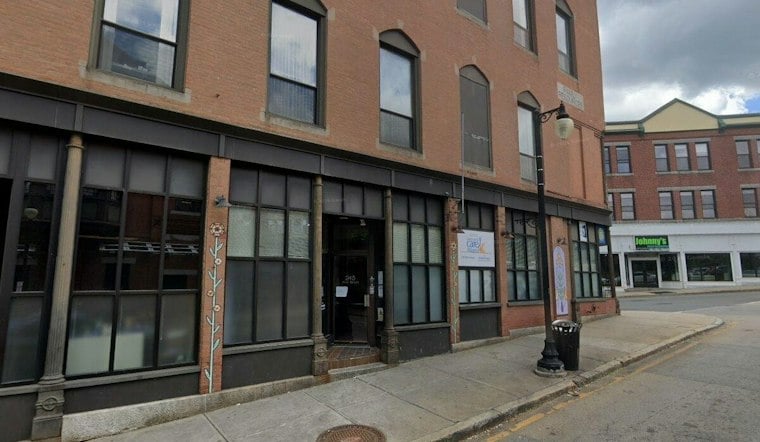
Woonsocket's City Council voted 7-0 this week to ask state lawmakers for more control over the needle exchange program operating within city limits, a move councilors framed as a request for a seat at the table rather than an effort to kill the statewide initiative. The resolution, passed Monday, asks the city's legislative delegation to introduce and support legislation establishing what it calls municipal authorization and accountability over syringe-service activities.
According to The Valley Breeze, the needle exchange program is a statewide initiative run by AIDS Care Ocean State and aims to reduce the risk of HIV transmission among people who inject drugs by discouraging needle reuse. Participants can drop off used needles and syringes and collect clean ones in return. The Rhode Island Department of Health manages the program, and as Community Care Alliance has noted, the state health agency contracts with AIDS Care Ocean State to distribute clean needles, including in Woonsocket.
City Councilman Dan Gendron, who helped introduce the resolution, said he believes no one in Woonsocket is satisfied with how the exchange program currently functions and that it needs finer tuning along with more local input. He said the council wants the city to have some control over how the program operates within its borders, but stressed the proposal would not eliminate the statewide program — it would simply give participating cities a say in how it's conducted locally, per the Valley Breeze report.
What the Resolution Actually Asks For
The resolution requests legislation requiring a vote by an elected municipal governing body before syringe-service activity can begin or continue in any Rhode Island municipality. It also asks for authority allowing Woonsocket to approve, conditionally approve, deny, suspend, revoke or decline participation in such programs, along with the power to limit outdoor, mobile and street-outreach components, according to the Valley Breeze.
Councilman James Cournoyer pointed to language in the resolution allowing the city to approve programs with conditions attached, and he noted that opting out entirely would still require a council vote rather than a unilateral decision. Cournoyer said Woonsocket currently has little oversight of what happens within its borders related to the program and that the city experiences some adverse effects as a result. He framed the proposal as seeking input and control rather than shutting the program down.
Councilor Valerie Gonzalez said she backed the resolution because it would encourage communication between the city and the agencies running the programs. She said the city already communicates with Community Care Alliance and learned through those conversations that other agencies had also been distributing needles in encampments. Gonzalez added that the legislation could formalize that conversation between agencies and improve collective decision-making going forward.
One Councilor's Change of Heart
Councilor Kristina Fox initially said she planned to vote against the resolution, citing the program's benefits and concerns she had about the measure. After Cournoyer and Gonzalez addressed those concerns during the meeting, Fox said the relevant passages resolved her objections, and she changed her vote to yes, helping the resolution pass unanimously.
The resolution states the council is willing to work with the Woonsocket delegation, the Rhode Island Department of Health, public-health professionals, community organizations, residents and others to craft balanced legislation. It frames the goal as balancing disease-prevention objectives with municipal authority, transparency, neighborhood protection and public safety. The council also specified what it is not seeking: criminalizing addiction, penalizing lawful syringe possession, interfering with legitimate medical treatment, or preventing emergency medical care.
Community Care Alliance's Voluntary Changes
The resolution notes that Community Care Alliance acknowledged in June that requests for supplies at encampments had led to an abundance of discarded needles and related public-safety concerns. In response, the organization announced voluntary measures including one-for-one exchanges at its Safe Haven program, an end to bulk deliveries at encampments, tracking of syringe distribution, and additional cleanup efforts.
Community Care Alliance has described that one-for-one approach in detail: unhoused individuals must bring in dirty needles in exchange for clean ones at Safe Haven, a system the organization says limits distribution to what gets returned. AIDS Care Ocean State will continue delivering needles to private residences, but those recipients must also return their used needles, the organization says. Outreach staff and AIDS Care Ocean State will coordinate with Woonsocket's city administration to help clean up sites where discarded needles have accumulated.
How the Debate Fits a Wider Pattern
Woonsocket's push for local authority echoes tensions playing out elsewhere in New England over how syringe-service programs should be regulated at the municipal level. In Maine, Lewiston residents faced a citizen-initiated referendum, scheduled for Nov. 3, that would have limited sterile needle distribution to 20 per person per day, required a single fixed location and banned mobile units, according to The Maine Monitor. Lewiston had already amended its business ordinance to require state-certified programs to obtain a city license and operate only in designated zones, a change that limited the city to one provider at a time, the outlet reported. Augusta city councilors separately approved a 180-day moratorium on new syringe programs amid concerns about needle litter, per the same account.
Rhode Island lawmakers have debated similar questions at the state level. The state House approved a two-year extension of Rhode Island's harm-reduction center pilot program through March 1, 2028, by a 52-17 vote with six members absent, according to Rhode Island Current. Project Weber/RENEW told the outlet its south Providence harm-reduction center had drawn more than 500 visitors and prevented 27 overdose deaths since opening in mid-January. Statewide, drug-related overdose deaths fell 21% from 2023 to 2024, dropping to 320 deaths, according to state health data cited by Rhode Island Current. Community Care Alliance has separately stated that opioid-overdose death rates in both Rhode Island and Woonsocket have declined since harm-reduction practices were implemented.



