

























































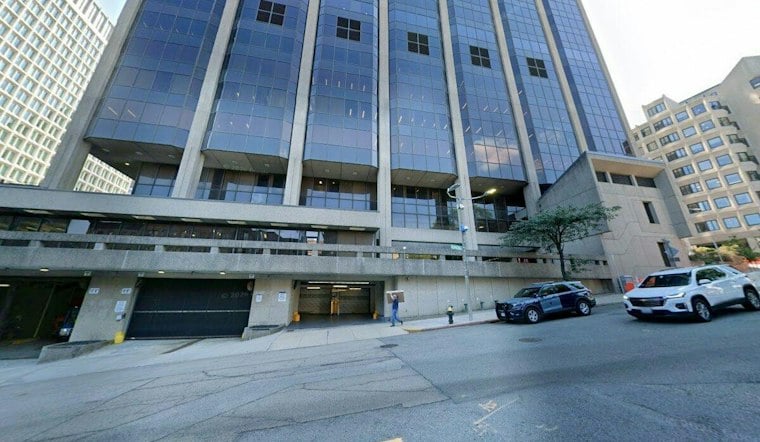
The city’s handling of an investigation into a Worcester police deputy chief’s age-discrimination complaint has become a records-access dispute as well. The city’s Diversity, Equity and Inclusion office cleared Police Chief Paul B. Saucier of wrongdoing, but the 19-page investigative report released by Worcester was more than 60 percent redacted.
A October Clash Over Overtime and Details
According to the Worcester Telegram & Gazette, the dispute stems from an Oct. 23, 2025, exchange after which McGinn was barred from performing details for the rest of the year and lost some duties. Saucier said McGinn had worked too many details. City records cited by the newspaper show Saucier had flagged what he viewed as an excessive amount of McGinn’s off-duty detail pay. The newspaper reported that city policies allow union employees to work up to 96 total hours a week, combining overtime and details, but that it was unclear what caps apply specifically to deputy chiefs.
McGinn, then 62, filed an age-discrimination complaint with the city’s DEI office. Saucier, then 59, told the Telegram he did not know the deputies’ ages and said the complaint was not sustained because there was “no evidence whatsoever” to support it. The DEI office cleared Saucier in a May 14, 2026, letter, according to the newspaper. It also recommended clearer records of deputy reassignment decisions, automated tracking of detail hours, and consideration of other communication approaches. The office identified disciplinary records, misconduct and overuse of detail hours as criteria for reassignment decisions.
Printer Incident and a Retaliation Claim
McGinn also alleged that, within 48 hours of filing his complaint, his confidential investigator summary and online complaint appeared on a communal printer in the chief’s office suite. The allegation was reported by the Telegram but was not independently verified in city records. McGinn later filed a retaliation claim. The DEI office said retaliation was outside its jurisdiction and, according to the newspaper, referred him to the attorney general’s office, the Massachusetts Civil Service Unit and Community Legal Aid.
A city spokesman declined to say on Oct. 30 whether Worcester had received a formal grievance or been threatened with a lawsuit, the Telegram reported. The city has said many report redactions protect mental impressions made in reasonable anticipation of litigation and has indicated the investigation could be subject to future litigation.
A Records Fight That Started Months Earlier
The redactions followed an earlier dispute over access to police DEI investigations. In September, reporting detailed how the city first signaled in August that it would withhold all such investigations from the Telegram & Gazette, then reversed course about a week later. Worcester provided the newspaper six letters summarizing DEI investigation findings on Aug. 26 and said by Sept. 4 that it would provide further responsive records, excluding attorney work product. The office investigates police complaints that may involve discrimination; it does not replace the department’s internal affairs function. It had conducted 17 police investigations since 2022, the report said.
The Telegram reported that six other DEI investigations involving lower-ranking officers had substantially lighter redactions, prompting questions about the different treatment of the McGinn-Saucier report. The newspaper and McGinn have each appealed Worcester’s public-records response to the secretary of state; records show McGinn has appealed twice.
What the rules and records process establish
The City of Worcester’s police policy index lists a policy titled “Off Duty Assignments.” The listing alone does not establish which rules on off-duty details, combined work hours or detail tracking applied to deputy chiefs in McGinn’s case. The Massachusetts Secretary of the Commonwealth’s Division of Public Records says requesters may appeal a public-records response within 90 days of receiving it. That general deadline does not determine whether Worcester’s redactions were lawful.
Pay Records and a Prior Legal Fight
Public pay records cited by the Telegram show McGinn earned $279,288 in 2025, including $66,455 in detail pay. Deputy Chief Matthew D’Andrea, promoted in late 2025 and younger than McGinn, earned $274,272, including $54,460 in detail pay. Other deputy chiefs’ detail earnings were $60,960 for Carl Supernor and $31,380 for Kenneth Davenport.
McGinn had previously challenged the process that elevated Saucier to lead the department. A Massachusetts Civil Service Commission filing says McGinn and fellow deputy chiefs Sean J. Fleming and Carl J. Supernor filed a petition on June 24, 2024, challenging Saucier’s appointment process. The commission agreed to investigate. That year, the city separately petitioned state lawmakers to remove the police chief and deputy chief positions from civil service protection.



