

























































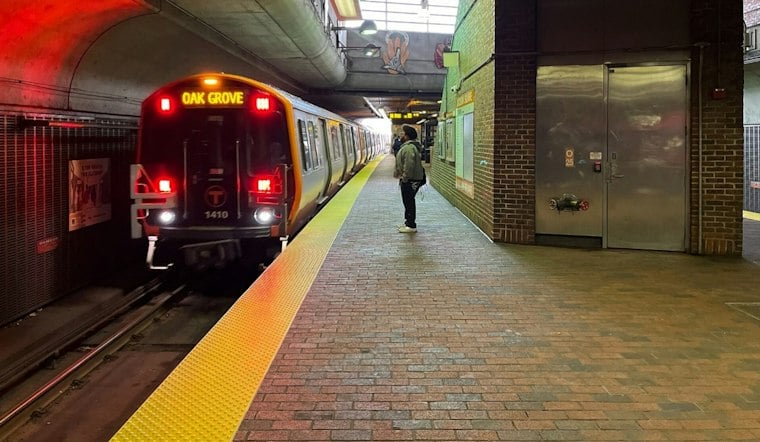
A young girl may have come into contact with the electrified third rail at the Jackson Square MBTA stop Saturday morning, officials said. She was conscious and alert when she was taken to a local hospital for evaluation, and the transit agency says it is now piecing together exactly what happened.
MBTA Superintendent Richard Sullivan confirmed the girl's condition in a statement reported by The Boston Globe, saying she was conscious and alert when transported for evaluation. The MBTA said it is investigating the facts and circumstances surrounding the incident, though it has not yet detailed how the contact may have occurred. Jackson Square station sits on the Orange Line in Jamaica Plain, according to the same report.
How the Third Rail Works, and Why It's Dangerous
The rails that power MBTA trains carry a serious jolt. MBTA spokesperson Joe Pesaturo has said the electrified third rails carry 600 volts and power trains on the Orange Line, Red Line, and a portion of the Blue Line, a detail outlined in a report from Boston.com following an unrelated fatal incident earlier this year. That voltage is part of why any contact with the rail, even brief, can cause severe injury.
The MBTA’s rider guidance urges passengers to stay behind the platform’s yellow tactile warning strip and not to retrieve items that fall onto the tracks. Instead, the agency says, riders should ask an MBTA employee or transit ambassador for help. The guidance underscores that the electrified rail is not a place for passengers to approach, even when trying to recover a dropped belonging. MBTA safety guidance sets out those precautions.
This is not the first time this year that an MBTA third rail has drawn scrutiny. A 19-year-old woman was hospitalized in critical condition after falling onto the tracks at Forest Hills Station, where Lowell resident Frankey Wright also died after falling from the platform, Boston.com reported. That incident snarled Orange Line service, with trains delayed up to 20 minutes before shuttle buses eventually replaced service, according to WCVB. In a separate case, a man died after coming into contact with the electrified third rail on the Red Line near the Neponset River Bridge, with the incident occurring shortly before midnight on a Sunday; WCVB reported he was pronounced dead at the scene and his identity had not been released.
MBTA's Platform Barrier Plans Still in Early Stages
Those earlier incidents pushed the MBTA to explore physical barriers between riders and the tracks. Earlier this year, the agency issued a request for information about adding transit station platform screen door systems to stations on the Red, Blue, and Orange lines, Boston.com reported. The T received eight responses to that request, according to a report from Streetsblog Mass.
The agency has said it plans to use that feedback to seek proposals for a pilot program at a yet-to-be-determined Orange Line or Red Line station, per Boston.com's reporting. The goal, according to Streetsblog Mass, is to observe a platform barrier's integration with MBTA infrastructure and evaluate its capabilities and operational effectiveness within the subway system. Elsewhere, the scale of such a build-out has proven daunting: a New York City transit study found that only 27 percent of stations could even accommodate full-height platform screens, at an estimated cost of around $7 billion, Boston.com noted.
New York’s experience shows why platform barriers can be difficult to retrofit into older subway systems. A Metropolitan Transportation Authority feasibility study found that narrow platforms, structural limits and train doors that do not line up consistently would prevent full-height doors at many stations; it estimated that just 128 of 472 stations could accommodate them, at a cost exceeding $7 billion. The study illustrates why a pilot at one Boston station would test not just the barrier itself but how it fits existing trains and station infrastructure. The MTA’s track-intrusion study details those constraints.
It remains unclear whether any barrier system would have been relevant to Saturday's incident at Jackson Square, and the MBTA has not said whether that station is under consideration for the pilot. For now, the agency's investigation into what happened at Jackson Square is ongoing, and no further details about the girl's condition have been released.
The MBTA conducts the investigation into what happened, while a separate state agency oversees transit safety compliance. Massachusetts designates the Department of Public Utilities’ Rail Transit Safety Division as the safety oversight agency for the MBTA’s rail system, responsible for monitoring compliance with safety standards, policies and corrective actions. In September 2026, the Federal Transit Administration closed its final special directive concerning DPU’s oversight, returning responsibility for remaining safety actions to the state agency. The state’s oversight framework and the FTA directive’s closure define that regulatory context.



