

























































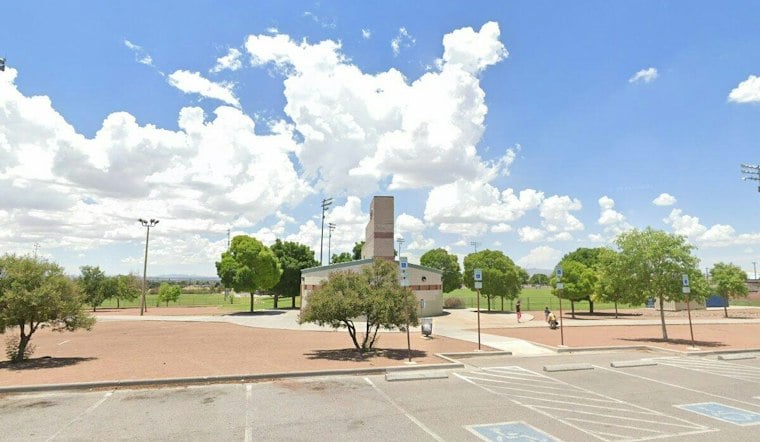
A long-simmering fight over who actually owns a chunk of El Paso's Lower Valley, including the popular Blackie Chesher Park, has hit a significant snag for the Ysleta del Sur Pueblo. A U.S. magistrate judge has recommended that the tribe's lawsuit against the city be dismissed, finding the court lacks jurisdiction to decide the land-ownership claims at the heart of the case.
The dispute centers on more than 155 acres in the Lower Valley, according to El Paso Inc., though Law360 UK has put the figure at 155.6 acres. The Pueblo claims it is the rightful owner of parcels near Gateway East and Zaragoza, including Blackie Chesher Park, a claim rooted in a 1751 Spanish land grant and an assertion of aboriginal title rights. The city disputes that entirely, arguing it legally acquired the parcels between 1944 and 1970.
In August, U.S. Magistrate Judge Miguel Torres issued a report and recommendation backing the city's motion to dismiss the case, which is pending in the U.S. District Court for the Western District of Texas. The report's publication doesn't end the matter though — the article notes a final order has not been filed, leaving the case in limbo for now.
Why the Judge Says the Claim Falls Short
Torres's report found that the court lacks subject-matter jurisdiction over the Pueblo's land-ownership claims tied to the Spanish land grant, and separately concluded the Pueblo failed to demonstrate aboriginal title rights. The city had argued throughout that the federal court lacks jurisdiction to hear the case at all, and separately contended the Pueblo must first obtain a state-court judgment establishing ownership before pursuing its claims in federal court.
Torres wrote that “the history of the Pueblo's relocation by the Spanish and Spanish land grant makes clear that the Pueblo does not have aboriginal title to the disputed property because it has not plead that it occupied the disputed property since time immemorial.” The report also pointed to the Pueblo's history: after Spanish relocation from northern New Mexico in the late 1600s, the tribe shared the area with other groups, including the Piro.
A Fight That Has Played Out Before
This isn't the first time these two sides have squared off over the same ground. The Pueblo filed an earlier lawsuit in 2017 seeking judicial confirmation over land it said was covered by the same 1751 grant — a case the Native American Rights Fund describes as seeking 111.73 acres, while El Paso Inc. describes it as 111 acres. That case was dismissed in 2020 for lack of subject-matter jurisdiction, following city attorneys' argument that the court lacked authority because the 1751 Spanish Land Grant had never been confirmed by Congress, a point also noted by the Native American Rights Fund. In that earlier round, the court granted in part and denied in part the city's motion for summary judgment, and city attorneys also argued the Pueblo had not objected when Blackie Chesher Park was developed or when a nearby Ysleta ISD elementary school was built.
The Pueblo received federal recognition in 1987, but that designation did not include land tied to the 1751 Spanish land grant or any land not specifically named in the recognition act. In 1993, the Pueblo filed an affidavit asserting land claims across five Texas counties, including the Ysleta and Socorro land grants, laying groundwork for disputes that have resurfaced in the decades since.
School District Properties Also in the Crosshairs
Blackie Chesher Park isn't the only public land caught up in the fight. Public entities with property in the disputed area include the city of El Paso, Ysleta Independent School District, El Paso County, El Paso Water, Texas A&M University, and HOME, which is the current name of the Housing Authority of the City of El Paso.
Ysleta ISD filed an amicus brief in August supporting the city, telling the court the Pueblo had intervened multiple times in the district's attempts to sell 11 surplus properties, including Robert F. Kennedy Pre-K and Camino Real Middle School, which the district had under contract for sale. The brief said the claimed district properties have been rendered virtually unmarketable as a result.
According to the amicus brief, the Pueblo wrote letters to the purchaser of those properties claiming Ysleta ISD's titles were void and obtained through “fraudulent transfers,” then sued the purchaser, pain management physician Dr. Manouchehr Refaeian, after the sales had already closed. That case ended in an undisclosed compromise settlement and was ultimately dismissed.
The school district's brief also argued that the Pueblo's land-grant claims have been rejected in a 2021 court case and in other cases throughout U.S. history, and said any enforceability of the 1751 claims would require approval and ratification by an act of Congress or a separate treaty between the Pueblo and the United States — neither of which has occurred, according to the brief. The brief further noted that the Treaty of Guadalupe Hidalgo, signed in 1848, was not self-executing.
Both the city of El Paso and Pueblo Governor Michael Silvas declined to comment on the pending case, citing ongoing legal proceedings.



