
























































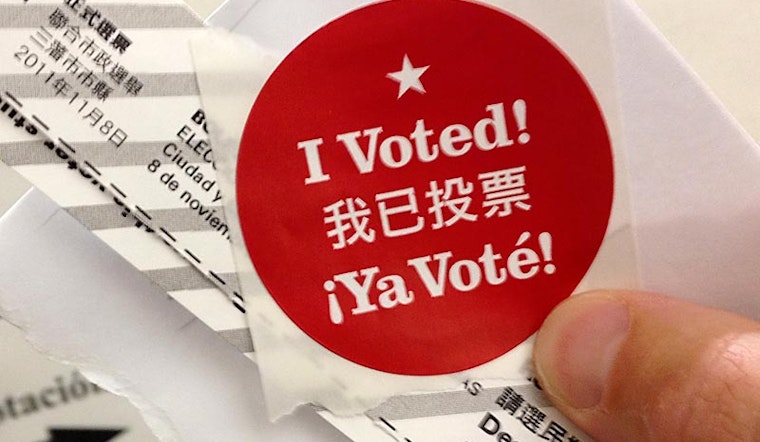
A few weeks ago, we invited readers of Haighteration, and our sibling blogs in Hayes Valley (Hayeswire) and the Upper Haight (Uppercasing), to submit questions for the candidates running for District 5 Supervisor.
Today, we present the final set of the candidates' answers.
We selected five questions to represent each neighborhood, and submitted them to the candidates. Topics included crime, homelessness, traffic, housing, blight, Ross Mirkarimi, and more. While all eight candidates agreed to answer our readers' questions, as of our deadline we hadn't received responses from candidates Daniel Everett or John Rizzo. So, only six of the candidates are represented below. Hayeswire posted part one a couple of weeks ago, followed by Uppercasing with part two. Now, here are the candidates' answers to our five Lower Haight questions, presented in random order.
E. asks: "There's been a recent surge in street crimes in the Lower Haight - mostly muggings, with the attackers pulling out guns or knives. What will the candidates do to make our neighborhood safer?"
 Julian Davis:
Keeping our streets safe is critical to our mission of building vibrant, prosperous neighborhoods. That means diligent, organized community policing, but it also means addressing the root causes of poverty and crime and reaching out to our most vulnerable by expanding mental health services and resources for the homeless. We need to add more beat cops but we need to do it responsibly by ensuring our police are culturally competent, and can work effectively with D5 residents to keep our streets clear of muggers and weapons.
Julian Davis:
Keeping our streets safe is critical to our mission of building vibrant, prosperous neighborhoods. That means diligent, organized community policing, but it also means addressing the root causes of poverty and crime and reaching out to our most vulnerable by expanding mental health services and resources for the homeless. We need to add more beat cops but we need to do it responsibly by ensuring our police are culturally competent, and can work effectively with D5 residents to keep our streets clear of muggers and weapons.
 Hope Johnson:
I support the community policing practice of foot patrols, and would like to see more partnerships between police and individual neighborhood groups and small businesses. Local residents are better able to identify problem areas and possible solutions. I agree with the campaign to educate people on proper care and use of valuables since a number of robberies seem to be related to stealing laptops and cell phones.
In addition, we need neighborhood police sub-stations such as the one opening for Twitter. In District 5, many of the crimes against residents happen at night or early in the morning along residential streets. The SFPD should be responsible for providing records and information to the Public Defender’s Office, including justification for statistics and actions. I also support community training for police that is based on the cultural norms in specific neighborhoods.
I would like to see DPW addressed graffiti as soon as possible, a practice also implemented in the reduction of crime in New York. When a neighborhood looks cared for, people are less likely to consider vandalizing it. In addition, I would like to see fines issued for possession of small amounts of marijuana rather than jail time as is now practice in Chicago.
Further, we must provide jobs and educational opportunities for young people. This might be done partnering with small businesses, a project I will donate a portion of my salary to begin if elected. I would also like to encourage manufacturing jobs return to the United States so that there will more jobs. Many jobs that used to be considered starter jobs for youth are now taken by under-employed adults.
Hope Johnson:
I support the community policing practice of foot patrols, and would like to see more partnerships between police and individual neighborhood groups and small businesses. Local residents are better able to identify problem areas and possible solutions. I agree with the campaign to educate people on proper care and use of valuables since a number of robberies seem to be related to stealing laptops and cell phones.
In addition, we need neighborhood police sub-stations such as the one opening for Twitter. In District 5, many of the crimes against residents happen at night or early in the morning along residential streets. The SFPD should be responsible for providing records and information to the Public Defender’s Office, including justification for statistics and actions. I also support community training for police that is based on the cultural norms in specific neighborhoods.
I would like to see DPW addressed graffiti as soon as possible, a practice also implemented in the reduction of crime in New York. When a neighborhood looks cared for, people are less likely to consider vandalizing it. In addition, I would like to see fines issued for possession of small amounts of marijuana rather than jail time as is now practice in Chicago.
Further, we must provide jobs and educational opportunities for young people. This might be done partnering with small businesses, a project I will donate a portion of my salary to begin if elected. I would also like to encourage manufacturing jobs return to the United States so that there will more jobs. Many jobs that used to be considered starter jobs for youth are now taken by under-employed adults.
 Andrew Resignato:
We need more police foot patrols in neighborhoods and especially in crime hotspots. A police presence on the street will prevent crimes. We also need to spend our scarce police resources wisely. If you look at the Police Stats you will notice that arrests for Narcotics are second highest below Warrant Arrests totaling nearly a quarter of the total arrests that the police make. Why are the police wasting their time and our resources arresting people for drug violations? This 'nexus' between drugs and crime that the police Captains cite does not exist. Increased drug enforcement actually increases violent crime. This is empirically proven by myself and others (tandfonline.com, icsdp.org). As Supervisor I will make sure our police resources are being spent in a way that will reduce violent crime, not increase it.
I also believe the Supervisor needs to have a long conversation with Ross Mirkarimi and Vallie Brown because during his time as Supervisor violent crimes significantly decreased in District 5. We need to replicate what they did. It's not rocket science but it worked and I don't believe the current Supervisor has a handle on it.
Andrew Resignato:
We need more police foot patrols in neighborhoods and especially in crime hotspots. A police presence on the street will prevent crimes. We also need to spend our scarce police resources wisely. If you look at the Police Stats you will notice that arrests for Narcotics are second highest below Warrant Arrests totaling nearly a quarter of the total arrests that the police make. Why are the police wasting their time and our resources arresting people for drug violations? This 'nexus' between drugs and crime that the police Captains cite does not exist. Increased drug enforcement actually increases violent crime. This is empirically proven by myself and others (tandfonline.com, icsdp.org). As Supervisor I will make sure our police resources are being spent in a way that will reduce violent crime, not increase it.
I also believe the Supervisor needs to have a long conversation with Ross Mirkarimi and Vallie Brown because during his time as Supervisor violent crimes significantly decreased in District 5. We need to replicate what they did. It's not rocket science but it worked and I don't believe the current Supervisor has a handle on it.
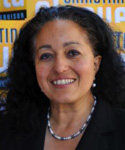 Christina Olague:
One of my top priorities as Supervisor has been public safety. However, I do understand that crime is reflective of the greater problems within our district—that of poor housing, poverty, and unemployment. In that, my task as Supervisor is twofold: first, to engage the District as a whole to help combat the systematic problems that beget crime, and second to promote effective crime prevention in my district. To achieve the latter, I support programs that lead to proper crime prevention and the effective investigation of violent crime. I support the SFPD in accomplishing these goals and I will do what I can as Supervisor to ensure that such programs are properly funded and resourced to ultimately protect the residents of my District.
Christina Olague:
One of my top priorities as Supervisor has been public safety. However, I do understand that crime is reflective of the greater problems within our district—that of poor housing, poverty, and unemployment. In that, my task as Supervisor is twofold: first, to engage the District as a whole to help combat the systematic problems that beget crime, and second to promote effective crime prevention in my district. To achieve the latter, I support programs that lead to proper crime prevention and the effective investigation of violent crime. I support the SFPD in accomplishing these goals and I will do what I can as Supervisor to ensure that such programs are properly funded and resourced to ultimately protect the residents of my District.
 London Breed:
We've got one uniformed police officer in this City for every 454 residents. Think about that for a second and you can’t help but cringe. Any solution to the uptick in crime has to come from our communities in cooperation with law enforcement. We need to engage more neighborhood groups, and find out how law enforcement can work together with them to create a safer City existence.
When we have trust and cooperation between neighborhoods and the police, we can start to increase reporting of suspicious persons, decrease response times, and tighten our communities around the concept of public safety.
I am proud to be the #1 endorsed candidate of the San Francisco Police Officers Association, and as Supervisor I will be the bridge between these groups that we need to have working together, for all our sakes.
Prevention of these crimes is an important part of the solution as well. As Supervisor, I will make sure that we are working to improve the lives of the youth in the community, before they become tomorrow’s criminals, by providing opportunities for education, training and employment.
London Breed:
We've got one uniformed police officer in this City for every 454 residents. Think about that for a second and you can’t help but cringe. Any solution to the uptick in crime has to come from our communities in cooperation with law enforcement. We need to engage more neighborhood groups, and find out how law enforcement can work together with them to create a safer City existence.
When we have trust and cooperation between neighborhoods and the police, we can start to increase reporting of suspicious persons, decrease response times, and tighten our communities around the concept of public safety.
I am proud to be the #1 endorsed candidate of the San Francisco Police Officers Association, and as Supervisor I will be the bridge between these groups that we need to have working together, for all our sakes.
Prevention of these crimes is an important part of the solution as well. As Supervisor, I will make sure that we are working to improve the lives of the youth in the community, before they become tomorrow’s criminals, by providing opportunities for education, training and employment.
 Thea Selby:
For me, crime is a deeply personal issue. In 2007, two young men were shot point-blank across from my family’s house on Haight St. We pulled together as a neighborhood in response and turned the street around from one people said they would avoid to one that’s safe, thriving, and inclusive.
E., you're right: crime of all kinds is up across the city. There’s been a 38% uptick in homicides, with 47 so far this year. According to the Examiner, there were 100 personal assaults in a recent 23-day period. 67 of those involved theft of smartphones and other gadgets. I helped found the Lower Haight Merchant + Neighbor Association and was its President (up until last week!) — we’re the folks who bring you those 150-person safety meetings with police, merchants, neighbors, and representatives from City Hall. At our safety meetings, the community demands are clear: more foot patrols, more community policing, and smarter enforcement. As Supervisor I would also support programs that help at-risk youth and strengthen restorative justice for offenders who are returning to our communities.
Thea Selby:
For me, crime is a deeply personal issue. In 2007, two young men were shot point-blank across from my family’s house on Haight St. We pulled together as a neighborhood in response and turned the street around from one people said they would avoid to one that’s safe, thriving, and inclusive.
E., you're right: crime of all kinds is up across the city. There’s been a 38% uptick in homicides, with 47 so far this year. According to the Examiner, there were 100 personal assaults in a recent 23-day period. 67 of those involved theft of smartphones and other gadgets. I helped found the Lower Haight Merchant + Neighbor Association and was its President (up until last week!) — we’re the folks who bring you those 150-person safety meetings with police, merchants, neighbors, and representatives from City Hall. At our safety meetings, the community demands are clear: more foot patrols, more community policing, and smarter enforcement. As Supervisor I would also support programs that help at-risk youth and strengthen restorative justice for offenders who are returning to our communities.
Lawrence L. asks: "Housing prices in D5 continue to rise. In this context, what housing policies do you promise to implement?"
Julian Davis:
I fully support Prop C, the Affordable Housing Trust Fund. But it doesn’t go far enough. San Francisco will have to identify other financial resources to meet the demand for affordable housing. San Francisco has not passed an affordable housing bond since 1996. We need to work with our legislators in Sacramento to change state law so affordable housing bonds can be approved with at most 55% of the vote by cities and counties, instead of the Proposition 13 era two-thirds requirement that exists today and we need to go back to the ballot with an affordable housing bond regardless. We ought to be investing upwards of $1 billion in affordable housing over the next 5-10 years. Our city’s economic development policies are to blame for the sky rocketing rents and rising cost of living. In addition to reorienting our policies away from the 1% towards small mom and pops businesses, I will also explore the creation of a local rental subsidy program (akin to Section 8) to make rental options more affordable for low-income people (including students, artists, seniors, and young families).
Hope Johnson:
Actually building affordable housing must be included in development for low to middle income people to live in San Francisco. Often, developers pay monetary fees rather than building the housing when what is needed is the housing itself. San Francisco is already one of the most expensive places to live and a shortage of useful affordable housing in new development drives the price up further.
I support a three year test moratorium on condo conversions and strengthening tenant rights. People convert condos for a variety of reasons but conversions always increase the unit's value, creating one less affordable unit. We need to find creative ways to slow ever increasing housing costs. Rental units built after 1979 might be included in rent control. I also support repealing the Ellis Act and legalizing some in-law units.
Andrew Resignato:
The Mayor has rolled out the red carpet for tech companies and our second tech boom has caused skyrocketing rents and is leading to the 'Manhattanization' of our City as we lose a lot of the things that makes SF an amazing place to live and work. First we have to support development that is congruent with SF values and satisfies the need for affordable housing. Even though it is not in D5, the 8 Washington Project is a perfect example of development that does not help our housing situation and only makes it worse. We also need to explore ways to expand rent control to buildings built after 1979 and to approve development to build more housing without parking as that is cheaper to produce, more affordable and would align with our Transit First policies.
Christina Olague:
As Supervisor, I support Proposition C, a local ballot measure that will create the Housing Trust Fund to help create new affordable housing units and to help engage the housing market in the city. I believe that one of the greatest challenges to the city is the supply of accessible housing for our city’s residents and the priority of keeping our local residents in their homes. As Supervisor, I will continue to work to create more affordable housing units in the city and to help encourage the steady growth of the supply of housing in order to keep San Franciscans in the city and to keep our city diverse and in tact.
London Breed:
The City’s lack of affordable housing is undeniable and devastating, and that goes for renters and buyers alike. District 5 is particularly hard-hit, but the entire City deserves Supervisors who will champion affordable housing.
In my five years on the Redevelopment Agency Commission, I voted to approve 10,000 new housing units at Hunters Point Shipyard, and voted for projects from market rate home ownership to supportive housing for the formerly homeless. I also supported the building of below market rate housing in Mission Bay, the Western Addition, South of Market and the Tenderloin.
So what other policies will help? As Supervisor, I will make sure the
money in the Affordable Housing Trust is being spent, and spent wisely. I will fight to expand rent control to buildings built after 1979, and to partner with developers so that new contracts contain requirements for a certain percentage of any new units constructed in San Francisco to be affordable, rent-controlled, or both.
Thea Selby:
Here’s the housing policy I hope to implement: build more housing. D5 is in the center of the city, but that doesn’t mean we don’t have room for new, sustainable, affordable construction (I’m thinking of the lot of the abandoned church on Gough between Eddy and Turk, vacant now for 4 years due to a fire). I look to places like St. Francis Square Co-op, originally financed by the Longshoremen's Union in 1963, as a model for us to emulate. The apartments are spacious, they are functional, and they are reasonably priced. (If you want to see them for yourselves, they’re in the Western Addition on Galilee Lane.) Moreover, they are still in good shape (in fact, solar panels have been added to them, thereby reducing the cost to the residents). If we could replicate this all over the city, we'd finally have homes for working families to rent and own with security — not for profit, but for the benefit of the community.
The City should consider putting aside money for this sort of housing. Mayor Lee’s proposal for a Housing Trust Fund (it’s Proposition C on the November ballot) is a good start: it’s funded by large downtown developers and administered by the city to assist those San Franciscans most in need.
We should also look at mixed-use development; the proposals for the Harding Theater are an example of how business, retail, and housing could partner together, perhaps in a live/work situation. We’re going to have to be inventive if we want to keep working people, students, seniors, artists, and families in San Francisco.
Rickbynight asks: "In order to enact a true transit-first policy in SF, what specific plans will you push for in district 5 (and beyond) to promote this?"
Julian Davis:
District 5 is a leader in the movement for bicycling and walking. Not only will I fight to implement the projects already in process (Masonic, Fell and Oak bikeways, Van Ness BRT) but I will lead on further improvements including separated bikeways alongside the Panhandle, further traffic calming measures on the Wiggle (particularly Scott Street), and Geary BRT. The SF Bicycle Coalition has set out its Connecting the City initiative, an ambitious but achievable vision of cross-town bikeways that are comfortable and inviting for people of all ages and abilities, connecting neighborhoods and helping locals and visitors to shop, work, and play more often on bike. I will prioritize next-generation infrastructure including cross-town bikeways, carbon free corridors, and other "low stress" bike routes. This will require standing firm to reprogram some on-street car parking and traffic lanes. One of the most important roles we can play is to hold Mayor Lee and our other city leaders accountable to their promise as well as the nearly 30 year-old “Transit-First” mandate. I will put an end to foot-dragging in City Hall that has negatively impacted our progress on transportation infrastructure.
Hope Johnson:
Transit first means we should support public transportation over individual automobile use in our policies through out the City.
Rather than first looking for ways to increase revenue, Muni needs oversight of the use of current revenue. Management salaries need to be reduced and work orders to other departments must be eliminated. As more current revenue is directed toward service, ridership will increase which generates revenue. Projects such as the Central Subway should not move forward until reasonable service is provided with existing infrastructure.
The best way to encourage people to decrease their use of cars is to improve public transportation. Muni needs to run frequently and properly cover heavily used areas during commute hours and special events. We need shuttle service in heavy use areas during commute hours (like the 5 Fulton) such as was implemented with the Castro Shuttle and 21 Hayes. We need proper oversight of Muni’s funds to ensure revenue is spent on service and infrastructure instead of overly inflated management salaries and work orders from other departments. I support revising the appointments to allow the Board of Supervisors at least two appointments to the Board to better represent riders, bicyclists, and pedestrians. I also support re-negotiating work rules with the operators to ensure proper driver coverage. Parking rates based on vehicle size might also discourage use of cars.
I support bicycle lanes along Fell and Oak. As new development is built (Parkmerced, Octavia condos, 55 Laguna), this area will become ever more congested with cars. Since we removed the freeway (a good thing), this has become the main artery in and out of parts of the City. As the car lanes stop moving, at least the bicycle lanes will move. This area is also very noisy and bicycles will not only help calm traffic but also reduce noise.
We must also address dangerous intersections with a policy toward safety fro pedestrians and cyclists.
Andrew Resignato:
We need to be a lot bolder in our interpretation and pursuit of a 'transit first' city. The former Mayor of Bogota, Enrique Penalosa said, "A developed country is not a place where the poor have cars. It's where the rich use public transportation." MUNI needs to be improved so it is a viable transportation option for everybody. That means addressing efficiency, safety, and cleanliness. We can make some of these improvements by simply implementing new technologies. We also need to put incentives in the system for both drivers and managers that reward success. I support making it free for all youth under 18 which will assure future ridership and make some of the above issues more of a priority.
I also support the Bike Coalition's Connecting the City plan which includes separated Bikeways from the Bay to the Ocean and from Aquatic Park down Polk Street into the South part of the City. We can start by closing down Market Street to car traffic and making separated Bikeways on Fell and Oak between Scott and Baker Streets. As Supervisor I would also look to expand the Sunday Streets program to include more times per year and larger areas. By activating streets and eliminating the need for a car we will see positive changes in community health (diabetes, obesity, asthma), public safety, and small business commerce.
Christina Olague:
I firmly believe in the Transit-First policy in the City, and I will support any program that encourages alternative, green forms of transportation to make the city more accessible. I support an expanded MUNI program and more programs for bike commuters. However, I am also aware that there are issues that affect these programs, and as Supervisor I will focus on things like bicycle safety, increasing bike lanes, and promoting MUNI programs for students and low-income people. Such programs will have ancillary benefits towards our school system and local economy and will ultimately make the city a much more accessible place.
London Breed:
I support the Fell and Oak bikeways project, the SF Bicycle Coalition’s Connecting the City initiative, and the City’s stated goal of an emissions-free fleet by the year 2020. Of course, setting goals is fine, but achieving them is better. As Supervisor I won’t focus on setting more goals, but on achieving them.
Actually, I think we can do even more: we need bikeways along Masonic Ave. the way we have them on Webster Street, more bike parking spots at public buildings and on sidewalks, and most of all (because it’s such an important economic issue) we need to support San Francisco’s small businesses, because the closer our citizens are to our businesses, the more we’re out on two feet or two wheels, and not in our cars. Strong, inclusive neighborhoods are where pedestrians and cyclists are in our element.
As Supervisor I will help make this City a model of forward-thinking transportation policy, and smart, responsible urban planning.
Thea Selby:
As a car-free San Franciscan, I hardly leave my house and consullt departure times for the 6, N, 71 or the 22. My two kids get to school on public transit as well. I firmly believe in San Francisco’s transit-first policy, and in speeding up our progress to our goal 50% alternative transportation.
As a member of the executive committee of the San Francisco Transit Riders Union, I pushed for all-door boarding and free MUNI for youth. All-door boarding has sped up transit times across the city; free Muni for youth (over which we’re still fighting) is going to allow the newest generation of San Franciscans to grow up on familiar and comfortable with our public transit system.
Bikes are part of this as well, and I’ve had great conversations with bikers across the district (particularly from the Wigg Party, who endorsed me. It’s clear to me that more education is necessary, not just for commuter bicyclists but for recreational bikers as well (many of whom are tourists). We need to be thinking collectively if we’re going to make a transit system that’s safe, efficient, and affordable, no matter how many wheels (or no wheels at all) you’re on.
Stephen V. asks: "What can you do to expedite the building process for local businesses? For example, bureaucracy in the City has caused both the Bi-Rite Market construction and the burned-out Walgreens rebuild to take almost two years each."
Julian Davis:
The permitting maze is inefficient. There is no reason why small business owners should have to go to five different City departments to get permits. We need to streamline the permitting process and create a one stop shop for permitting through the City’s Office of Small Business. It will take some funding and reorganization to accomplish reform. This is at the top of my agenda.
Hope Johnson:
I need to research more specific information on the reasons for the Bi-Rite and Walgreens delay. I support streamlining the permit process to the extent possible, provided all safety precautions are maintained. Since the Walgreen’s building was older, there are a number of permits that cannot be issued until other construction is completed (for example, building code upgrades). I support an expedited process for small businesses that provide a service need in the community with one specific point of contact for all needed city interactions. I also hope to incorporate into the city zoning laws some limitation on how long commercial properties can sit vacant so that we don’t have so many blighted properties.
Andrew Resignato:
These processes take a while because they require community input and a thorough vetting of the projects. However, I'm sure that if you follow the process there are kinks that can be streamlined. The Supervisor needs to research these processes, identify the steps that can be eliminated or streamlined without compromising the process and make those changes. This needs to be done across City government to make it function better. I will work on this as Supervisor.
Christina Olague:
As Supervisor, I will fight to ensure that small businesses are assisted and not hindered by local government in establishing their businesses and creating jobs for our community. City Hall should not be a roadblock to businesses, and I will work to ensure that any regulation out of city government is to ultimately promote tangible and necessary city-wide objectives. Ultimately I believe that we must do everything we can to foster our city’s local economy and will make that my top priority if I am elected Supervisor.
London Breed:
Yes, this has gotten out of hand, and those aren’t the only two horror stories I could tell you. People are forgetting that not only do locally owned businesses give San Francisco its unique character, but small businesses provide a majority of jobs across the entire City.
Our public policy in San Francisco today just isn’t producing the jobs our families need to thrive. To bring more and better jobs to District 5, I will create a one-stop shop for business permits and inspections, to replace the multi-organ bureaucracy we have now. Making things simpler and less expensive will help business owners to hire more people from the community.
This is no small thing. I’m talking about re-designing the entire process that businesses go through, to make City government a partner in that process instead of a roadblock.
Thea Selby:
As the only small business owner in the race, this issue is very important to me. We can simplify the process, make the permitting process a one-stop-shopping experience, and (most importantly) make sure the answers small businesses receive are consistent. Too often you get one answer from one city employee, and another from another. As Supervisor I’d work to streamline the permitting process and fully fund the Office of Small Business.The burned-out Walgreens is, as you say, a perfect example. We were told that it would take 9-18 months to rebuild. Now it’s starting to look like late 2013 may be our best bet. I share your frustration, as does my son, who now has to venture further afield for his candy fix.
David D. asks: "What specific qualities do YOU have, and the other candidates lack, that would make you the best District 5 Supervisor?"
Julian Davis:
Unlike my major opponents, I've never been a part of the political establishment. I'm truly independent progressive running a grassroots campaign, and I’m completely unconnected to the special interests currently in control of City Hall. Good government is about working with integrity to fight lobbyists and corporate interests to keep San Francisco real for everyday people.
Hope Johnson:
I have a public record of honesty and ethics.
I am the immediate past Chair of the Sunshine Ordinance Task Force, San Francisco’s open government commission. I have a reputation for holding public officials and city departments accountable for their actions, and have a public record of votes demonstrating fair examination and vetting of issues.
I helped resolve disputes between the public and City Hall including cases requiring the San Francisco Municipal Transportation Authority to provide employees with previously denied access to their personnel files to prepare for disciplinary hearings; the Recreation and Parks Department to review electronic back-up tapes to recover improperly deleted emails; and alerting the Board of Supervisors of the need to investigate mismanagement at the Arts Commission.
During my tenure as Task Force Chair, the Ethics Commission held its first public hearing on a referral from the Task Force and found a city commissioner in violation of San Francisco’s public meeting laws. I helped draft recommendations to the Ethics Commission on handling enforcement of state and local open government laws, and participated in a joint meeting between the two bodies to develop details of the regulations.
I facilitated the creation of a Sunshine Task Force Technology Committee to help improve San Francisco’s lagging technology infrastructure and public record policies. A recent report by the San Francisco Civil Grand Jury echoed the need for improvement in this area.
I previously covered local politics for the online publication Fog City Journal. I won San Francisco’s infamous Best Political Mind Contest in 2008. I volunteered for five years at the SF SPCA, helped co-found Fix San Francisco.org to work toward no kill in San Francisco, and worked with animal rights groups and former Supervisor Mirkarimi to ban cat declawing in San Francisco.
I have lived in District 5 for seven years and currently rent an apartment in the Western Addition with my three-legged cat Zoe. I choose not to own a car, preferring walking and public transit to spending time spent hunting for parking. I have been a member of City CarShare since 2004. As a renter, public transit rider, and private sector employee, I understand the diverse challenges in District 5.
Andrew Resignato:
I believe I am the most creative of the candidates. Creativity in the job of Supervisor is important because SF needs new ideas and a leader with vision to sculpt the kind of City we want in the future. I have always been an out-of-the-box thinker and I am running my campaign differently. One example of that is calling for an end to political door hangers and creating more sustainable campaign collateral.
I am also the only candidate with experience in the health sector which is important as we implement the Affordable Care Act in SF and negotiate with CPMC over retrofitting and building a new hospital. I am an active musician so I can see things from the perspective of artists and musicians. I run a nonprofit Coalition which brings people together from different sectors to come up with ideas and solutions to issues. I have become good at putting peoples' ideas into action. My background in economics and health give me a deep respect for science and the need to look at problems in a scientific way. These characteristics make me unique from the other candidates.
Christina Olague:
I have the perfect blend of both the pragmatic political experience from my experience as Supervisor and as President of the Planning Commission and the real world experience necessary to truly reach out to my constituents and empathize with them and understand their issues on a personal level. I take the responsibility of being a civil servant very seriously, and I believe that the greatest responsibility of a Supervisor is to connect with his or her community and understand the issues that affect the community on a ground level. But on another level, understanding how to take that knowledge and transforming it into proper and effective legislation to effectuate the change we need is also important. Per these two issues, I believe that I can best embody these two strengths and ultimately make District 5 the greatest place to live in the city.
London Breed:
I am the only candidate in the race who was born and raised in District 5. In difficult family circumstances for themselves and for me, the people of the neighborhood were my family, my support system, and my guidance. I’ve spent my life where we call home, and in all that time I have come to understand the beating heart of District 5 – its people – better than any outside candidate.
The other candidates in this race have a lot of energy and passion, and I am intrigued by some of their ideas on how to look at San Francisco public policy. But I get the sense, in spending as much time listening to them as I have, that they don’t really have a full understanding of what makes us who we are. I’m running to have a chance to give back to the same communities that nurtured me, and in turn, we can work together to make our community a safe and thriving community for the people who live here.
Thea Selby:
As a long-time neighborhood activist, and the only president and founder of a merchant and neighbor association, I am able to speak — and, more importantly, listen — to people from all walks of life and in all professions, be they law enforcement officials, local merchants, or neighbors. As the only small business owner with employees in the race, I understand our city’s economic ups and downs, and can get things done with tight timelines and tighter budgets. Small business is the economic engine of San Francisco, and I will do all I can to make it thrive. And as the only mother in the race, raising two boys on Haight Street and sending them to public school (and getting them there on public transportation), I have a concrete investment in the quality of life in San Francisco, fro,m reliable Muni to safe schools and streets.
… plus, I’m a devoted Haighteration reader!
That's it! Thanks to the candidates for responding to our readers' questions. Be sure to check out parts one and two for the rest of their answers. And don't forget to vote on (or by) November 6th.
We selected five questions to represent each neighborhood, and submitted them to the candidates. Topics included crime, homelessness, traffic, housing, blight, Ross Mirkarimi, and more. While all eight candidates agreed to answer our readers' questions, as of our deadline we hadn't received responses from candidates Daniel Everett or John Rizzo. So, only six of the candidates are represented below. Hayeswire posted part one a couple of weeks ago, followed by Uppercasing with part two. Now, here are the candidates' answers to our five Lower Haight questions, presented in random order.
E. asks: "There's been a recent surge in street crimes in the Lower Haight - mostly muggings, with the attackers pulling out guns or knives. What will the candidates do to make our neighborhood safer?"
Julian Davis:
Keeping our streets safe is critical to our mission of building vibrant, prosperous neighborhoods. That means diligent, organized community policing, but it also means addressing the root causes of poverty and crime and reaching out to our most vulnerable by expanding mental health services and resources for the homeless. We need to add more beat cops but we need to do it responsibly by ensuring our police are culturally competent, and can work effectively with D5 residents to keep our streets clear of muggers and weapons.
Hope Johnson:
I support the community policing practice of foot patrols, and would like to see more partnerships between police and individual neighborhood groups and small businesses. Local residents are better able to identify problem areas and possible solutions. I agree with the campaign to educate people on proper care and use of valuables since a number of robberies seem to be related to stealing laptops and cell phones.
In addition, we need neighborhood police sub-stations such as the one opening for Twitter. In District 5, many of the crimes against residents happen at night or early in the morning along residential streets. The SFPD should be responsible for providing records and information to the Public Defender’s Office, including justification for statistics and actions. I also support community training for police that is based on the cultural norms in specific neighborhoods.
I would like to see DPW addressed graffiti as soon as possible, a practice also implemented in the reduction of crime in New York. When a neighborhood looks cared for, people are less likely to consider vandalizing it. In addition, I would like to see fines issued for possession of small amounts of marijuana rather than jail time as is now practice in Chicago.
Further, we must provide jobs and educational opportunities for young people. This might be done partnering with small businesses, a project I will donate a portion of my salary to begin if elected. I would also like to encourage manufacturing jobs return to the United States so that there will more jobs. Many jobs that used to be considered starter jobs for youth are now taken by under-employed adults.
Andrew Resignato:
We need more police foot patrols in neighborhoods and especially in crime hotspots. A police presence on the street will prevent crimes. We also need to spend our scarce police resources wisely. If you look at the Police Stats you will notice that arrests for Narcotics are second highest below Warrant Arrests totaling nearly a quarter of the total arrests that the police make. Why are the police wasting their time and our resources arresting people for drug violations? This 'nexus' between drugs and crime that the police Captains cite does not exist. Increased drug enforcement actually increases violent crime. This is empirically proven by myself and others (tandfonline.com, icsdp.org). As Supervisor I will make sure our police resources are being spent in a way that will reduce violent crime, not increase it.
I also believe the Supervisor needs to have a long conversation with Ross Mirkarimi and Vallie Brown because during his time as Supervisor violent crimes significantly decreased in District 5. We need to replicate what they did. It's not rocket science but it worked and I don't believe the current Supervisor has a handle on it.
Christina Olague:
One of my top priorities as Supervisor has been public safety. However, I do understand that crime is reflective of the greater problems within our district—that of poor housing, poverty, and unemployment. In that, my task as Supervisor is twofold: first, to engage the District as a whole to help combat the systematic problems that beget crime, and second to promote effective crime prevention in my district. To achieve the latter, I support programs that lead to proper crime prevention and the effective investigation of violent crime. I support the SFPD in accomplishing these goals and I will do what I can as Supervisor to ensure that such programs are properly funded and resourced to ultimately protect the residents of my District.
London Breed:
We've got one uniformed police officer in this City for every 454 residents. Think about that for a second and you can’t help but cringe. Any solution to the uptick in crime has to come from our communities in cooperation with law enforcement. We need to engage more neighborhood groups, and find out how law enforcement can work together with them to create a safer City existence.
When we have trust and cooperation between neighborhoods and the police, we can start to increase reporting of suspicious persons, decrease response times, and tighten our communities around the concept of public safety.
I am proud to be the #1 endorsed candidate of the San Francisco Police Officers Association, and as Supervisor I will be the bridge between these groups that we need to have working together, for all our sakes.
Prevention of these crimes is an important part of the solution as well. As Supervisor, I will make sure that we are working to improve the lives of the youth in the community, before they become tomorrow’s criminals, by providing opportunities for education, training and employment.
Thea Selby:
For me, crime is a deeply personal issue. In 2007, two young men were shot point-blank across from my family’s house on Haight St. We pulled together as a neighborhood in response and turned the street around from one people said they would avoid to one that’s safe, thriving, and inclusive.
E., you're right: crime of all kinds is up across the city. There’s been a 38% uptick in homicides, with 47 so far this year. According to the Examiner, there were 100 personal assaults in a recent 23-day period. 67 of those involved theft of smartphones and other gadgets. I helped found the Lower Haight Merchant + Neighbor Association and was its President (up until last week!) — we’re the folks who bring you those 150-person safety meetings with police, merchants, neighbors, and representatives from City Hall. At our safety meetings, the community demands are clear: more foot patrols, more community policing, and smarter enforcement. As Supervisor I would also support programs that help at-risk youth and strengthen restorative justice for offenders who are returning to our communities.
Lawrence L. asks: "Housing prices in D5 continue to rise. In this context, what housing policies do you promise to implement?"
Julian Davis:
I fully support Prop C, the Affordable Housing Trust Fund. But it doesn’t go far enough. San Francisco will have to identify other financial resources to meet the demand for affordable housing. San Francisco has not passed an affordable housing bond since 1996. We need to work with our legislators in Sacramento to change state law so affordable housing bonds can be approved with at most 55% of the vote by cities and counties, instead of the Proposition 13 era two-thirds requirement that exists today and we need to go back to the ballot with an affordable housing bond regardless. We ought to be investing upwards of $1 billion in affordable housing over the next 5-10 years. Our city’s economic development policies are to blame for the sky rocketing rents and rising cost of living. In addition to reorienting our policies away from the 1% towards small mom and pops businesses, I will also explore the creation of a local rental subsidy program (akin to Section 8) to make rental options more affordable for low-income people (including students, artists, seniors, and young families).
Hope Johnson:
Actually building affordable housing must be included in development for low to middle income people to live in San Francisco. Often, developers pay monetary fees rather than building the housing when what is needed is the housing itself. San Francisco is already one of the most expensive places to live and a shortage of useful affordable housing in new development drives the price up further.
I support a three year test moratorium on condo conversions and strengthening tenant rights. People convert condos for a variety of reasons but conversions always increase the unit's value, creating one less affordable unit. We need to find creative ways to slow ever increasing housing costs. Rental units built after 1979 might be included in rent control. I also support repealing the Ellis Act and legalizing some in-law units.
Andrew Resignato:
The Mayor has rolled out the red carpet for tech companies and our second tech boom has caused skyrocketing rents and is leading to the 'Manhattanization' of our City as we lose a lot of the things that makes SF an amazing place to live and work. First we have to support development that is congruent with SF values and satisfies the need for affordable housing. Even though it is not in D5, the 8 Washington Project is a perfect example of development that does not help our housing situation and only makes it worse. We also need to explore ways to expand rent control to buildings built after 1979 and to approve development to build more housing without parking as that is cheaper to produce, more affordable and would align with our Transit First policies.
Christina Olague:
As Supervisor, I support Proposition C, a local ballot measure that will create the Housing Trust Fund to help create new affordable housing units and to help engage the housing market in the city. I believe that one of the greatest challenges to the city is the supply of accessible housing for our city’s residents and the priority of keeping our local residents in their homes. As Supervisor, I will continue to work to create more affordable housing units in the city and to help encourage the steady growth of the supply of housing in order to keep San Franciscans in the city and to keep our city diverse and in tact.
London Breed:
The City’s lack of affordable housing is undeniable and devastating, and that goes for renters and buyers alike. District 5 is particularly hard-hit, but the entire City deserves Supervisors who will champion affordable housing.
In my five years on the Redevelopment Agency Commission, I voted to approve 10,000 new housing units at Hunters Point Shipyard, and voted for projects from market rate home ownership to supportive housing for the formerly homeless. I also supported the building of below market rate housing in Mission Bay, the Western Addition, South of Market and the Tenderloin.
So what other policies will help? As Supervisor, I will make sure the
money in the Affordable Housing Trust is being spent, and spent wisely. I will fight to expand rent control to buildings built after 1979, and to partner with developers so that new contracts contain requirements for a certain percentage of any new units constructed in San Francisco to be affordable, rent-controlled, or both.
Thea Selby:
Here’s the housing policy I hope to implement: build more housing. D5 is in the center of the city, but that doesn’t mean we don’t have room for new, sustainable, affordable construction (I’m thinking of the lot of the abandoned church on Gough between Eddy and Turk, vacant now for 4 years due to a fire). I look to places like St. Francis Square Co-op, originally financed by the Longshoremen's Union in 1963, as a model for us to emulate. The apartments are spacious, they are functional, and they are reasonably priced. (If you want to see them for yourselves, they’re in the Western Addition on Galilee Lane.) Moreover, they are still in good shape (in fact, solar panels have been added to them, thereby reducing the cost to the residents). If we could replicate this all over the city, we'd finally have homes for working families to rent and own with security — not for profit, but for the benefit of the community.
The City should consider putting aside money for this sort of housing. Mayor Lee’s proposal for a Housing Trust Fund (it’s Proposition C on the November ballot) is a good start: it’s funded by large downtown developers and administered by the city to assist those San Franciscans most in need.
We should also look at mixed-use development; the proposals for the Harding Theater are an example of how business, retail, and housing could partner together, perhaps in a live/work situation. We’re going to have to be inventive if we want to keep working people, students, seniors, artists, and families in San Francisco.
Rickbynight asks: "In order to enact a true transit-first policy in SF, what specific plans will you push for in district 5 (and beyond) to promote this?"
Julian Davis:
District 5 is a leader in the movement for bicycling and walking. Not only will I fight to implement the projects already in process (Masonic, Fell and Oak bikeways, Van Ness BRT) but I will lead on further improvements including separated bikeways alongside the Panhandle, further traffic calming measures on the Wiggle (particularly Scott Street), and Geary BRT. The SF Bicycle Coalition has set out its Connecting the City initiative, an ambitious but achievable vision of cross-town bikeways that are comfortable and inviting for people of all ages and abilities, connecting neighborhoods and helping locals and visitors to shop, work, and play more often on bike. I will prioritize next-generation infrastructure including cross-town bikeways, carbon free corridors, and other "low stress" bike routes. This will require standing firm to reprogram some on-street car parking and traffic lanes. One of the most important roles we can play is to hold Mayor Lee and our other city leaders accountable to their promise as well as the nearly 30 year-old “Transit-First” mandate. I will put an end to foot-dragging in City Hall that has negatively impacted our progress on transportation infrastructure.
Hope Johnson:
Transit first means we should support public transportation over individual automobile use in our policies through out the City.
Rather than first looking for ways to increase revenue, Muni needs oversight of the use of current revenue. Management salaries need to be reduced and work orders to other departments must be eliminated. As more current revenue is directed toward service, ridership will increase which generates revenue. Projects such as the Central Subway should not move forward until reasonable service is provided with existing infrastructure.
The best way to encourage people to decrease their use of cars is to improve public transportation. Muni needs to run frequently and properly cover heavily used areas during commute hours and special events. We need shuttle service in heavy use areas during commute hours (like the 5 Fulton) such as was implemented with the Castro Shuttle and 21 Hayes. We need proper oversight of Muni’s funds to ensure revenue is spent on service and infrastructure instead of overly inflated management salaries and work orders from other departments. I support revising the appointments to allow the Board of Supervisors at least two appointments to the Board to better represent riders, bicyclists, and pedestrians. I also support re-negotiating work rules with the operators to ensure proper driver coverage. Parking rates based on vehicle size might also discourage use of cars.
I support bicycle lanes along Fell and Oak. As new development is built (Parkmerced, Octavia condos, 55 Laguna), this area will become ever more congested with cars. Since we removed the freeway (a good thing), this has become the main artery in and out of parts of the City. As the car lanes stop moving, at least the bicycle lanes will move. This area is also very noisy and bicycles will not only help calm traffic but also reduce noise.
We must also address dangerous intersections with a policy toward safety fro pedestrians and cyclists.
Andrew Resignato:
We need to be a lot bolder in our interpretation and pursuit of a 'transit first' city. The former Mayor of Bogota, Enrique Penalosa said, "A developed country is not a place where the poor have cars. It's where the rich use public transportation." MUNI needs to be improved so it is a viable transportation option for everybody. That means addressing efficiency, safety, and cleanliness. We can make some of these improvements by simply implementing new technologies. We also need to put incentives in the system for both drivers and managers that reward success. I support making it free for all youth under 18 which will assure future ridership and make some of the above issues more of a priority.
I also support the Bike Coalition's Connecting the City plan which includes separated Bikeways from the Bay to the Ocean and from Aquatic Park down Polk Street into the South part of the City. We can start by closing down Market Street to car traffic and making separated Bikeways on Fell and Oak between Scott and Baker Streets. As Supervisor I would also look to expand the Sunday Streets program to include more times per year and larger areas. By activating streets and eliminating the need for a car we will see positive changes in community health (diabetes, obesity, asthma), public safety, and small business commerce.
Christina Olague:
I firmly believe in the Transit-First policy in the City, and I will support any program that encourages alternative, green forms of transportation to make the city more accessible. I support an expanded MUNI program and more programs for bike commuters. However, I am also aware that there are issues that affect these programs, and as Supervisor I will focus on things like bicycle safety, increasing bike lanes, and promoting MUNI programs for students and low-income people. Such programs will have ancillary benefits towards our school system and local economy and will ultimately make the city a much more accessible place.
London Breed:
I support the Fell and Oak bikeways project, the SF Bicycle Coalition’s Connecting the City initiative, and the City’s stated goal of an emissions-free fleet by the year 2020. Of course, setting goals is fine, but achieving them is better. As Supervisor I won’t focus on setting more goals, but on achieving them.
Actually, I think we can do even more: we need bikeways along Masonic Ave. the way we have them on Webster Street, more bike parking spots at public buildings and on sidewalks, and most of all (because it’s such an important economic issue) we need to support San Francisco’s small businesses, because the closer our citizens are to our businesses, the more we’re out on two feet or two wheels, and not in our cars. Strong, inclusive neighborhoods are where pedestrians and cyclists are in our element.
As Supervisor I will help make this City a model of forward-thinking transportation policy, and smart, responsible urban planning.
Thea Selby:
As a car-free San Franciscan, I hardly leave my house and consullt departure times for the 6, N, 71 or the 22. My two kids get to school on public transit as well. I firmly believe in San Francisco’s transit-first policy, and in speeding up our progress to our goal 50% alternative transportation.
As a member of the executive committee of the San Francisco Transit Riders Union, I pushed for all-door boarding and free MUNI for youth. All-door boarding has sped up transit times across the city; free Muni for youth (over which we’re still fighting) is going to allow the newest generation of San Franciscans to grow up on familiar and comfortable with our public transit system.
Bikes are part of this as well, and I’ve had great conversations with bikers across the district (particularly from the Wigg Party, who endorsed me. It’s clear to me that more education is necessary, not just for commuter bicyclists but for recreational bikers as well (many of whom are tourists). We need to be thinking collectively if we’re going to make a transit system that’s safe, efficient, and affordable, no matter how many wheels (or no wheels at all) you’re on.
Stephen V. asks: "What can you do to expedite the building process for local businesses? For example, bureaucracy in the City has caused both the Bi-Rite Market construction and the burned-out Walgreens rebuild to take almost two years each."
Julian Davis:
The permitting maze is inefficient. There is no reason why small business owners should have to go to five different City departments to get permits. We need to streamline the permitting process and create a one stop shop for permitting through the City’s Office of Small Business. It will take some funding and reorganization to accomplish reform. This is at the top of my agenda.
Hope Johnson:
I need to research more specific information on the reasons for the Bi-Rite and Walgreens delay. I support streamlining the permit process to the extent possible, provided all safety precautions are maintained. Since the Walgreen’s building was older, there are a number of permits that cannot be issued until other construction is completed (for example, building code upgrades). I support an expedited process for small businesses that provide a service need in the community with one specific point of contact for all needed city interactions. I also hope to incorporate into the city zoning laws some limitation on how long commercial properties can sit vacant so that we don’t have so many blighted properties.
Andrew Resignato:
These processes take a while because they require community input and a thorough vetting of the projects. However, I'm sure that if you follow the process there are kinks that can be streamlined. The Supervisor needs to research these processes, identify the steps that can be eliminated or streamlined without compromising the process and make those changes. This needs to be done across City government to make it function better. I will work on this as Supervisor.
Christina Olague:
As Supervisor, I will fight to ensure that small businesses are assisted and not hindered by local government in establishing their businesses and creating jobs for our community. City Hall should not be a roadblock to businesses, and I will work to ensure that any regulation out of city government is to ultimately promote tangible and necessary city-wide objectives. Ultimately I believe that we must do everything we can to foster our city’s local economy and will make that my top priority if I am elected Supervisor.
London Breed:
Yes, this has gotten out of hand, and those aren’t the only two horror stories I could tell you. People are forgetting that not only do locally owned businesses give San Francisco its unique character, but small businesses provide a majority of jobs across the entire City.
Our public policy in San Francisco today just isn’t producing the jobs our families need to thrive. To bring more and better jobs to District 5, I will create a one-stop shop for business permits and inspections, to replace the multi-organ bureaucracy we have now. Making things simpler and less expensive will help business owners to hire more people from the community.
This is no small thing. I’m talking about re-designing the entire process that businesses go through, to make City government a partner in that process instead of a roadblock.
Thea Selby:
As the only small business owner in the race, this issue is very important to me. We can simplify the process, make the permitting process a one-stop-shopping experience, and (most importantly) make sure the answers small businesses receive are consistent. Too often you get one answer from one city employee, and another from another. As Supervisor I’d work to streamline the permitting process and fully fund the Office of Small Business.The burned-out Walgreens is, as you say, a perfect example. We were told that it would take 9-18 months to rebuild. Now it’s starting to look like late 2013 may be our best bet. I share your frustration, as does my son, who now has to venture further afield for his candy fix.
David D. asks: "What specific qualities do YOU have, and the other candidates lack, that would make you the best District 5 Supervisor?"
Julian Davis:
Unlike my major opponents, I've never been a part of the political establishment. I'm truly independent progressive running a grassroots campaign, and I’m completely unconnected to the special interests currently in control of City Hall. Good government is about working with integrity to fight lobbyists and corporate interests to keep San Francisco real for everyday people.
Hope Johnson:
I have a public record of honesty and ethics.
I am the immediate past Chair of the Sunshine Ordinance Task Force, San Francisco’s open government commission. I have a reputation for holding public officials and city departments accountable for their actions, and have a public record of votes demonstrating fair examination and vetting of issues.
I helped resolve disputes between the public and City Hall including cases requiring the San Francisco Municipal Transportation Authority to provide employees with previously denied access to their personnel files to prepare for disciplinary hearings; the Recreation and Parks Department to review electronic back-up tapes to recover improperly deleted emails; and alerting the Board of Supervisors of the need to investigate mismanagement at the Arts Commission.
During my tenure as Task Force Chair, the Ethics Commission held its first public hearing on a referral from the Task Force and found a city commissioner in violation of San Francisco’s public meeting laws. I helped draft recommendations to the Ethics Commission on handling enforcement of state and local open government laws, and participated in a joint meeting between the two bodies to develop details of the regulations.
I facilitated the creation of a Sunshine Task Force Technology Committee to help improve San Francisco’s lagging technology infrastructure and public record policies. A recent report by the San Francisco Civil Grand Jury echoed the need for improvement in this area.
I previously covered local politics for the online publication Fog City Journal. I won San Francisco’s infamous Best Political Mind Contest in 2008. I volunteered for five years at the SF SPCA, helped co-found Fix San Francisco.org to work toward no kill in San Francisco, and worked with animal rights groups and former Supervisor Mirkarimi to ban cat declawing in San Francisco.
I have lived in District 5 for seven years and currently rent an apartment in the Western Addition with my three-legged cat Zoe. I choose not to own a car, preferring walking and public transit to spending time spent hunting for parking. I have been a member of City CarShare since 2004. As a renter, public transit rider, and private sector employee, I understand the diverse challenges in District 5.
Andrew Resignato:
I believe I am the most creative of the candidates. Creativity in the job of Supervisor is important because SF needs new ideas and a leader with vision to sculpt the kind of City we want in the future. I have always been an out-of-the-box thinker and I am running my campaign differently. One example of that is calling for an end to political door hangers and creating more sustainable campaign collateral.
I am also the only candidate with experience in the health sector which is important as we implement the Affordable Care Act in SF and negotiate with CPMC over retrofitting and building a new hospital. I am an active musician so I can see things from the perspective of artists and musicians. I run a nonprofit Coalition which brings people together from different sectors to come up with ideas and solutions to issues. I have become good at putting peoples' ideas into action. My background in economics and health give me a deep respect for science and the need to look at problems in a scientific way. These characteristics make me unique from the other candidates.
Christina Olague:
I have the perfect blend of both the pragmatic political experience from my experience as Supervisor and as President of the Planning Commission and the real world experience necessary to truly reach out to my constituents and empathize with them and understand their issues on a personal level. I take the responsibility of being a civil servant very seriously, and I believe that the greatest responsibility of a Supervisor is to connect with his or her community and understand the issues that affect the community on a ground level. But on another level, understanding how to take that knowledge and transforming it into proper and effective legislation to effectuate the change we need is also important. Per these two issues, I believe that I can best embody these two strengths and ultimately make District 5 the greatest place to live in the city.
London Breed:
I am the only candidate in the race who was born and raised in District 5. In difficult family circumstances for themselves and for me, the people of the neighborhood were my family, my support system, and my guidance. I’ve spent my life where we call home, and in all that time I have come to understand the beating heart of District 5 – its people – better than any outside candidate.
The other candidates in this race have a lot of energy and passion, and I am intrigued by some of their ideas on how to look at San Francisco public policy. But I get the sense, in spending as much time listening to them as I have, that they don’t really have a full understanding of what makes us who we are. I’m running to have a chance to give back to the same communities that nurtured me, and in turn, we can work together to make our community a safe and thriving community for the people who live here.
Thea Selby:
As a long-time neighborhood activist, and the only president and founder of a merchant and neighbor association, I am able to speak — and, more importantly, listen — to people from all walks of life and in all professions, be they law enforcement officials, local merchants, or neighbors. As the only small business owner with employees in the race, I understand our city’s economic ups and downs, and can get things done with tight timelines and tighter budgets. Small business is the economic engine of San Francisco, and I will do all I can to make it thrive. And as the only mother in the race, raising two boys on Haight Street and sending them to public school (and getting them there on public transportation), I have a concrete investment in the quality of life in San Francisco, fro,m reliable Muni to safe schools and streets.
… plus, I’m a devoted Haighteration reader!
That's it! Thanks to the candidates for responding to our readers' questions. Be sure to check out parts one and two for the rest of their answers. And don't forget to vote on (or by) November 6th.




