
























































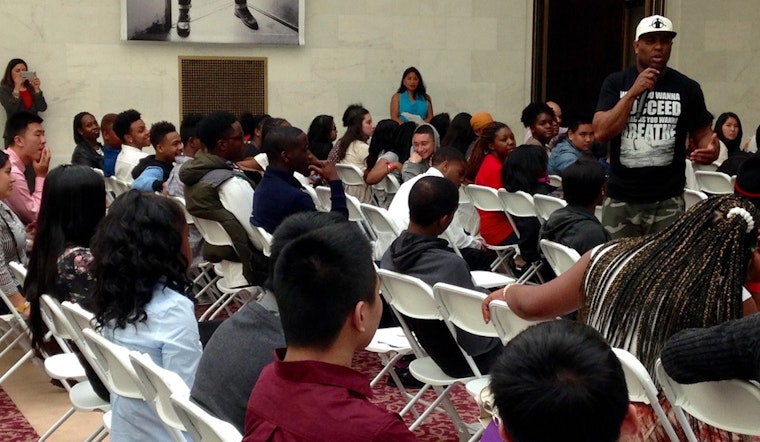
Today’s Western Addition is a far cry from its diverse, working class history. Steadily increasing rents and living costs have forced many families into cheaper cities like Richmond, Oakland and Antioch. A neighborhood that once boasted nearly half of San Francisco’s African-American population is now more expensive—and less diverse—than ever.
“Outmigration has been happening for almost two decades, it’s only now that people are paying attention to it,” said De’Anthony Jones, program coordinator at Magic Zone, a non-profit supporting youth in the Western Addition. “We’re trying to get to the root of the issue.”
The root, Jones and his colleagues decided, is economic, social and political burdens that keep minorities away from well-paying jobs—namely in technology, government and law enforcement. They asked, how can we bridge the gap between low-income and minority communities and these industries?
One such bridge has arrived. Magic Zone has teamed up with the city officials, the SF Public Utilities Commission, SFPD and a number of private companies to form the Community Safety Internship (CSI), a summer program that connects at-risk high school students with professionals in fields they probably never thought of pursuing.
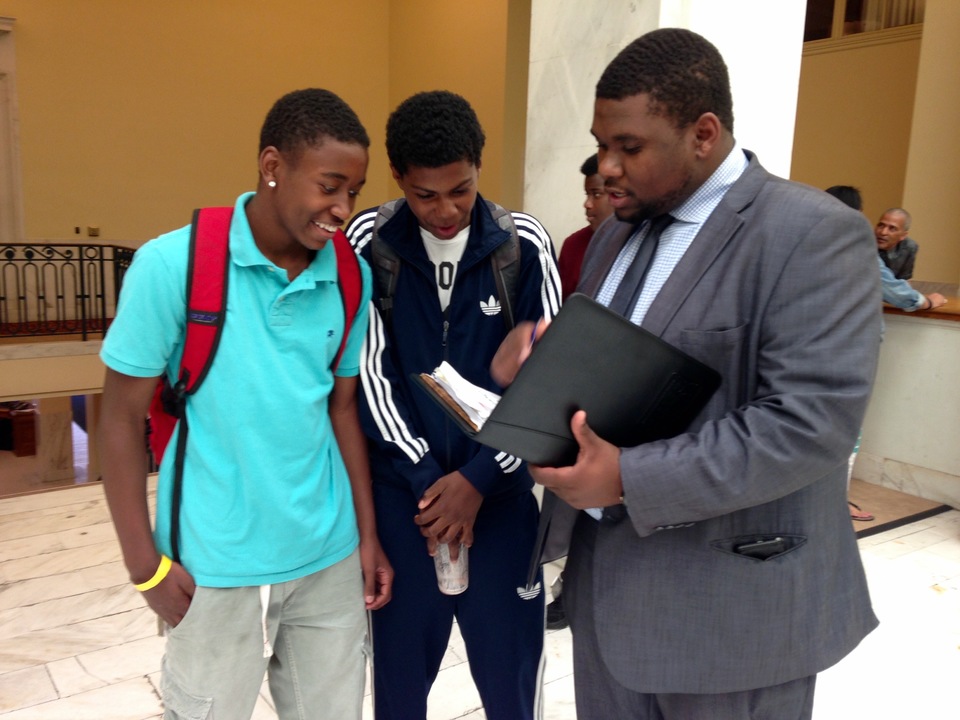
De’Anthony Jones (right) with CSI students Malik Miller of Mission High (left) and Antonio Heckre (middle) of Jefferson High.
Jones and his colleagues have spent the last few months recruiting students from underserved high schools and housing projects to CSI. Students go through an application and orientation process, then are assigned to an industry that corresponds to their strengths and interests.
Once assigned to either tech, government or law enforcement, youth work one-on-one with professionals in those fields—attending workshops, collaborating on projects and doing groundwork in their community. The idea is to expose youth to people and places they would have never experienced on their own (and build professional relationships along the way.) They’ll have lunch at Twitter, take field trips to Silicon Valley and campaign for water conservation with the SFPUC.
Jones said that minorities tend to write off tech, government and policing not from lack of interest, but because the industries are never presented as an option. It’s nearly impossible to land a job at LinkedIn, for instance, if you grew up with little or no access to a computer.
Then there’s stress at home, which can distract from developing the fundamental skills required for tech jobs. “When you’re living in communities that have a lot of drama, it’s hard to focus on math homework,” Jones explained. “It hinders you from getting into the minutiae required for these fields.”
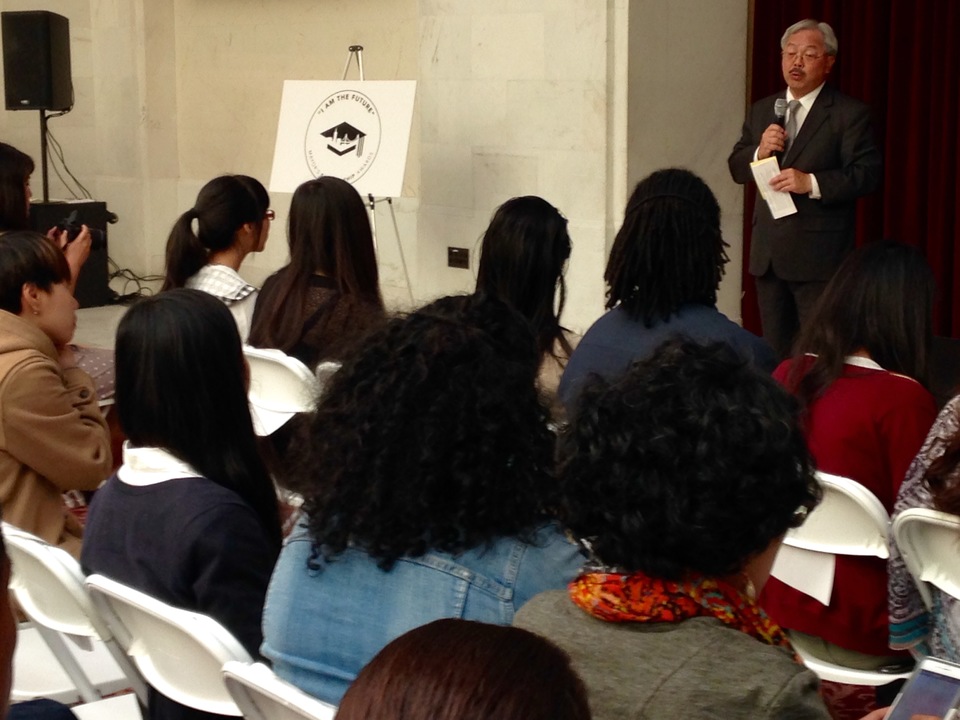
Mayor Ed Lee speaking to CSI students.
Aversion to law enforcement jobs, on the other hand, is not an issue of exposure, but rather a tarnished relationship between minority communities and police. According to Jones, most of the CSI youth feel that the police are inherently against them. “We’re trying to break down those stereotypes on both ends,” Jones said. “I want youth to leave this program inspired to become a police officer—because not all police officers are bad, just like not all black youth are bad.”
CIS launched on June 11th with about 100 students—all of whom are paid an hourly rate. After the program ends in August, Magic Zone will continue tracking each student’s development, in hopes that they will “be the force that changes the perspective of their community.”
Student enrollment is closed, but if you’re a professional who’d like to get involved, contact De’Anthony Jones at deanthony {at} sfmagiczone {dot} org. This is CSI’s first go-round, so Magic Zone will see how the summer goes before they finalize plans to continue the program.





