
























































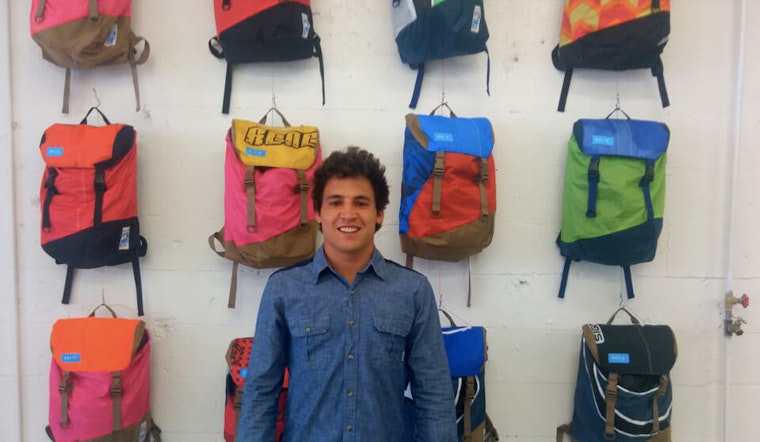
Mafia Bags turns used kite- and windsurfing sails into one-of-a-kind totes, backpacks and accessories, but it's no surf shop, said co-founder and CEO Marcos Mafia. Instead, it's about "bringing the ocean to the city and the city to the ocean." That's why Mafia is thrilled about his company's move from the ocean-adjacent Inner Richmond to a landlocked new location in SoMa (1122 Howard St.), surrounded by tech companies, design shops and museums.
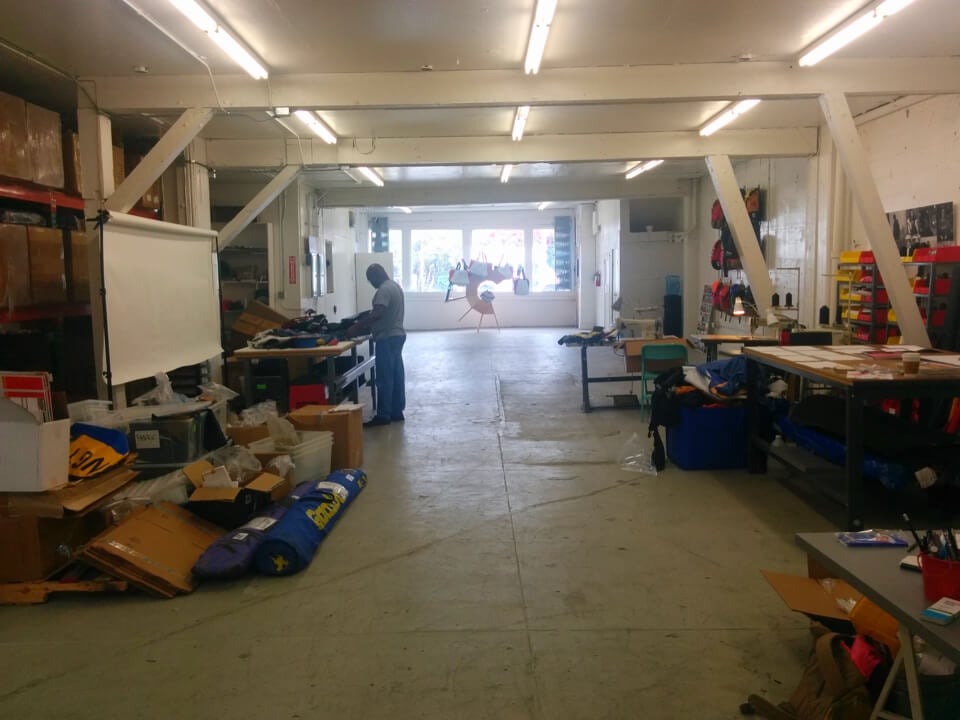
The warehouse, just a couple of weeks after moving in.
Mafia, an Argentine native who kitesurfed professionally for five years, founded Mafia Bags with his sister Paz in Buenos Aires. What started as "a couple of friends making bags" out of Marcos' personal collection of old, yet sturdy sails soon blossomed into a thriving company, with 13 product lines and locally-produced bag and retail operations in South America, Asia, the U.S., and soon, Europe.
The U.S. operation, certified by SFMade, is now settling in at a spacious warehouse used by one of Mafia Bags' suppliers, Best Kiteboarding, to store used sails sent in by customers for up-cycling. After noticing that much of Best's space went unused, Marcos convinced the company and its landlord to let Mafia Bags share the space and open a small-scale factory and retail shop. He says that the landlord, who remembers playing in the space as a child, is thrilled to see the warehouse coming back to life.
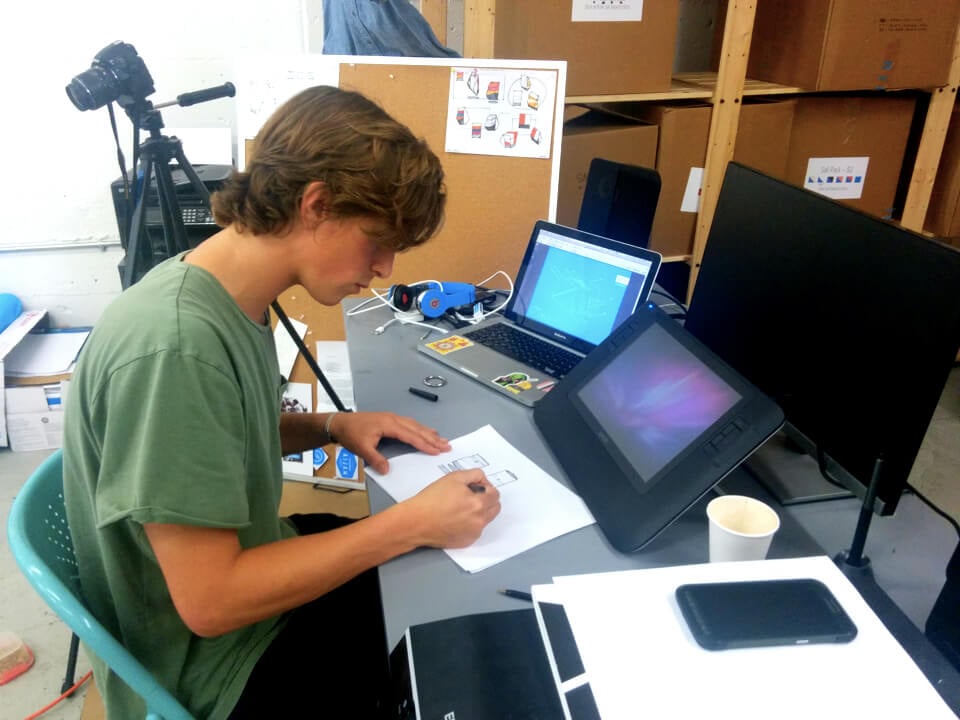
A Mafia Bags designer sketching new designs.
According to the landlord, the building once housed a 1940s-era department store that attracted tourists from all over the world; in recent years, it served as an antique mall. Today, it houses a couple of desks, a few sewing machines, tables full of sketches and prototypes, and stacks upon stacks of vibrant sails, competition banners and other unexpected materials—like airplane seats—waiting to be transformed into bags. Next month, Mafia plans to install wider, more welcoming front doors and construct additional product displays, to make the space more welcoming to customers.
In addition to shopping off the shelf and having an unobstructed view into the brand's design process, customers will have the ability to place custom orders. Currently, anyone who donates a sail to Mafia Bags receives a free bag made from their donation, complete with a lifetime warranty. But Marcos plans to take it a step further by allowing donors to make and repair their custom bags themselves. Customers will use transparent stencils to choose exactly which portions of the material they'd like to use for each side, and select all of the components — like webbing, zippers and thread colors. The team will even show people how to sew their creations, if they're interested.
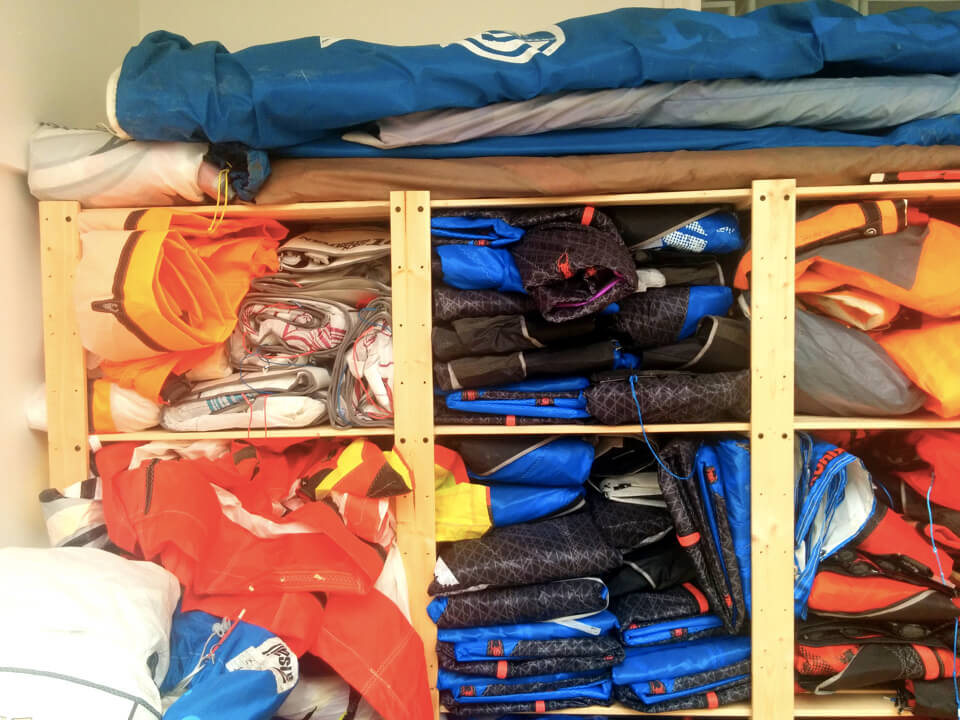
A stash of sails, ready for recycling.
Mafia is emphasizing this hands-on experience as a way to showcase the amount of labor that goes into each Mafia Bag. (The bags sell online for roughly $90 to $200, depending on the size and style.) But he also hopes it will make his customers more conscious consumers when it comes to everything they put on.
For now, 1122 Howard St. may appear from the outside to be just another underutilized warehouse, but don't be shy. Ring the doorbell, Mafia says, and he and his staff will happily show you "the whole thing."





