
























































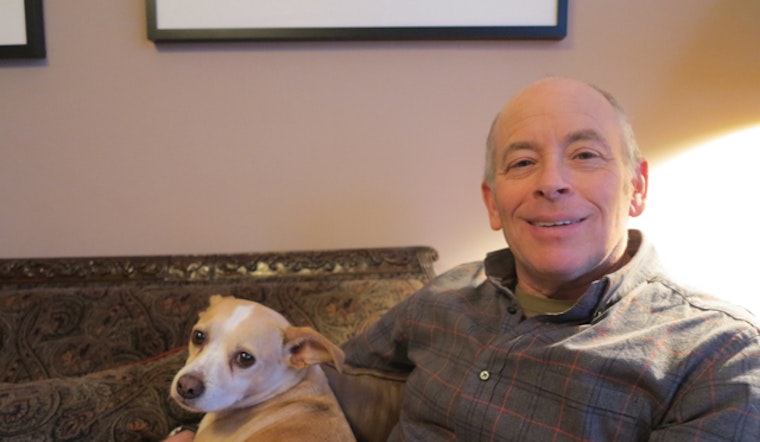
Since he first moved to the Upper Haight in 1975, photographer Hal Fischer has been a key figure in San Francisco's art world—and beyond. Though he only actively produced photography until 1982, a recent resurgence of interest in gay life in the '70s has brought his work back into the public eye.
L.A.'s Cherry and Martin recently rereleased Fischer's 1978 book of photography, Gay Semiotics, which doubles as a field guide to how gay men of the era identified themselves, both sartorially (jock, hippie, "basic gay") and sexually (through items like handkerchiefs and keys). Many of the featured men were Fischer's fellow Upper Haight residents, whom he met at spots like Gus's Pub and Eye Food, a photo supply store.
Along with the book's rerelease, the Harvey Milk Photo Center will soon feature In Motion, a show curated by Fischer that highlights the work of members of the Bay Area Photographers Collective. It opens on January 23rd.
Though Fischer no longer works as a photographer, he's been very involved in local museums, working as a grants writer at the Fine Arts Museums of San Francisco and organizing many of the international shows the Asian Art Museum held in the '90s. We caught up with him at his home in the Lower Haight, to which he moved in 1993, to learn more about his life and work.
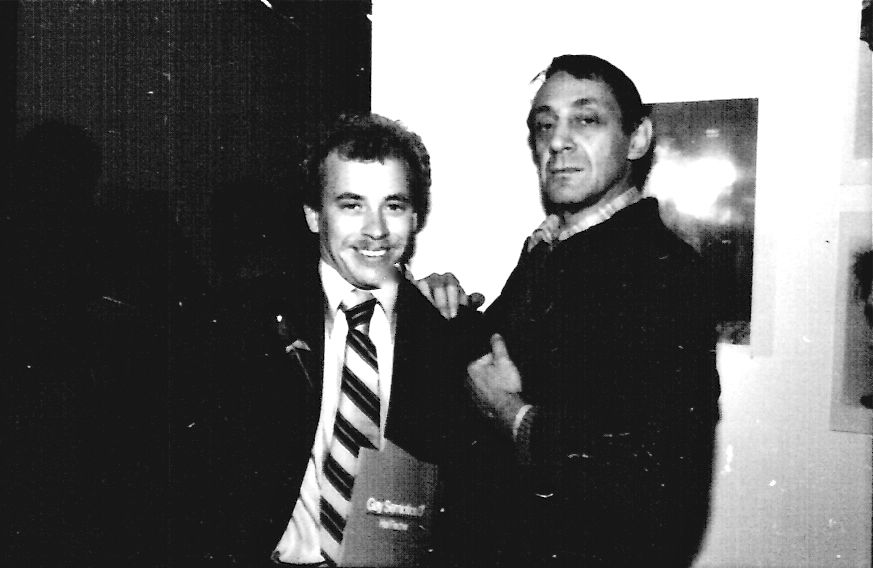
Fischer with Harvey Milk at the original book signing for Gay Semiotics. (Photo: Courtesy of Hal Fischer)
Where are you from, and how did you get here?
I grew up outside Chicago, and I came to San Francisco to pursue my master's degree in photography at San Francisco State. Very shortly after I arrived, I began writing for a magazine called Artweek as a project for class, and eventually became a critic. So basically, I was doing my photography, and writing for more and more art journals.
After a period of time, I started going more toward the writing end of things, and consciously moved away from photography. I also always had a strong interest in museums, so I eventually went into museum work.
How would you describe your relationship with the San Francisco art scene?
Well, my relationship with it has been as an artist, but also as a critic. For lack of a better term, I represented the 'younger generation' in photography at the time. At the time, I was one of a small cadre of writers that was really starting to focus on this, but I was the one, particularly, that was doing photography. There was an enormous amount of new work, lots of experimental work in the '70s. It was an incredibly creative period in art.
In 2011, there was a show at the Museum of Contemporary Art in Los Angeles called "Under the Big Black Sun: California Art 1974 - 1981." The show was huge, and kind of a revelation, because it was a period of enormous experimentation. There was the flowering of feminist art, gay art, and also just a lot of alternative art—people working in performance, in video installation. It was just a great time of experimentation, and I was part of it, and part of that show.
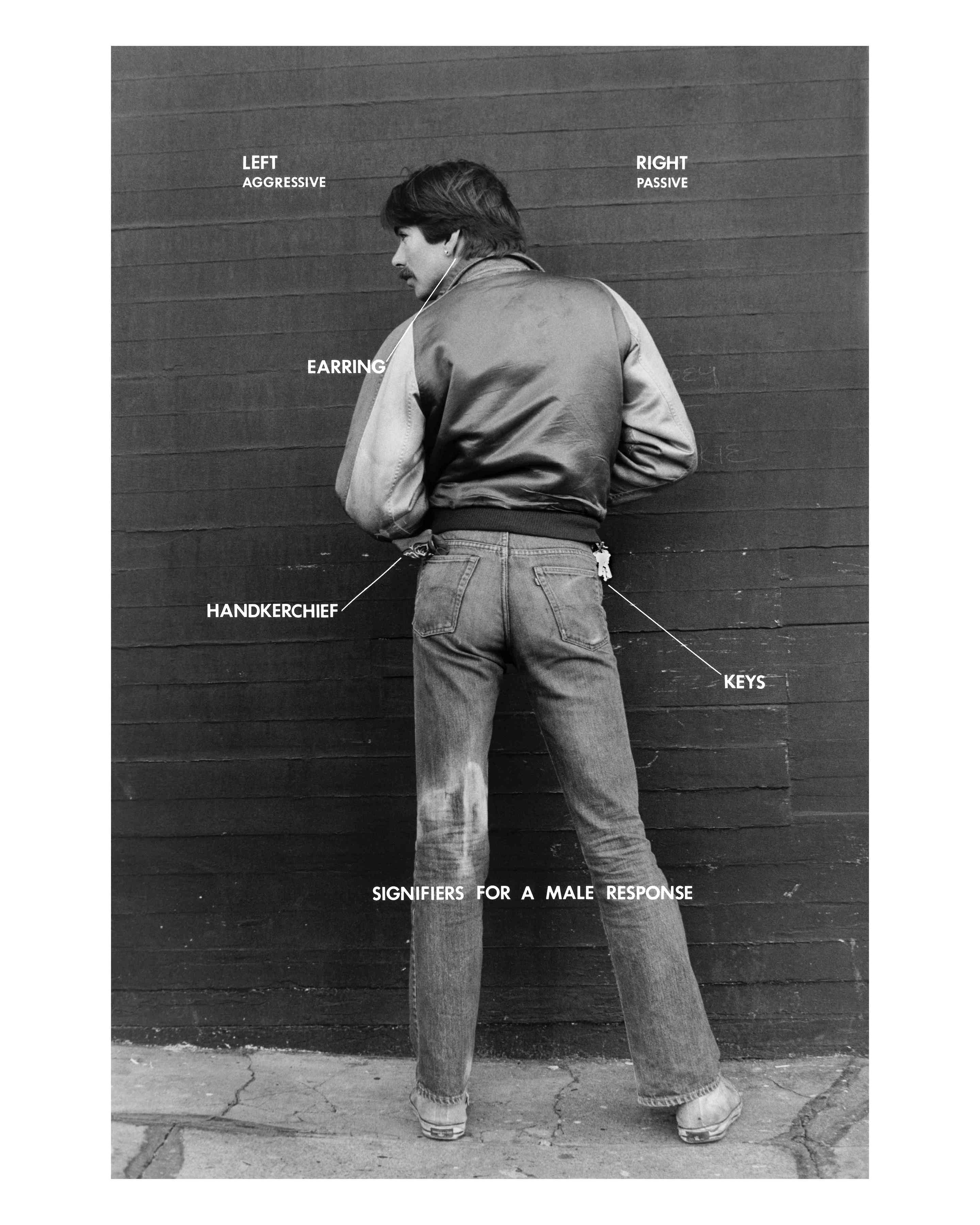
Hal Fischer's Signifiers For a Male Response. (Image: Courtesy of SFMOMA)
The recent re-release of your book, Gay Semiotics, has been receiving a lot of press. Tell us a little bit about it.
The book was originally produced in 1978. It originated in a series of 24 photographs that made up my first one-person exhibition, held in 1977 at a gallery here in San Francisco. It was all 16" x 20" black-and-white photographs, very conceptual, with text printed into the photo.
At the time, my mentor Lew Thomas ran a press, NFS Press. He was very evolved in conceptual theories and photo language, and he had seen the work. When he saw the show, he said, 'We need to make it into a book.'
For years, though, the book has been out of print. It's only been on Amazon or eBay, for something like $500 a copy.
Why did the re-release only happen now?
Partially because of that show that I mentioned in Los Angeles. After that, a lot of curators and a lot of people started looking at the art of that era. For example, the San Francisco Museum of Modern Art, which had shown my work, acquired a lot of my work.
I also ended up being represented by a gallery in Los Angeles, Cherry and Martin. They were the ones that really wanted to do the work, and they're the publisher of record on the book. The book was released in September 2015 at the New York Art Book Fair.
Why do you think people are embracing your work so strongly today?
I think there are a few different things. The work crosses a lot of boundaries, so some people are looking at it and seeing it as quintessential 1970s. For gay men of my generation, that was the golden age, the pre-AIDS era. It's something that was there and then went away.
It's also being embraced by young gay people, which is a surprise to me. I think there's a lot of movement there about recapturing history, and I think it appeals on that level. The way that I worked with the text and the images was very forward. I wasn't making documentary images; I wasn't making cliched, romantic images that had two men rather than a man and a woman. A lot of it was stuff you didn't see, so I was basically an out gay male who was making work that was on the cutting edge of how people were thinking at that point.
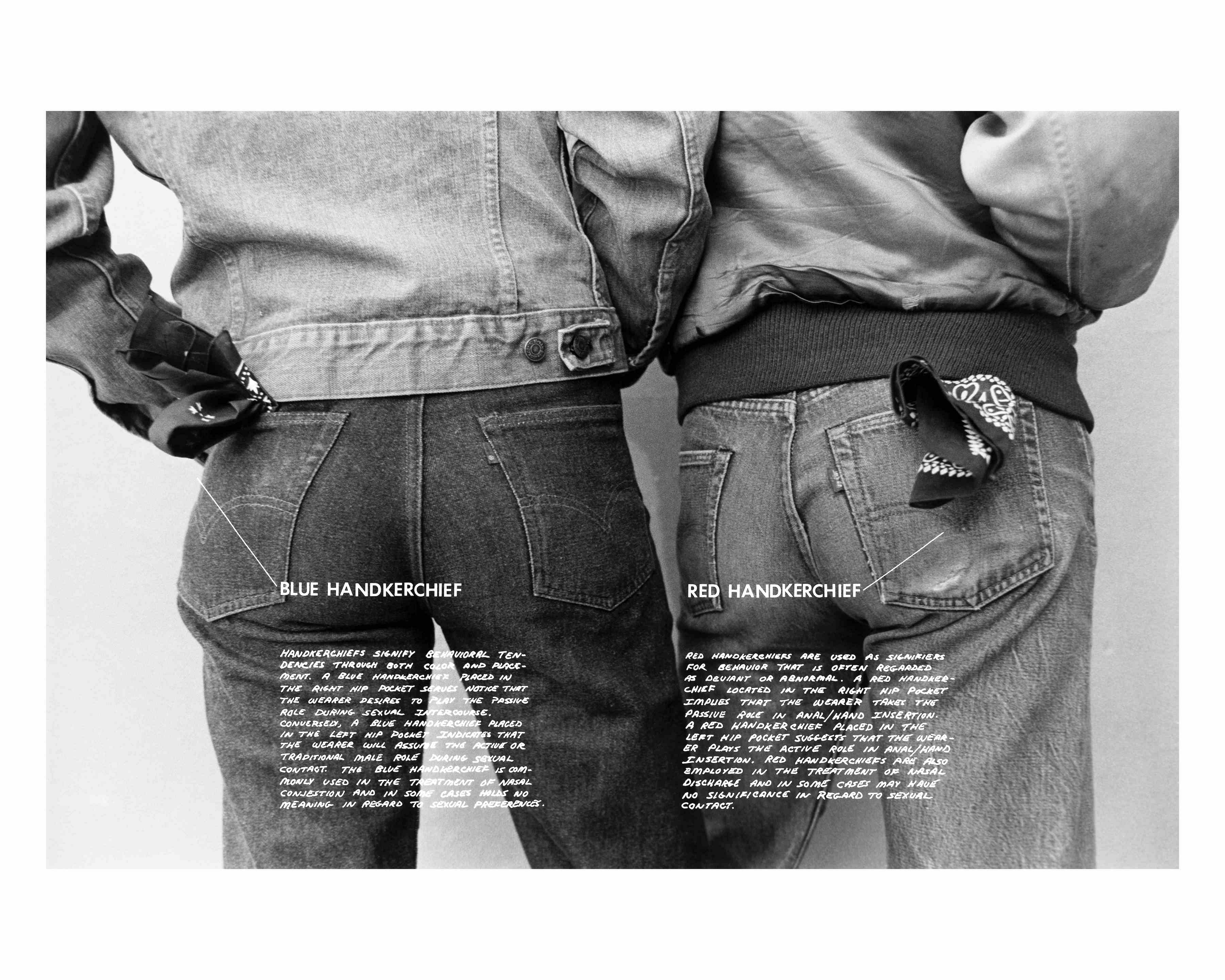
Hal Fischer's Handkerchiefs. (Image: Courtesy of SFMOMA)
How is the art scene in San Francisco different from when you were producing work?
Well, it's much much larger. When I was part of the "art scene," that was the pre-internet age, so it was very different and very small. But that was also in the '70s, and nobody had any money. It wasn't just that artists were finding interesting ways to do work with limited resources—nobody thought at that time that they were going to "make it." Making it, broadly speaking, was if you could get a teaching job.
There were galleries here, but it was always a struggle. Now, art is essentially a very big business. There are galleries, but there are also these huge international art fairs. It's a very, very different world, and not necessarily one that I'm that thrilled with.
Why not?
Because so much of it is really driven by money. That's not to say that there aren't people that have good intentions, but art is very fashionable now.
So you feel that it's less pure than it was back then?
When money wasn't a factor, people could really pursue what they wanted to pursue, for the sake of pursuing it. Now, I think it's very hard for an artist to not be involved in a lot of other considerations with their work. That's not to say that there isn't interesting work being done. But the marketplace plays a much more prominent role in art production today.
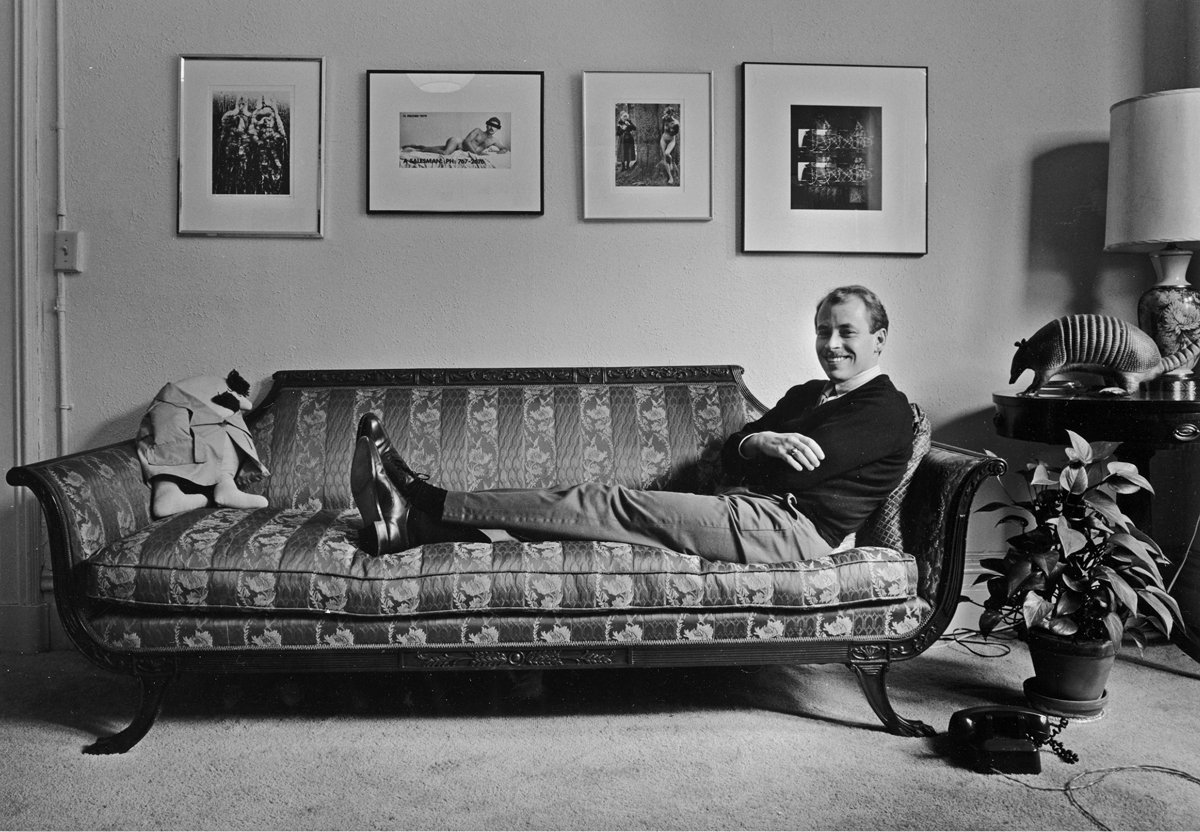
Fischer in 1981, on the same couch as in the present-day photo above. (Photo: Kurt Edward Fishback)
What do you do now within the art world?
I've had two big recent projects. One is that I developed a museum in Riverside in 2012. The other was establishing an independent organization called First Exposures, which is a youth mentoring program that uses photography.
That grew out of my work as interim director at San Francisco Camerawork, which I did for about 18 months. I moved Camerawork from Mission Street to Mid-Market—I'm sort of a pioneer with that. First Exposures, which had been a part of Camerawork, went independent. I'm especially proud of Camerawork because I was one of the founders of the Camerawork nonprofit, back in 1977.
Tell us about the show you're curating at the Harvey Milk Photo Center.
The Bay Area Photographers Collective asked me if I would curate a show from their members, where they pick a theme. In this case, the theme was "In Motion," and their members submitted pictures that fit into this theme. We're hanging it on January 14th, and the opening event is on January 23rd.
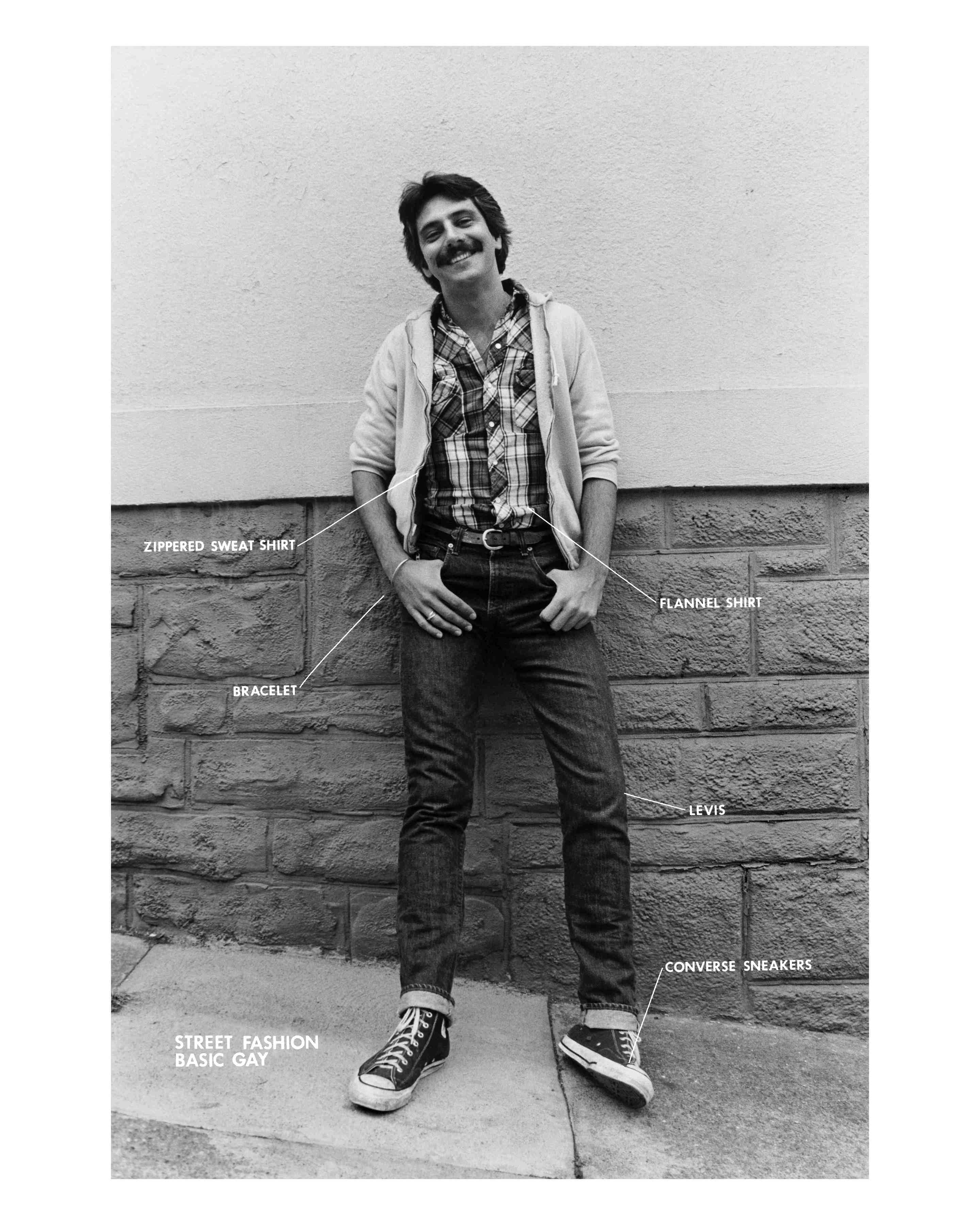
Hal Fischer's Street Fashion: Basic Gay. (Image: Courtesy of SFMOMA)
Who are the people pushing boundaries in the gay art community today?
I get asked that question a lot, and that's about the toughest question people ask, because it's a lot harder to push boundaries now. Catherine Opie at UCLA comes to mind; she does really incredible work.
Where I would be looking is more in the transgender community. The fact of the matter is that gay white men are so mainstream now. You can't turn the TV on without seeing a gay white male character, so I don't necessarily expect to see that within the art community. But transgender art is a certainly a frontier.





