

























































Strut, the San Francisco AIDS Foundation's new multimillion-dollar health center for gay and bisexual men, is struggling with delays and inefficiencies in its early weeks of operation, with many patients unable to get urgent STI testing appointments—despite promises that the new center would increase capacity.
For those unacquainted with Strut, it's the new, larger incarnation of Magnet, San Francisco’s most venerable STI testing facility for gay men. Magnet was rolled into Strut as part of an initiative to put all of the SFAF's services under one roof, and after some delays, the new facility debuted at 470 Castro St. on January 5th.
Strut's expanded size was supposed to address one of the biggest issues at Magnet—the difficulty of securing a same-day appointment for testing. But at 9:30am on a recent morning, half an hour before Strut was set to open for the day, more than 20 people had already lined up in the cold and rain to secure a spot. It's a wait that was par for the course at Magnet, but is frustrating clients who'd hoped Strut's bigger space would be able to accommodate them.

Though HIV/AIDS is the center's focus, Strut tests for all STIs, including gonorrhea, chlamydia, and syphilis. Patients who've previously visited Magnet can book a testing appointment online, but as of this writing, the next available slot is more than two and a half weeks away—too long for many men who need a more urgent test.
“I’ve been here since 8:30am this morning. This is my second time this week trying to get in,” one hopeful client told us. When asked whether he was there for a regular checkup or a specific need, he responded, “Need is relative, but it’s probably a good idea that I get checked out.”
Another client was making his fourth attempt of the week. “I really need to get tested," he said.
By the time Strut's doors open at 10am, the line has swelled to more than 30 people, but only the first 10 will get a same-day appointment. The move to Strut was supposed to increase Magnet’s testing capacity by 40 percent, but those gains are yet to be seen. "I came all the way from Oakland for this," said one man who was turned away. "I thought I had gotten here early enough. Maybe next time."
"This is ridiculous," said another. "I have a job, and I don’t live nearby. It’s really inconvenient for me to come down here. This is my third or fourth time trying to get tested here this week.”
A sign on Strut's gleaming new front desk reads “Please pardon our decreased capacity while we settle into our new clinic."
Clients who aren’t able to secure a same-day appointment at Strut are offered referrals to other nearby testing facilities, but many aren’t interested. In some ways, Magnet/Strut is a victim of its own success, with a reputation for a sex-positive, no-judgments approach to testing. As the clinic's website puts it, there are "no agendas, no lectures and no finger wagging"—a far cry from the experience at traditional doctor's offices, which can often come with a dose of shame, some of the men in line said.
"I know that no matter what crazy thing I’ve done, the people at Magnet never try to make me feel bad,” said one man who was turned away. “That's why I’ll keep trying to get in.”
Strut and the SFAF say the slow ramp-up was always part of the plan. “We’re operating at about 60 percent of capacity at our new building, but 60 percent of our new capacity is 100 percent of Magnet’s capacity," said Andrew Hattori, SFAF's director of marketing and communications. "We wanted to get in to the space, work out all the kinks, and kick the tires a bit ... We realistically understood that we had to scale up when we got in.”
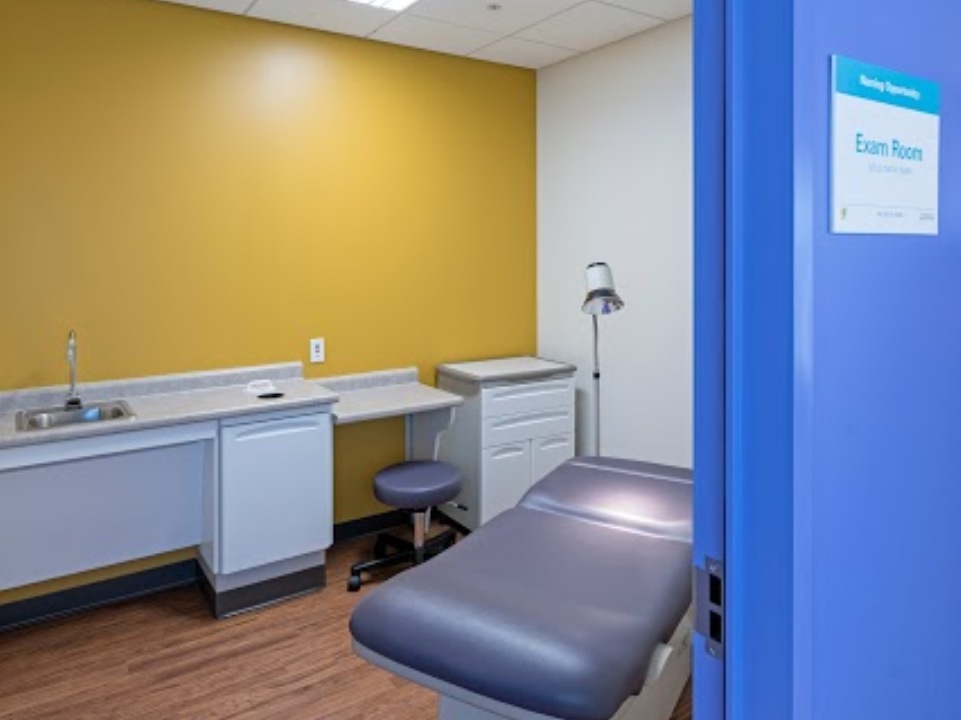
But Hattori's math doesn’t quite add up. Though representatives from SFAF had previously stated that Strut would offer a 40 percent capacity increase over Magnet, the new location doubled Magnet's number of exam rooms and phlebotomy chairs, indicating that more patients should be able to be accommodated. (Hattori declined to comment on the exact number of patients per day that were seen at Magnet or are now being seen at Strut.)

One employee, speaking anonymously, told us that soundproofing issues with the construction of the space are to blame for the unrealized capacity. “You can hear everything that goes on in the other rooms. We talk about all kinds of stuff in here, so that’s no good.” The employee couldn’t offer any details on what repairs would be needed, or when they would be completed. “I don’t know. That’s a little above my pay grade.”
Gensler and GCI, the architects and general contractor for Strut, have already faced some controversy over the installation of a non-medical-grade HVAC system, which delayed the center's opening by several months. Neither responded to requests for comment.
Hattori confirmed there was a soundproofing problem, but downplayed its severity. “With any building, when you move in, there are new things you discover. Right now, we’re working really hard to work out all the kinks, so our clients and the community can continue to get the best level of service they can.”
Hattori gave no timeline on a potential fix for the soundproofing issue, but a general contractor with experience in soundproofing told us that a fix would probably not be straightforward—or inexpensive. Portions of the building would likely need to be closed for construction, and much of the existing work would need to be redone.
In the meantime, those seeking an appointment for STI testing would do well to book online in advance. For more urgent testing, Strut is referring clients to the SF City Clinic, Alliance Health Project, and the AIDS Health Care Foundation.
Update, 2/1: Andrew Hattori sent us the following update on progress on the issue last week:
"While issues like the one we’re experiencing are typical when you move into new buildings, we appreciate its seriousness and are working on it as a top priority. We've already selected a sound privacy expert who is currently developing a solution, and we expect to receive his recommendation on Friday [Jan. 29]. In the meantime, we've identified some interim fixes to ensure we can maintain client privacy and the highest possible service levels."





