
























































Hoodline doesn't yet officially cover the Marina/Cow Hollow, but from time to time, we may share important stories from the area. Want to help us expand to more neighborhoods? We're looking for writers (and yes, we pay!)
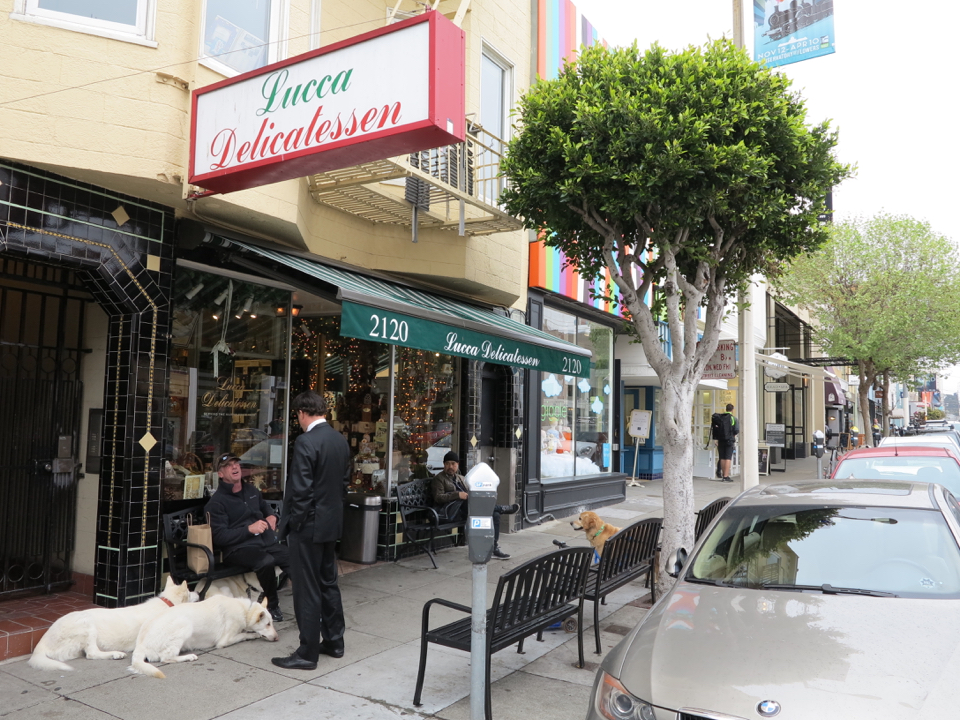
In 1929, Mike Bosco moved to San Francisco from Glenwood Springs, Colorado and, along with two partners, opened Lucca Delicatessen. Nearly 90 years later, Lucca is still a small, family-run business that serves as a hub for food and conversation in the heart of Chestnut Street.
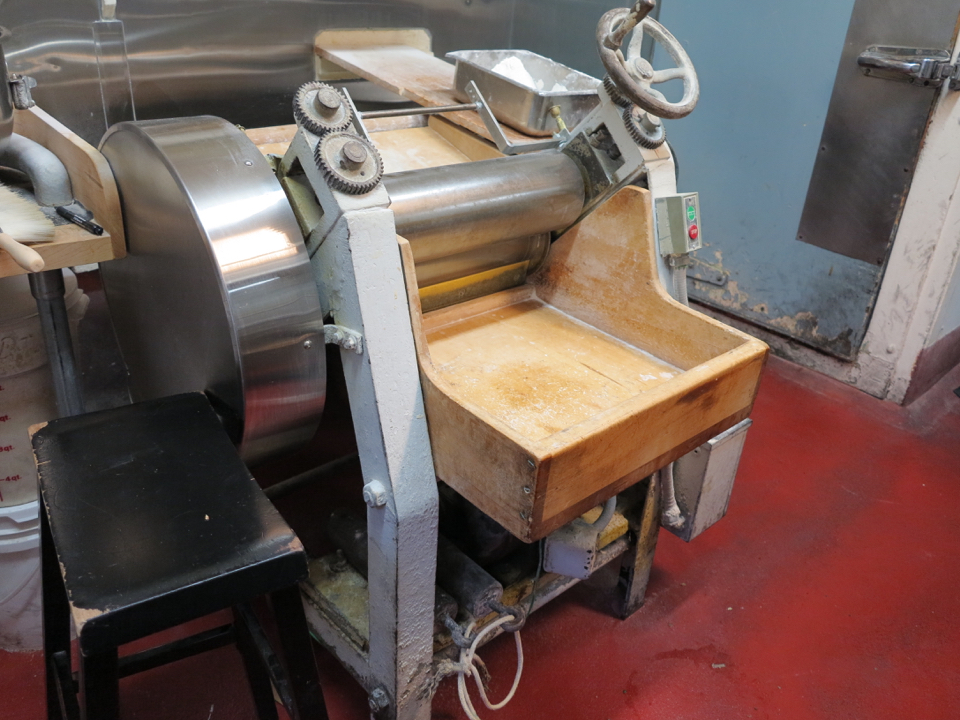
Today, the business is run by Mike's grandson Paul and his sister Linda, who inherited the business from their father, Ed Bosco. (The Chestnut Street Lucca has no relationship to the other Lucca on Valencia Street in the Mission.) The real jewel of Lucca is arguably its handmade ravioli, which were once dined upon by patrons at the Fairmont Hotel, and are still made using the same machine Mike Bosco shipped to San Francisco from Italy back in the 1930s.
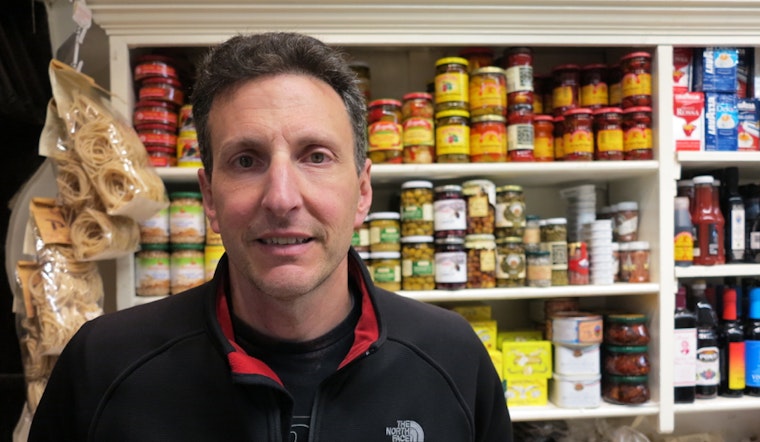
We were lucky enough to catch up with Paul Bosco the other day and talk about the neighborhood, tradition, and his genuine love of the family business.
Tell us a bit about your relationship to the Marina.
Well, I grew up going to work in this neighborhood. My sister and I would come down from Marin with my father when we were kids. We would help out during the summer, when we were in high school. We grew up around food.
This neighborhood, specifically, still had a lot of Italians in it. The Italians started out in North Beach, but as things started to expand in San Francisco, a lot of them migrated to this area. My [maternal] grandfather's house was behind the deli and over one house to the right, and his brother lived across the street. It was a small, tight-knit community, where everyone kind of knew everyone.
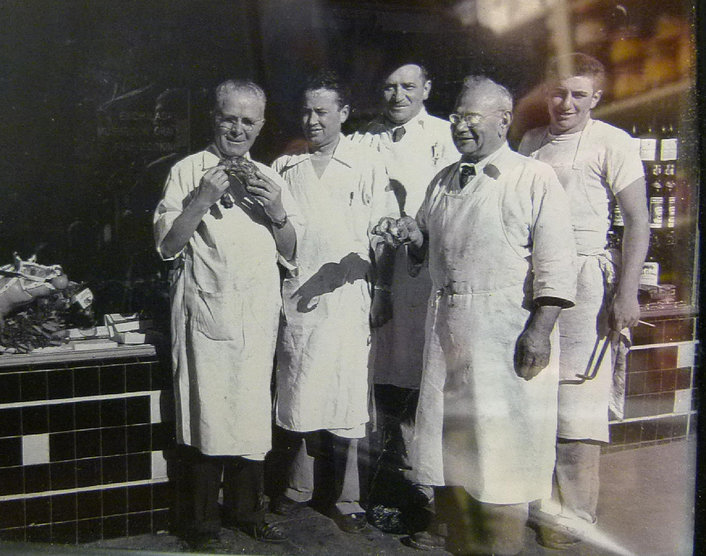
Lucca cofounder Mike Bosco (back) and his son Ed Bosco (far right) with other employees. (Photo: Courtesy of Lucca Delicatessen)
Your family has a lot of culinary roots in the city.
Yes. My grandfather on my mom's side and his two brothers started Columbus Salame. Then they sold that company years and years ago ... Columbus Salame's first location was down in North Beach, then they sold it out to one guy, then that guy sold it out to someone else. Now it's a huge company.
My grandfather who started [Lucca] moved to San Francisco from Glenwood Springs, Colorado, probably in the early '20s. He started the deli with two other guys, Maggiore Colona--who was a really good cook--and Italo Cencini. He was partners with them, and after a certain amount of time, he bought them out.
What does a delicatessen like yours bring to a neighborhood?
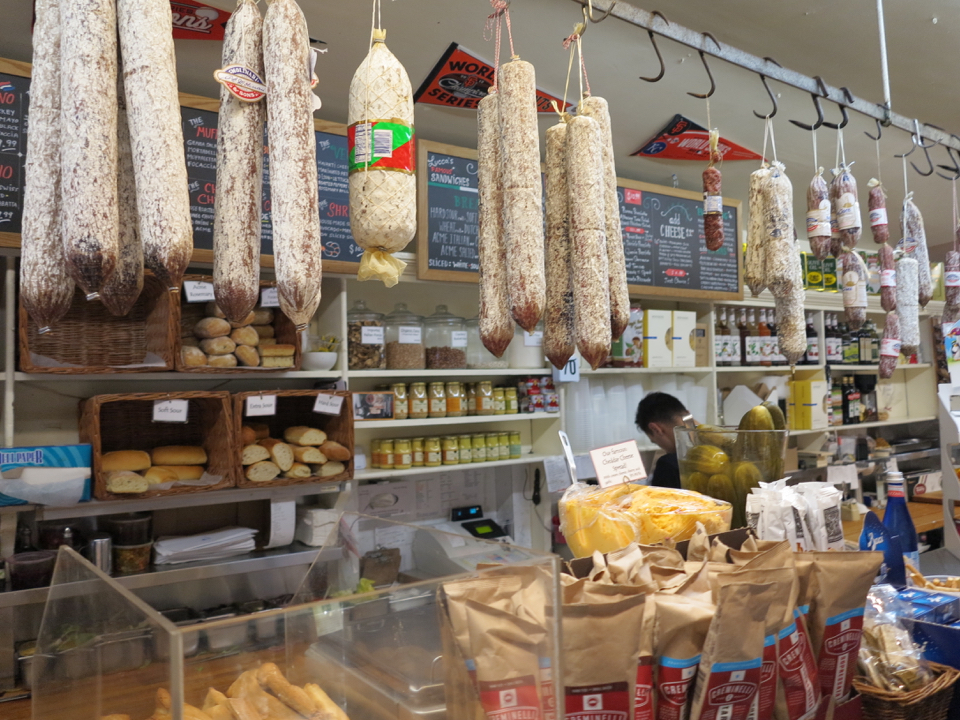
Obviously, there's the food end of it. But I think it gives people a sense of comfort, a place they can go. It comes down to value, really. Where can I go to get the freshest ingredients and bang for my buck?
Nothing against them, but there's a sandwich place around the corner, and I see the people who go in there are just out of college. I think our customers are a bit more refined. People who want something they know is good, is going to taste good, is healthy, and has quality ingredients. I think that's what the majority of people are looking for. I also think part of it is people wanting to come in and BS a bit with the people behind the counter, stuff like that.
It really comes down to tradition. You know, we have a tradition that we're maintaining in the neighborhood. We try to keep what we've established going. It's a family atmosphere. Instead of just going into some place that might only be there for, say, five years, our place is more of an institution.
What do you like most about your job?
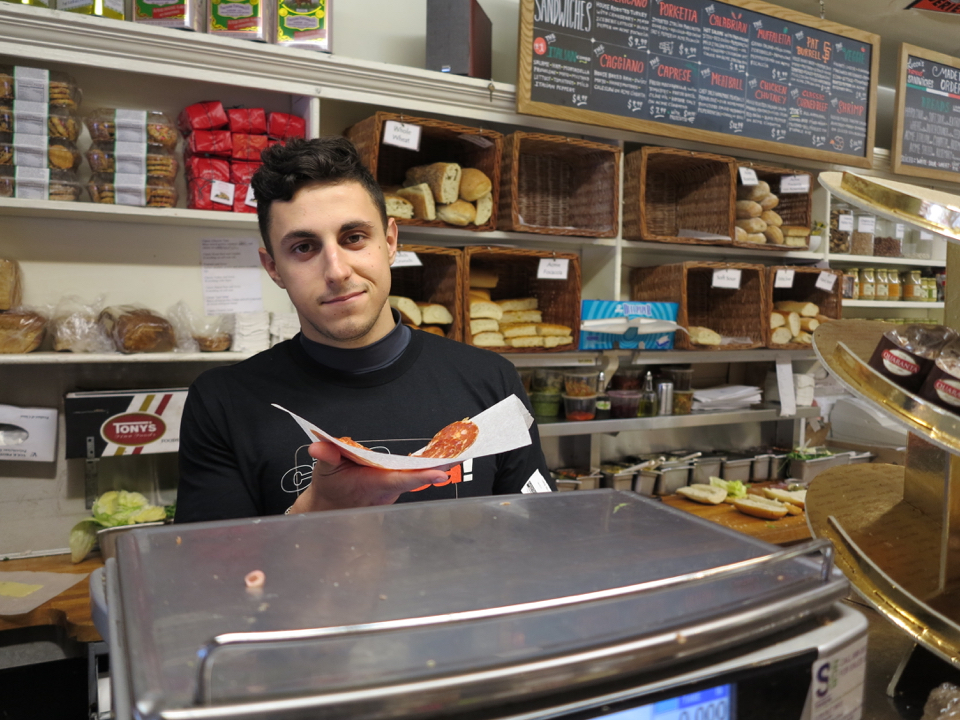
I used to be more behind-the-scenes; I used to do a lot of cooking, a lot of kitchen work and things like that. But I'm basically getting a little bit too old. Now, I like being up front, I like waiting on customers. I totally like taking care of them, slicing meat and all that stuff. Taking a half pound of prosciutto and slicing it for somebody is totally my deal.
What about the act of slicing meat do you love so much?
Aw, man, just the smell of the meat. I just love food. I'm always thinking one meal to the next. When you're in the food business, you're just constantly thinking about food all the time.
What it was like in this neighborhood when you were growing up?
Well, I've been coming down here since I was six years old, back in the '70s. There were a bunch of characters, really. It was funny. That Noah's Bagels across the street used to be a donut shop. You'd go in there in the morning and there'd be just a bunch of crazy characters. At like six in the morning, it would just be packed with people ordering donuts and coffee, and everybody knew everybody else. Then me and my father would walk down the street and see the garbage men and talk to them. It's kind of still the same, in some ways.
How is it the same?
Well, in terms of our customers. There are people we see every day that are regulars, that come in all the time, once a week, twice a week or whatever. You get to know everybody. It's good that way.
But yeah, it was all just mom-and-pop businesses. For example, that Pottery Barn? That was a supermarket. Across the street was a five-and-dime. Over there, you had a stereo store called The Good Guys. They were all just single-owner types of places.
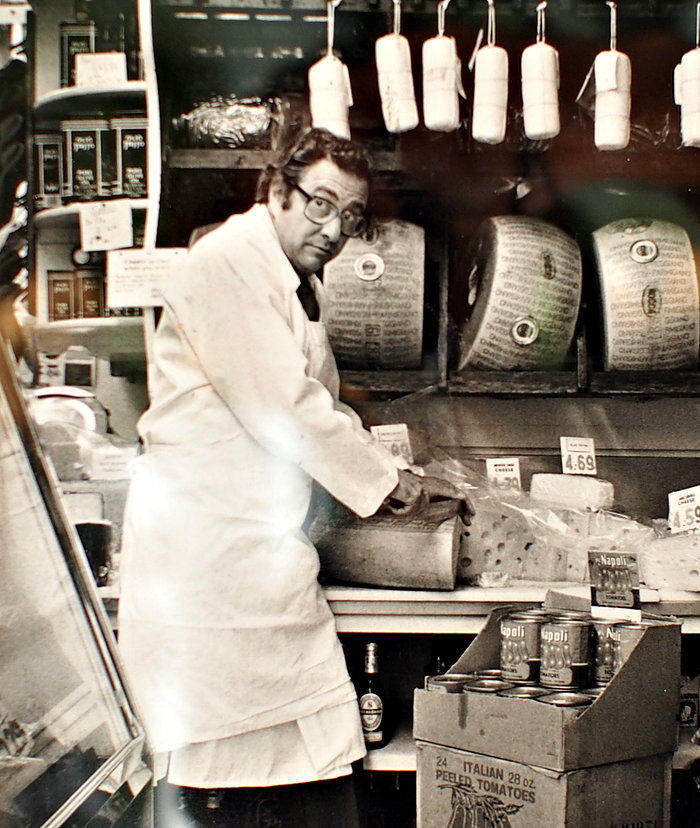
Paul's father, Ed Bosco. (Photo: Courtesy of Lucca Delicatessen)
When did you see changes really start to occur?
The big changes happened after the earthquake in '89. That's when I think a lot of people sold. Part of that also has to do with real estate. Once real estate prices started going up, people started thinking it was time to retire.
Are businesses like yours a dying breed?
Not really, but let me tell you what: Nobody can duplicate our ravioli. The machine that's in the kitchen back there is 80 years old. It comes from Italy. Only something like three parts have been replaced on it. The way that we do it, it's done by feel. The guy lays the crust down, puts the filling in, then lays another crust on top, and we roll it out and cut it by hand.
No one else in San Francisco does this. This is old-school. $15 a box. People will sometimes come by and ask, 'Why does it cost so much?' Well, it's made by hand, and we're not using fillers and stuff. We're ordering center-cut chuck, we're ordering sausage and all these vegetables, and we're roasting it all in the oven the day before. Then we take it out the next day and grind it, then we mix it with swiss chard and eggs for our meat filling. We also do a cheese, and a pumpkin too.
How many boxes of ravioli do you sell a year?
Thousands. We sell about a hundred boxes a week, minimum. We make them fresh twice a week, on Mondays and Fridays.
What does the future look like for Lucca? Anything new on the horizon?
We're going to keep doing what we're doing right now. It all comes down to maintaining what I have.
Do you have any children you're planning on passing the business down to?
Well, I'm married with no kids. My sister has two daughters, but they haven't really worked here, so I don't know what we're going to do. We haven't really figured that part out. It's hard to say!


