
























































Today, the 538 members of the Electoral College will meet in their respective state capitols to choose the next President of the United States.
Typically, representatives from each state cast their electoral votes based on which candidate took home the majority of votes in their state. But this year, Donald Trump captured a majority of states while Hillary Clinton captured a majority of the popular vote, placing a renewed spotlight on the Electoral College.
Citing Trump's potential conflicts of interest, as well as his alleged ties to Russia, a groundswell of Americans has been lobbying electors, asking them to vote for a different Republican candidate in order to keep Trump out of the White House. So far, however, only one Republican elector has publicly said he will cast his vote for another candidate. (For more, here's an explanation of the "Hamilton Electors" movement.)
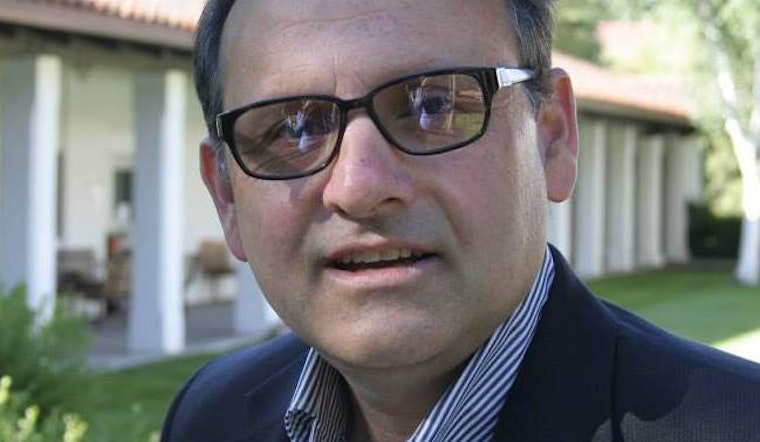
To gain a better understanding of what it's like to be a member of the Electoral College, we spoke to former Martinez city councilman Tim Farley, a member of the Contra Costa Community College District board of directors and one of the 55 California electors casting their votes in Sacramento today. Here's what he had to say.
Why did you want to become an elector? How were you selected?
I’ve always been fascinated by the election process, and I think as an institution, the electoral college serves its purpose. It’s important and significant, and I’m very honored to have this role. Each party nominee for Congress gets a direct appointment, and Congressman Mike Thompson appointed me.
So what’s going to happen today when electors meet?
The electors meet at 2pm at their state capitol. We all convene at the floor of the California State Assembly, and then go in and sign a bunch of documents. In the past, they passed out ballots that were pre-written. It's a paid job: we’re given 10 cents per mile for our travel, round-trip.
You have the option to change your vote. Why not—as many have suggested—do away with the electoral system completely and let the popular vote decide?
The electoral system may be archaic, but it’s part of the Constitution, and it requires candidates to campaign all over the country, instead of just big cities and states.
The problem is the allocation of votes to the Senate right now over-enhances the voting power of small rural areas. Why give the enhancement of two senators per state? It’s inherently unfair to other large states, like California, New York, and Texas.
Do you expect electors to change their vote today?
Theoretically, it’s a possibility. But you’re going to find 37 Republican electors who won't vote for Trump? Maybe one or two might.
Would you change your vote if you were displeased with the outcome of the election?
This role is primarily ceremonial. The people of California voted for Hillary Clinton, and I’m a supporter of Hillary Clinton, so I think I should be bound to vote for Hillary Clinton.





