

























































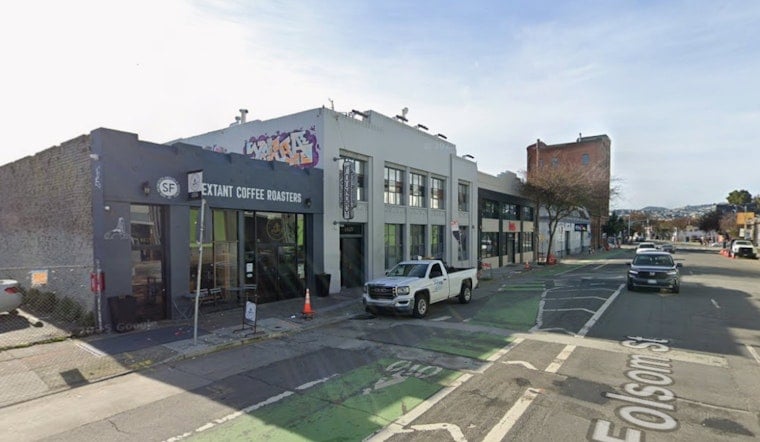
A South of Market nightlife venue is trading corporate rentals for house beats and phone-free dance floors. The Foundry, the 4,400-square-foot club at 1425 Folsom Street, has unveiled its first lineup of shows under new leadership, signaling a major transformation aimed at bringing more electronic dance music to San Francisco.
The shift follows the closing of an escrow process among Andrew Wasilewski and a group of music industry professionals, who signed the final paperwork on July 31, according to the San Francisco Chronicle. Wasilewski, who is also co-owner of the Faight Collective in Lower Haight, stepped in to reimagine the Foundry alongside the incoming team. The venue plans to focus less on corporate events and instead expand its music and community programming.
The new lineup includes New York sibling duo Tinzo and Jojo, booked for October 24 and 25, Florida-based producer Wonkywilla on October 30, and Italian DJ Kybba on September 18 — all according to the Chronicle's reporting. The Foundry says its programming will emphasize electronic music broadly, with genres spanning house, techno, hard groove, Afro house, and U.K. garage.
A Community-First Vision for the Dance Floor
Wasilewski said he hopes the Foundry becomes an intentional space for dancing and connecting with people, describing his broader goal of turning the club into a community-focused nightlife space, per the Chronicle. Beyond music, the venue's programming will include listening parties, dating events, and lectures, alongside its core lineup of shows.
Wasilewski also wants to support local music talent, noting that larger venues can make it challenging for local acts to get booked. That focus dovetails with his experience in the local nightlife scene — in May 2025, he served as a featured panelist at the San Francisco Nightlife and Entertainment Summit, where he spoke about shifting Gen Z consumer habits and strategies to bring patrons back to local venues.
Stickers Over Screens
Perhaps the most eye-catching change is the Foundry's plan to hand out stickers for patrons to cover their phone cameras inside the venue. Wasilewski said disconnecting from phones creates a better dance floor, and the club will display signage encouraging visitors to remain present and disconnect from the digital world, enabling them to engage fully with the music, according to the Chronicle.
The approach echoes a broader trend in global electronic music culture. Phone-free dance floors using camera stickers were pioneered by Berlin clubs like Berghain and have since spread to venues in London and Ibiza, intended to protect patron privacy and keep the focus on live performances, according to InspiredByBeatz.
Remodel and Falafel on the Menu
Bryce Myers, assistant general manager and creative director of the Foundry, said he and his colleagues first came to the venue as admirers of its sound system. Myers said the team wants to use the space to its utmost potential, per the Chronicle's report. Wasilewski and his team are considering more advanced lighting and an in-the-round experience as they intend to remodel the Foundry, with the work planned for early 2027.
On the food side, the club plans to offer falafel and kabobs, a modest but notable addition for a venue that will prioritize the dance floor above all else. The building itself dates to 1936, when it was constructed as an Art Deco brick warehouse in what is now Western SoMa's Light Industrial Historic District; the space was approved for a Type 42 beer and wine permit by the San Francisco Board of Supervisors in 2012 as Folsom Street Foundry, later hosting the weekly esports tournament nights known as #SFGameNights.
A Neighborhood in Flux
The Foundry's pivot arrives amid volatility for SoMa's nightlife scene. Nearby drag club Oasis announced its closure at 11th and Folsom in July 2025 due to financial losses before a multi-million-dollar philanthropic gift saved it, allowing it to reopen in July, as SFist reported. Hoodline previously covered that saga in its piece on the drag club's threatened closure.
San Francisco's nightlife and entertainment sector generates an estimated $7.1 billion in annual economic impact citywide, according to the San Francisco Entertainment Commission. City and state leaders have also tried to bolster the industry: in February 2025, State Senator Scott Wiener and Mayor Daniel Lurie introduced Senate Bill 395 to create 20 new liquor licenses for a downtown hospitality zone aimed at lowering startup costs for new venues. Separately, the city's Recreation and Parks Department launched SF Live in April 2024, a $2.5 million initiative that partnered with independent venues to curate free outdoor electronic music concerts.
Against that backdrop, the Foundry's bet on niche EDM subgenres and community programming over corporate rentals represents a direct wager that San Francisco's dance floors still have room to grow — one falafel wrap and phone sticker at a time.





