

























































San Francisco's Hall of Justice at 850 Bryant St. has been listed as seismically unsafe since 1992, and more than three decades later, city officials are finally weighing whether to tear it down or relocate the court operations still inside it. During a recent tour of the building, only one of its four main elevators was working. Former staff attorney turned District Attorney Brooke Jenkins has described mice, liquid leaking from the ceiling due to jail overflows, asbestos, and unsafe working conditions throughout the building.
The building's troubles are not new. According to the San Francisco Chronicle, the city has conducted four major feasibility studies on replacing the Hall of Justice since 2008, and a 2013 capital plan to build a $1.6 billion replacement next to the existing building has stalled. As reported by ABC7 Bay Area, the Hall of Justice was completed in 1960, though correctionalnews.com has reported it was built in 1958 — the two sources conflict on the exact date.
A Jail Rejected, a Grant Turned Down
San Francisco's two jails are overcrowded, but the city once had a shot at a new facility and walked away from it. In November 2015, the state offered San Francisco an $80 million grant to build a new jail at the Hall of Justice site, and the Board of Supervisors unanimously rejected the offer that December. Then-Supervisor London Breed opposed the proposed new jail, while Jane Kim supported alternatives to it, and then-state Senator Scott Wiener warned San Francisco could face consequences without alternatives in place. Matt Dorsey, now a San Francisco supervisor, has said the rejected grant was a missed opportunity.
Separately, San Francisco Public Works records show the Board of Supervisors formally rejected a proposed 384-bed Rehabilitation Detention Facility on December 15, 2015, directing the Department of Real Estate to instead negotiate acquiring parcels at the proposed site. A May 2015 update to the county's jail system needs assessment had estimated the facility could hold between 120 and 393 rated and non-rated maximum-security beds. The city had concluded that renovating 850 Bryant St. was not feasible given departmental requirements, facility deficiencies, and life-safety hazards, and that the project was meant to replace County Jails No. 3 and No. 4, which sat on the building's sixth and seventh floors.
Jail No. 3 closed in 2010 and Jail No. 4 closed in 2020; inmates from both were transferred to facilities at 425 Seventh St. and in San Bruno, according to ABC7. The shuttered jail space inside the Hall of Justice now serves as Sheriff's Department storage and is sometimes used for film productions, per the same report.
A Building Emptying Out, Piece by Piece
The departures have been gradual but steady. The San Francisco Police Department moved out of the Hall of Justice in 2015, and the District Attorney's Office — then led by George Gascón — moved out in 2017. Jenkins has said the dispersal of city departments created operational challenges, making coordination with SFPD investigation units more difficult; investigators reportedly travel by car as needed to get information from the medical examiner.
The Chronicle reports that police headquarters has relocated to Mission Bay and the district attorney's office now operates from a temporary Potrero Hill site, leaving the investigations bureau as the only major SFPD division still housed at 850 Bryant. The Superior Court remains the building's primary tenant but occupies just 23% of the space, and many of its suites sit partially or completely vacant, the Chronicle notes. Citywide, roughly one-third of downtown San Francisco's office space remains unused, while about 45% of Mid-Market offices sit vacant.
The Push to Move to Mid-Market
That vacancy has fed a new idea: move the justice hub into Mid-Market instead of rebuilding at 850 Bryant. Dorsey has proposed the relocation and plans to call a hearing to test it, per the Chronicle's reporting. He has floated several possible sites, including the former Uber headquarters at 1455 Market St., 50 U.N. Plaza, the former Twitter building, and the shuttered San Francisco Centre mall.
Skidmore, Owings & Merrill conducted the latest feasibility study in 2026, evaluating whether repurposing an existing commercial building could work instead of constructing an entirely new Hall of Justice. The firm's Lisa Follman analyzed five Mid-Market buildings for potential conversion, and according to ABC7, a study found that 50 U.N. Plaza and 1455 Market both met key requirements. Any future Hall of Justice project would not include a jail, per ABC7's reporting.
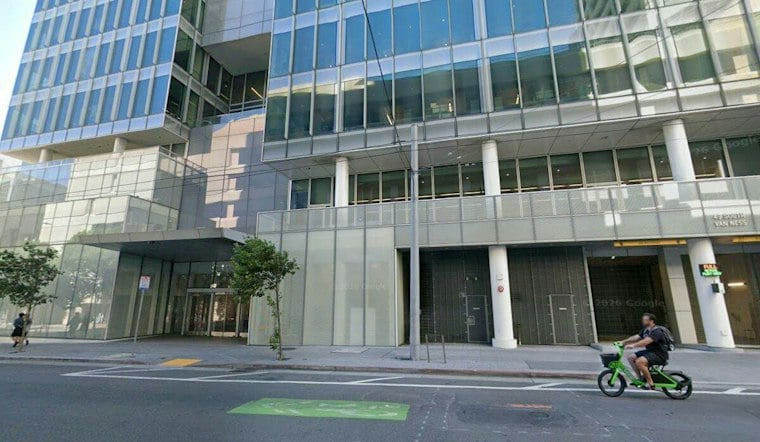
50 U.N. Plaza, located in San Francisco's Civic Center district, underwent a major seismic retrofit in 2013 that included electrical and plumbing upgrades. The building had appeared on a Trump administration list of federal buildings slated for sale in 2025, though ABC7 reports it is no longer on that list.
No Decision Yet on Demolition or Relocation
San Francisco officials are weighing whether to demolish the Hall of Justice or relocate court operations, citing both employee and public safety concerns, but they have not determined whether the city would purchase or lease any replacement building. The building's future depends on state and local funding and the city's willingness to move forward, ABC7 reports.
State courts, meanwhile, are pursuing their own timeline. The San Francisco Standard has reported that the Judicial Council of California gave the courthouse a high-risk seismic rating in 2017, warning it was unlikely to withstand a major earthquake, and has identified construction of a replacement as a critical-need project. Five years of maintenance logs at 850 Bryant St. included more than 200 mentions of toilets — overflowing, leaking, or breaking apart — and more than 250 mentions of elevators, the Standard found. The San Francisco Superior Court said it would request state funding for the replacement project for the 2026-27 fiscal year, while the Judicial Council plans to request its own funding to design and build a new hall in fiscal year 2029-30, with construction not expected to begin before 2030.
Addressing the Root Problems Elsewhere
Separate from the building debate, the city has also moved to address some of the issues the jail grant fight once centered on, including a lack of a mental health plan in 2015. San Francisco opened a Behavioral Health Stabilization Unit at 822 Geary St. in 2025 and opened the Reset Center in 2026, which serves people struggling with drug use and mental health issues. Proposition 1 funding has also allowed for expanded treatment and psychiatric beds at UCSF Health's Hyde Hospital, according to ABC7's reporting.



