

























































The National Institutes of Health (NIH) has recently awarded a whopping $2 million to researchers at UC San Diego's Qualcomm Institute (QI) for a game-changing, non-invasive technology designed to study and visualize the magnetic fields produced by the human brain, UC San Diego News Center reports. With far-reaching applications for various disorders such as epilepsy, brain tumors, concussions, schizophrenia, post-traumatic stress disorder, autism spectrum disorder, and Alzheimer's disease, this cutting-edge magnetoencephalography (MEG) system promises to bring previously unimagined possibilities for scientific research and patient treatment.
Roland Lee, M.D., director of the MEG Center at QI, and Mingxiong Huang, Ph.D., center co-director, are delighted to be able to allocate the funds to secure an advanced MEG machine. This will allow researchers to observe neural activity by measuring the magnetism created by the brain cells, or neurons, firing in real-time, according to UC San Diego News Center. Moreover, this technology can support scientists, physicians, and especially patients in pinpointing where seizures occur, mapping brain function before surgical procedures, and developing imaging markers for the early diagnosis of various brain disorders.
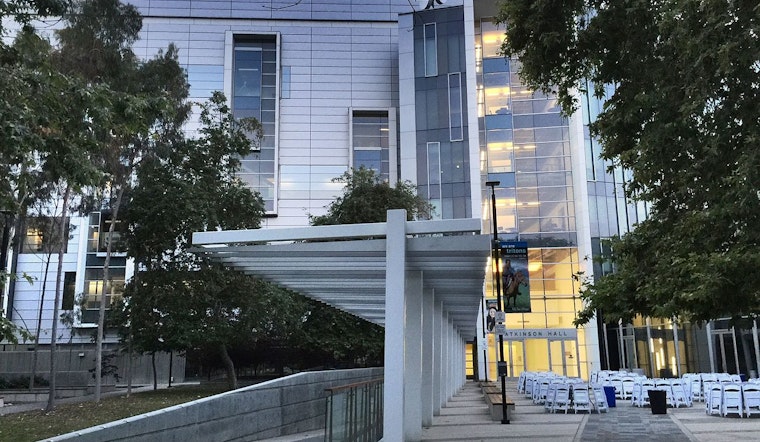
The state-of-the-art MEG machine will be installed in a dedicated, room-sized insulated chamber on the first floor of QI's Atkinson Hall on the UC San Diego campus. To ensure no interference from external electromagnetic sources, the chamber is shielded with an impressive six layers of metal. As the only MEG device of its kind in Southern California, the machine will not only promote the lab's research efforts, but will also be available as a shared service for scientists and medical patients throughout the region.
The MEG machine will replace an older unit installed in 2005, bringing enhanced signal detection and faster electronics into play, as mentioned by Dr. Lee, who is also an emeritus professor of radiology at UC San Diego School of Medicine and a physician with the Veterans Affairs (VA) San Diego Healthcare System. Functioning as UC San Diego's core MEG facility, it will serve research scientists and physicians and their patients in southern California and the Southwestern U.S.
When a person thinks, experiences emotions, or performs actions, neurons activate and produce an electrical current, generating electric and weak magnetic fields that can be detected using modern devices, including the MEG. Although other technologies, such as MRIs and electroencephalograms (EEGs), provide glimpses into the brain's inner workings, the unmatched capabilities of MEG make it possible for researchers and clinicians to detect brain activity in real-time and with much greater precision than EEG, UC San Diego News Center explains.
Compared to the functional MRI, which measures blood flow to active brain regions but fails to observe direct brain cell activity, the MEG system can determine the location of neuronal activity within mere milliseconds and at extremely close distances - as close as three millimeters. Magnetic fields are particularly advantageous because, unlike electrical fields, they do not become distorted while passing through the human skull and tissues. This avoids complications when calculating where the signals originate within the brain, as a MEG can generate a clear, uninterrupted signal using a helmet equipped with sensors.
So, when might a clinician or researcher need this astonishing level of information about the brain's functioning? Imagine the nearly 30 to 40% of epilepsy cases that do not respond to medication. In such severe instances, Dr. Lee suggests that it becomes crucial to clearly identify the part of the brain causing the problem to determine if surgical intervention by laser or scalpel is a viable treatment option. MEG is ideally suited for this purpose.
Furthermore, MEG data can assist surgeons in planning procedures by providing crucial information about important functional brain regions that may be difficult to locate, especially when tumors distort the brain's surface and appearance. In the case of concussions, MEG technology can indicate injured areas displaying abnormally slow brain magnetic rhythms, despite appearing normal on CT and MRI scans. Additionally, Dr. Lee notes that MEG can contribute to monitoring patient recovery even in cases involving repeat concussions.
As of this fall, the MEG Center's remarkable equipment will be available to clinicians and scientists without a university affiliation, according to UC San Diego News.





