

























































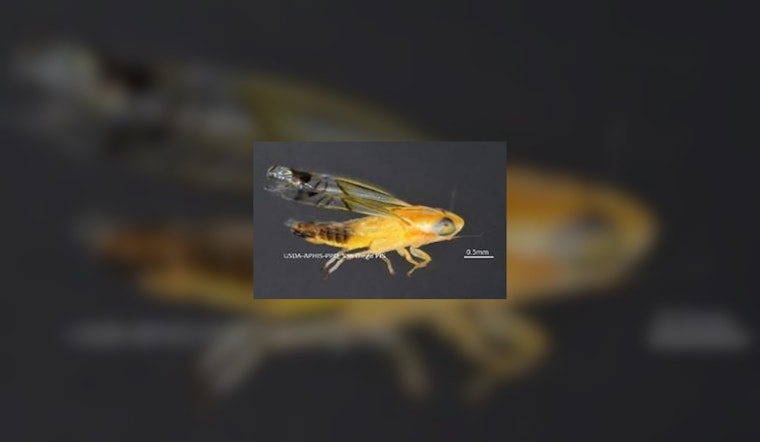
On August 17, 2023, US Customs and Border Protection (CBP) announced a groundbreaking discovery that has implications for the nation's agriculture and environment—a never-before-seen pest hiding within a cargo shipment intercepted in San Diego. This impressive find underscores the importance of CBP's ongoing efforts to protect American agriculture from invasive species and other threats.
This first-in-the-nation discovery occurred when CBP agriculture specialists at the Otay Mesa cargo facility inspected a shipment containing pocket leaves on July 19, 2023, according to CBP. When an unusual insect was found within the leaves, the pest was submitted for further identification to the United States Department of Agriculture’s (USDA) Animal and Plant Health Inspection Service. The shipment, along with the driver, was returned to Mexico under appropriate precautionary measures.
The pest was ultimately identified on August 3 as Rhabdotalebra signata, a species that has not been recorded in the USDA pest identification database. Because this marks the first discovery of its kind across all US ports, it showcases the significance of CBP's meticulous work in safeguarding the nation's agriculture and environment.
Rosa Hernandez, Otay Mesa Port Director, remarked on the importance of this discovery, saying, "It is truly a remarkable achievement discovering a first-of-its-kind pest in our nation. Our agriculture specialists’ role will continue to aid in safeguarding our environment and agriculture."
Such invasive species can pose a serious threat to the United States' agriculture and ecosystem, as seen in the case of the Asian citrus psyllid and the Brown marmorated stink bug, both of which have had devastating effects on crops and have caused millions of dollars in damages since their arrival.
In order to prevent the introduction of invasive species, the CBP employs agriculture specialists at various ports of entry, who are tasked with inspecting shipments and identifying potentially harmful pests. The CBP also encourages travelers and businesses importing flowers, plant materials, and other agricultural items to declare all agricultural items to a CBP officer upon arrival and consult the Bringing Agricultural Products into the United States section of CBP’s website for ways to prevent conveyance contamination.



