

























































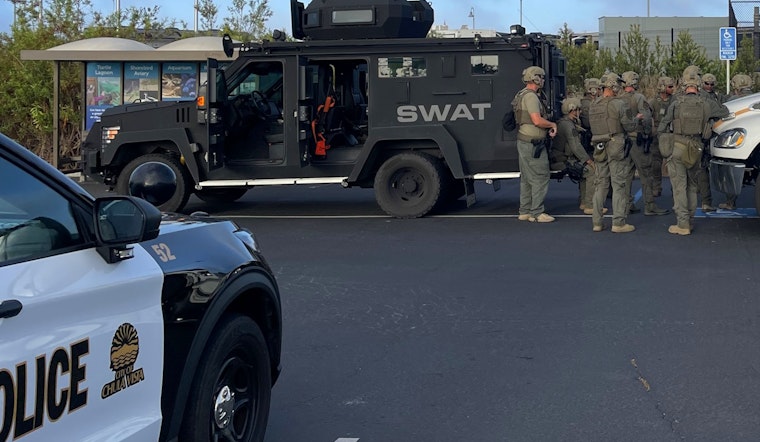
Today in Chula Vista, an alert from an Automated License Plate Recognition (ALPR) system led to the arrest of a highly dangerous murder suspect, Daniella Hess Prieto, during a tense standoff with the Chula Vista Police Department's SWAT team according to a police media advisory. An officer's cruiser-mounted ALPR system first recognized the suspect's unoccupied parked vehicle at a Motel 6 on E Street, and the officer subsequently confirmed the link to the San Bernardino County murder investigation that involved the shooting of a 56-year-old man in the high-desert community of Wonder Valley as reported by the Times of San Diego.
Media Advisory: ALPR Alert Results in Arrest of Murder Suspect in Chula Vista. Full story here: https://t.co/f1a0BsCDBX pic.twitter.com/LwTf0BQTH3
— Chula Vista Police Department (@ChulaVistaPD) August 10, 2022
With guns possibly inside the complex, SWAT personnel were called in to surround the motel, eventually apprehending Hess Prieto at around 9 a.m. without incident reported the Times of San Diego. The successful capture of this suspect highlights the impressive capabilities of ALPR cameras in aiding law enforcement officials in their fight against crime.
ALPR systems operate by using cameras, often mounted on police vehicles, to automatically photograph and compare license plates to various police databases, such as lists of stolen and wanted vehicles, usually within seconds of initial capture according to the Chula Vista Police Department. Once alerted, officers must still independently validate the accuracy of the ALPR's interpretation, match the license plate to the vehicle, and verify its validity before making an informed decision on what action to take.
The recent apprehension of criminals in nearby El Cajon with similar ALPR technology supports the notion that these cameras are highly effective in keeping communities safe as reported by Hoodline. While some concerns about privacy and data use persist, ALPR systems like those in Chula Vista focus solely on capturing license plates and vehicles, not individuals' faces, ensuring a balance between residents' privacy and public safety needs.
Moreover, data captured by ALPR cameras is typically deleted after 30 days unless it has evidentiary value. This balance is crucial for maintaining public trust in their usage by law enforcement agencies—data access policies must strictly adhere to protocols about third-party sharing to avoid unlawful misuse.
Critics of ALPR systems remain vigilant about any potential violation of privacy or ethical concerns, while supporters of the technology emphasize its numerous crime-fighting benefits and its ability to strengthen connections between law enforcement and the communities they serve according to the Chula Vista Police Department. One thing is certain: the quick apprehension of Hess Prieto in Chula Vista demonstrates the powerful potential of ALPR cameras to revolutionize law enforcement efforts in keeping communities safe.





-4.webp?w=160&h=400&fit=crop&crop=edges)