

























































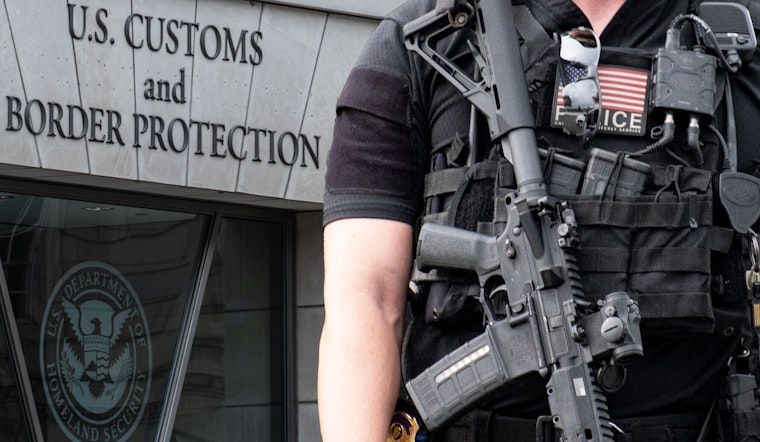
In the ongoing battle against drug trafficking and its devastating consequences, the tireless work of law enforcement officers stationed at border crossings continues to pay off. The diligent efforts of the U.S. Customs and Border Protection’s (CBP) San Diego Field Office at California's ports of entry with Mexico resulted in the interdiction of over $22 million worth of narcotics in July alone, as reported by the CBP.
These safeguards are imperative, particularly considering the disastrous impact that drug abuse and illegal narcotics dealing have on the lives and safety of countless individuals and communities. The San Diego Field Office is responsible for securing the following ports of entry: San Ysidro, Otay Mesa, San Diego air and seaport, the Cross Border Xpress facility, Calexico East/West, Tecate, and Andrade. Over the course of July, 197 separate incidents led to the seizure of the following narcotics:
- Marijuana - 33 pounds ($66,000)
- No recorded deaths have been attributed to marijuana overdose.
- Heroin - 40 pounds ($325,800)
- Lethal overdose likely occurs at 30 mg for opioid-naive individuals [StatNews.com]
- Cocaine - 729 pounds ($7,934,400)
- Lethal overdose likely occurs at 1.2 grams, though amount can vary widely depending on tolerance [NIH]
- Fentanyl - 765 pounds ($8,672,500)
- Lethal overdose likely occurs at 2-3 mg due to its extreme potency but can be less depending on purity [StatNews.com]
- Methamphetamine - 3,888 pounds ($5,832,000)
- Lethal overdose likely occurs at 200 mg [NIH]
These seizures represent an estimated $22,830,700 worth of narcotics, drugs that could have wreaked havoc on the lives of millions. The dedication of the officers and teamwork involved in preventing these dangerous substances from entering our communities cannot be understated. Sidney Aki, CBP Director of Field Operations in San Diego, praised the unwavering attention to detail and proactive approach of the officers, stating that their efforts undoubtedly contributed to the mission of keeping these dangerous drugs off our streets. Considering the advised lethal dosages from NIH, we may estimate potential number of lethal doses:
- Heroin: 40 pounds = 18,144 grams. If we take the lower limit of 30 mg as a lethal dose, 18,144 grams contains 604,800 doses.
- Cocaine: 729 pounds = 330,669 grams. Assuming 1.2 g is fatal, it provides 275,558 lethal doses.
- Fentanyl: 765 pounds = 347,231 grams. With 2 mg potential lethal, it provides approximately 173,615,500 lethal doses.
- Methamphetamine: 3,888 pounds = 1,763,698 grams. If we assume 200 mg as a fatal dose, this amount of methamphetamine provides about 8,818,490 lethal doses.
So, in sum, the seizure could hypothetically cause around 182,740,348 lethal doses. It's essential to underline that these figures are purely based on rough averages and actual figures can vary based on a wide range of factors. Moreover, the numbers ignore likely impurities and cut in the seized drugs.
The CBP is a unified border agency within the Department of Homeland Security, responsible for the comprehensive management, control, and protection of our nation's borders. This includes combining customs, immigration, border security, and agricultural protection at and between official ports of entry.
While the ongoing seizures of narcotics are commendable, the question remains – how do these efforts fit into the larger context of addressing the root issues driving drug trafficking? As recently as February 2020, the Associated Press reported on a surge in drug violence in Tijuana, Mexico – a city just across the border from San Diego. This exposes the complex and deeply ingrained web of drug cartels, organized crime, and corruption, which continue to fuel the illegal narcotics trade.
Another aspect to consider is the potential impact on drug users themselves. Previously, in 2022, The New York Times explored the efforts to dismantle clandestine cocaine labs in Colombia, ultimately revealing the devastating health effects facing users, not only in Colombia but also in the United States and around the world.





-4.webp?w=160&h=400&fit=crop&crop=edges)