

























































Off the coast of San Diego, history is being made as NASA successfully completed the first recovery test for its crewed Artemis II mission, a landmark aspect of America's future exploration of the Moon and beyond, according to FOX 5 San Diego. A test version of the Orion Spacecraft at Naval Base San Diego was used to simulate the extraction of the four astronauts, setting the stage for the first human mission to the moon in more than five decades.
In the recent recovery test, NASA's landing and recovery team used a new crew module test article along with personnel from the team to stand in for the astronauts on the mission, as reported on NASA's official website. The test aimed to practice the extraction of astronauts from the Orion spacecraft once they safely land in the Pacific Ocean following their lunar mission. The immense achievement was made possible by the combined efforts of NASA, the U.S. Navy, and the U.S. Air Force.
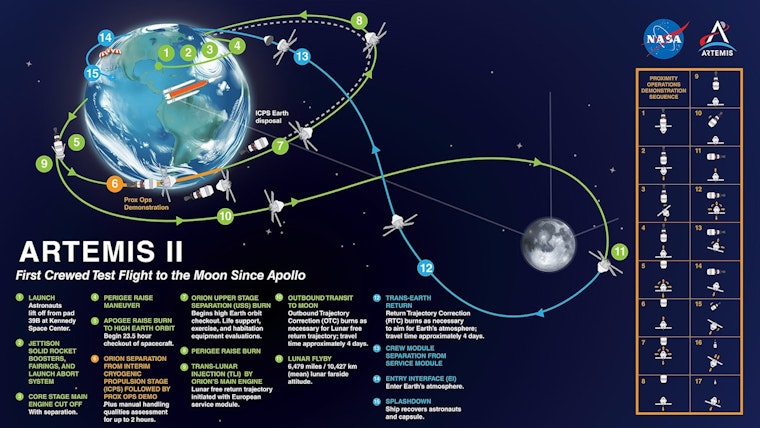
The Artemis II mission will test the limits of human deep-space exploration for the first time in decades, using the Space Launch System rocket and Orion spacecraft in preparation for future lunar landings, which will include the first woman and the first person of color to set foot on the Moon. The approximately 10-day mission will be crucial for the development of lunar exploration programs moving forward, as NBC San Diego reports.
Such remarkable progress would not be possible without the extensive collaboration and teamwork among multiple organizations. For instance, the USS John P. Murtha amphibious transport dock played a key role in the recovery test, with its commanding officer, Captain Doug Langenberg, stating, "There are a million fingerprints all over the success of this mission." The test involved a blend of boats, helicopters, and divers working together to recover both the crew and capsule within a two-hour time frame.
With the successful completion of the first recovery test, NASA is gearing up for the next phase. The four astronauts slated for the Artemis II mission are expected to participate in a future recovery test next year as part of their training. According to another NBC San Diego article, the Artemis II crew consists of NASA astronauts Reid Wiseman, Victor Glover, Christina Hammock Koch, and CSA (Canadian Space Agency) astronaut Jeremy Hansen. This extraordinary team is set to embark on a journey that will push the boundaries of space exploration and pave the way for future lunar missions.
The crewed Artemis II mission is a stepping stone to achieving even greater accomplishments. Lili Villarreal, NASA's landing and recovery director, expressed enthusiasm about the upcoming milestones, stating, "This is kind of like our next step to Artemis III, where we're going to land on the Moon." Following this week's successful tests and simulations involving collaboration across numerous agencies, there is a shared sense of excitement and anticipation for the upcoming launch of the Artemis II mission and the significant strides it represents for humankind's exploration of space.





