

























































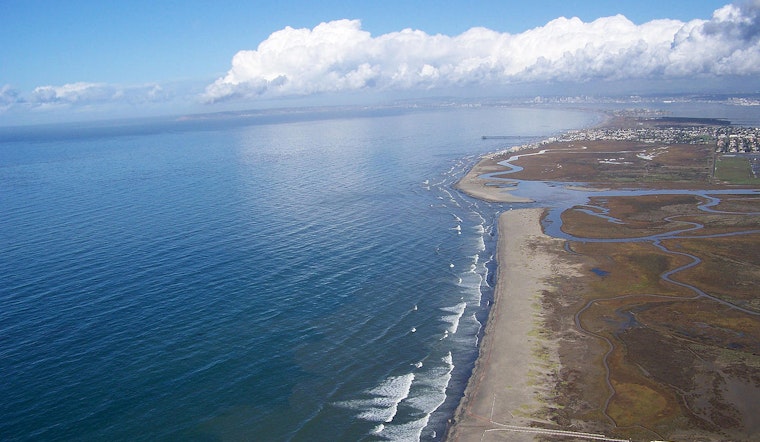
The coastal waters of San Diego have long suffered from a devastating problem, causing not only damage to the environment but significant risks to the public's health. Untreated sewage from cross-border pollution continually plagues the region, necessitating an urgent and innovative approach. As a recent UC San Diego announcement revealed, the California government has shown its commitment to face this crisis head-on, granting $3 million to UC San Diego's Scripps Institution of Oceanography to develop a forecast model for pathogens in coastal and tidal waters.
This newly funded project, known as the Tijuana River Estuary and Coastal Ocean Pathogen Forecast Model, aims to predict the presence of bacterial and viral pathogens originating from untreated sewage in estuary and coastal waters. Its purpose is to provide decision-makers with the necessary information to decide when beach closures are required and reduce human health risks in the San Diego area. For more than 30 years, the southernmost coastline of California has been under siege by discharges of trash, sediment, and wastewater from Mexico – including dangerous pathogens and chemicals that flow through the Tijuana River.
According to KPBS, during a press conference on August 25, California Assembly member David Alvarez expressed frustration with the government's reluctance to declare states of emergency and thus release state and federal funding to address cross-border sewage issues. Alvarez described the situation as "unacceptable" and emphasized the need for action to protect the coastline and local communities.
Thankfully, the Tijuana River Estuary and Coastal Ocean Pathogen Forecast Model, funded by the California government, is set to provide valuable assistance. Scripps Institution of Oceanography plans to use the allocated funds to create a tool that will allow local officials to predict pathogen concentrations in the ocean waters near Imperial Beach. But beyond informing residents and visitors of increased health risks, the model will also serve to evaluate the effectiveness of proposed water quality infrastructure solutions and support capital project planning.
Thus, an interdisciplinary team of biological and physical oceanographers will work in tandem to develop the estuary and coastal ocean pathogen forecast model over a three-year period. Furthermore, the project will fund regular and event-based water sampling at beach and coastal locations, laboratory experiments, and data assimilation and forecast capabilities in real-time. Scientists at Scripps have already developed a physical model showing ocean and estuary currents' movement and the transportation of contaminated wastewater along the coast, laying the groundwork for this project.
Falk Feddersen, a physical oceanographer at Scripps, expressed enthusiasm for the project in an interview with KPBS. He stated that they aim to provide five-day forecasts of pathogen loads at the beach and assess human health risks, facilitating informed decision-making for families planning trips to the shore. The plan is to create an app, similar to a weather prediction tool, that allows people to understand the risks associated with going to the beach, thus minimizing health hazards.
In addition to protecting the public from the dangers posed by contaminated ocean waters, the pathogen forecast model also intends to validate proposed infrastructure solutions. Modeling results will be employed in capital project planning and implementation, determining the net benefit and effectiveness of proposed relief efforts. Once the forecasts are developed, they will be accessible to the public and decision-makers through the Southern California Coastal Ocean Observing System website.





